How the Stock Profit calculator works
Profit
Profit = (Shares × sell price − selling fee) − (Shares × buy price + buying fee) + dividends
Return and break-even
Return = Profit ÷ total cost × 100; Break-even price = (total cost + selling fee − dividends) ÷ shares
Worked example
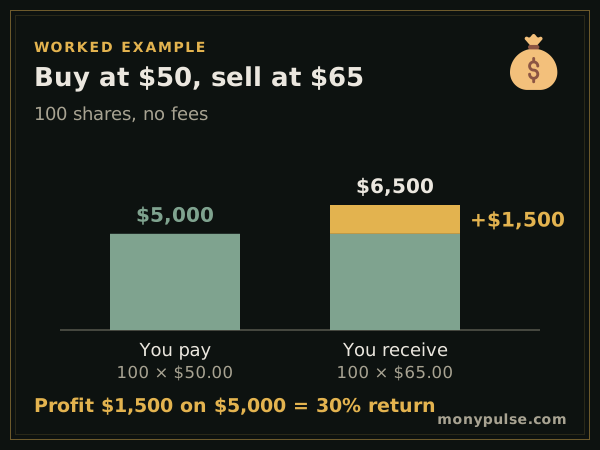
You buy 100 shares at $50.00 for a total of $5,000.00 and later sell them at $65.00, receiving $6,500.00. The profit is $1,500.00, a return of 30% on the money you put in.
If your broker charged a commission on each trade, add it under Fees, dividends and tax: the profit falls and the break-even price rises above your buy price.
Plan a trade before you make it
Use the calculator as a stock investment calculator ahead of time: enter a buy price and a target price to see what the trade could earn, then a stop price to see what you would lose. Comparing the two helps you judge whether the possible gain is worth the risk.
Profit after tax
Enter a tax rate to see the estimated tax and the profit you keep. Most long-term gains are taxed at 15% federally, but the right rate depends on your income and on whether you held the shares more than a year. State tax may apply too. For your exact figure, use the capital gains tax calculator.
Related calculators
If you bought the same stock several times, start with the stock average calculator to get your average cost. To include income from a dividend stock over many years, use the dividend calculator, and to compare this trade with others held for different lengths of time, the ROI calculator shows annualized returns.
Assumptions and limits
- All shares are bought at one price and sold at one price. For several purchases, find your average cost first with the stock average calculator.
- The tax estimate applies one rate to the whole gain. Actual tax depends on how long you held the shares and your income.
- Short sales, options and currency conversion are not covered.
Frequently asked questions
How do I calculate profit on a stock?
Multiply the shares by the sell price, subtract the selling commission, then subtract what you paid in total, shares times the buy price plus the buying commission. Add any dividends you received.
What is the break-even price?
The sell price at which you neither gain nor lose after fees. It is your total cost plus the selling fee, minus dividends received, divided by the number of shares.
Is stock profit taxed?
Yes, when you sell in a taxable account. Shares held more than a year are long-term gains, taxed at 0%, 15% or 20% federally depending on income; a year or less is short-term and taxed like wages. The capital gains tax calculator works out the exact figure.
How do I use this as a stock investment calculator before buying?
Enter the price you plan to pay and a target sell price to see the profit and return in advance, or set the sell price below the buy price to see the loss if a trade goes wrong.
Sources and method
- Topic no. 409, Capital gains and losses · Internal Revenue Service
- Publication 550, Investment Income and Expenses · Internal Revenue Service
Formulas and figures checked against these sources on November 11, 2026. The calculator runs entirely in your browser; nothing you type is sent to us or stored. Results are estimates for education, not financial, tax or legal advice, and MonyPulse is not a lender, tax preparer or investment adviser. Found an error? Tell us. See how we build and test our calculators and our editorial standards.