Apple
Apple in 1997: About 90 Days From Running Out of Cash
In 1997 Apple lost $1.04 billion and, by Steve Jobs's account, was about 90 days from running out of money. Its rescue included $150 million from its oldest rival.
- Loss, 1997
- -$1.04BLoss, 1997. Apple's net loss for fiscal 1997, the year ending in September 1997.
- Revenue, 2025
- $416BRevenue, 2025. Apple's revenue for fiscal 2025, a record, with net income of $112 billion.
In this story · 6 chapters
The short answer
Apple lost $1.04 billion in fiscal 1997, and Steve Jobs later said it was about 90 days from running out of cash. On August 6, 1997, Microsoft agreed to buy $150 million of non-voting Apple stock and to keep making Office for the Mac for five years. Apple made a $309 million profit in fiscal 1998.
In December 1996 Apple Computer bought a company that hardly anyone used. NeXT made powerful workstations and an elegant operating system, and it had sold very few of either. Apple paid $429 million in cash, plus 1.5 million Apple shares for NeXT’s founder, who agreed to come back as an adviser.
The founder was Steve Jobs. Eleven years earlier Apple had pushed him out. Now it needed him, because it was running out of time.
A company losing its way
By the mid-1990s Apple had become a cautionary tale. It made dozens of overlapping Macintosh models that confused buyers. It had licensed the Mac system to other manufacturers, which mostly took sales from Apple itself. Its own plan for a modern operating system had collapsed. Windows PCs, cheaper and everywhere, were taking its customers.
In March 1996 Apple warned that it would lose about $700 million in a single quarter. The new chief executive, Gil Amelio, a respected semiconductor executive, cut costs and reorganized the company. He also made the decision that would save it: to buy NeXT, mainly for its software. But he could not stop the losses. In July 1997, after another bad quarter, the board told him to go. Over his 17 months, the losses had wiped out every dollar of profit Apple had made since 1991, Cult of Mac calculated.
Jobs took charge, first as an adviser and from September 1997 as interim chief executive. He would later say that when he came back, Apple was about 90 days from running out of money.
Why Microsoft invested $150 million
On August 6, 1997, Jobs walked onto the stage at the Macworld conference in Boston to give his first major speech as Apple’s leader. It contained no new products. Instead he announced a partnership, and the name of the partner drew boos from the crowd: Microsoft.
The deal had several parts. The two companies settled a long-running patent dispute and agreed to share all their existing patents and those filed over the next five years. Microsoft promised to keep making its Office software for the Mac for five years, with as many major releases as on Windows. Apple would make Microsoft’s Internet Explorer the Mac’s default browser. And Microsoft would buy $150 million of non-voting Apple stock, which it agreed to hold for at least three years.
Then Bill Gates appeared by satellite on a giant video screen above Jobs, and the boos grew louder. Jobs told the audience that they had to let go of the idea that for Apple to win, Microsoft had to lose.
The $150 million was not much money. Apple had more than that in the bank. What mattered was the message. Office was the main reason many businesses used computers at all. If Microsoft stopped making it for the Mac, the Mac was finished. With the promise, customers and software developers could believe Apple would survive. Apple’s shares rose 33% that day.
Cutting to four
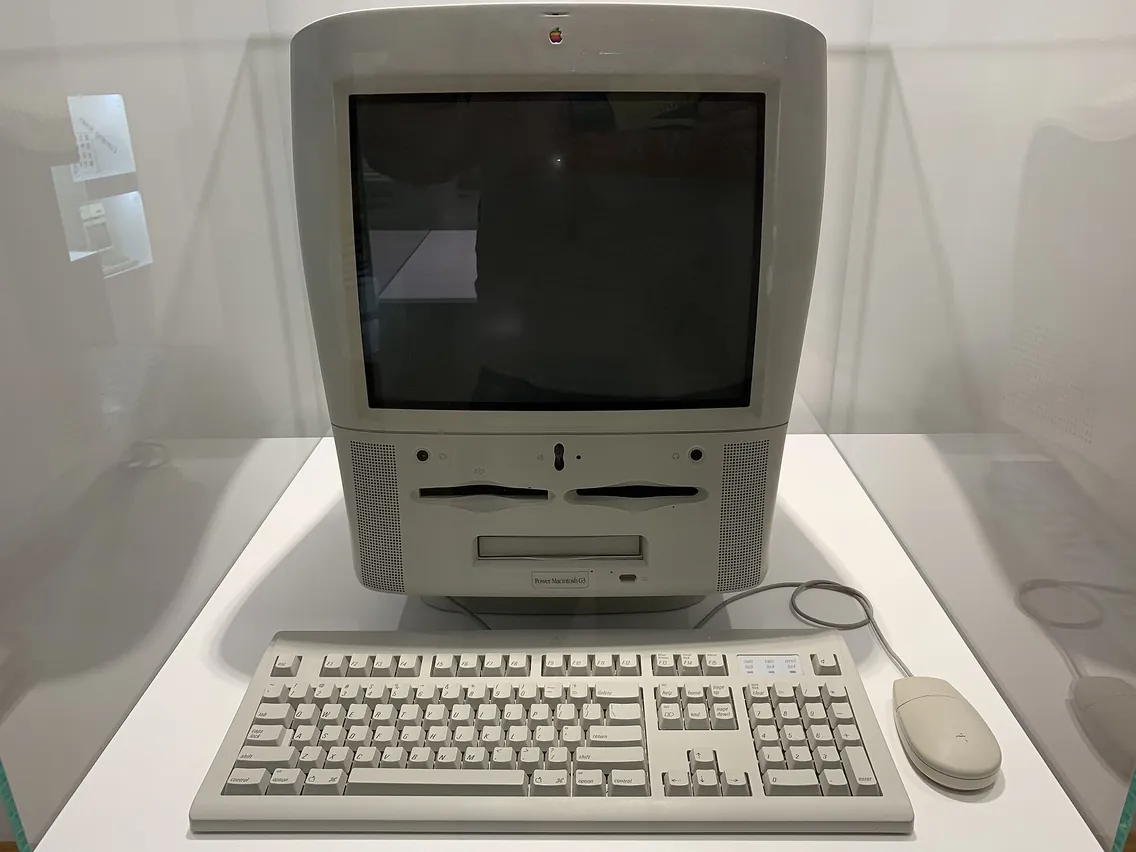
Inside the company, Jobs began cutting. He killed the Newton handheld computer and the deals that let other companies make Mac clones. He replaced most of the board. He reduced Apple’s long list of computers to four: a desktop and a laptop for consumers, and a desktop and a laptop for professionals. He took a salary of $1 a year.
With no new products to show yet, Apple launched an advertising campaign in the fall of 1997 that sold an attitude instead. “Think Different” showed black-and-white portraits of people such as Albert Einstein, Martin Luther King Jr. and Pablo Picasso. It did not mention a single computer. It told customers, and Apple’s own staff, that the company still believed in itself.
Outside, plenty of people thought it was too late. On October 6, 1997, Michael Dell, whose company was then booming by selling PCs directly to customers, was asked at a technology conference what he would do if he ran Apple. He said he would shut it down and give the money back to the shareholders. Apple’s whole stock market value was then about $2.3 billion.
For the fiscal year that ended in September 1997, Apple lost $1.04 billion.
The iMac
The first product of the new Apple came in August 1998. The iMac was an all-in-one computer in a curved, translucent blue case, designed by a young British designer named Jony Ive. It was simple to set up and made for getting on the internet. It had no floppy disk drive, which critics called a mistake. It sold about 800,000 units in its first five months.
Apple made a profit of $309 million in fiscal 1998. The turnaround had begun.
The NeXT purchase paid off too. Its software became the foundation of Mac OS X, released in 2001, and later of the operating system that runs the iPhone. In October 2001 Apple launched the iPod, then the iTunes store, then, in 2007, the iPhone. Each one turned Apple into a bigger company than it had been before.
From the edge to the top
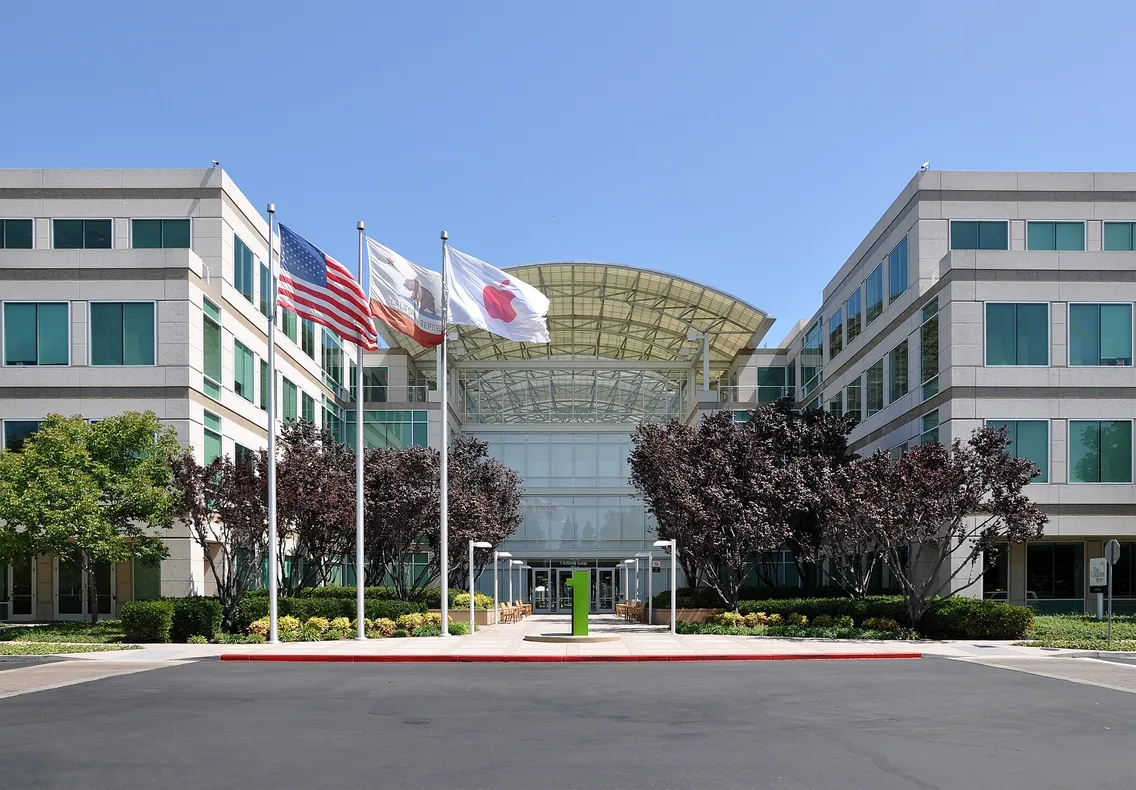
Apple’s revenue for fiscal 2025 was a record $416 billion, with net income of $112 billion. In a single year it now earns about a hundred times what it lost in 1997, and more than the whole company was worth when Michael Dell suggested closing it.
What the record shows
- Focus is a strategy. Apple went from dozens of products to four, and could finally explain what it sold.
- Swallow pride when survival is at stake. Taking money and software from Microsoft was humiliating for Apple fans, and necessary.
- Buy the team, not just the technology. Apple bought NeXT for its software and got back the leader who would save the company.
- Confidence is an asset. The Microsoft deal brought in little money but convinced customers that Apple would last.
Jobs came back to Apple already rich, thanks to Pixar, which Disney later bought for $7.4 billion. Apple’s forgotten cofounder sold his 10% for $800 in 1976. And Microsoft built its own fortune on a famous bargain: an operating system bought for $75,000.
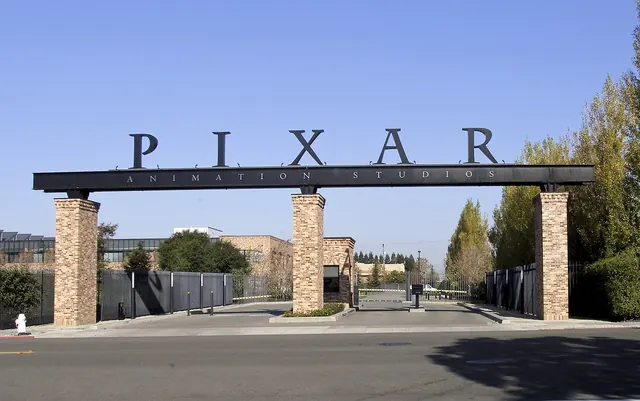 $7.4BRead nextSteve Jobs Paid $10 Million for Pixar. Disney Paid $7.4 Billion.In 1986 Steve Jobs paid $10 million for a computer graphics group George Lucas wanted to sell. It lost money for nine years. In 2006 Disney bought it for $7.4 billion.Pixar · 5 min read
Questions readers ask
- Was Apple almost bankrupt?
- Yes, by Steve Jobs's account. Apple lost $1.04 billion in fiscal 1997, and Jobs later said the company had been about 90 days from insolvency when he returned.
- Why did Microsoft invest in Apple?
- On August 6, 1997, Microsoft agreed to buy $150 million of non-voting Apple stock and to keep making Office for the Mac for five years. The deal also settled a patent dispute and made Internet Explorer the Mac's default browser.
- Did Microsoft save Apple?
- It helped, but $150 million was not what saved Apple. The deal mattered more for its promise to keep making Office for the Mac for five years and for the confidence it gave customers. The recovery came from Jobs's cuts and new products, starting with the iMac in 1998.
- What did Michael Dell say about Apple?
- On October 6, 1997, asked at a Gartner conference what he would do with Apple, Dell answered that he would shut it down and give the money back to the shareholders. Apple was worth about $2.3 billion at the time.
- How did Apple recover?
- Jobs cut most of Apple's product line, focused on a few computers, and launched the iMac in 1998. Apple made a $309 million profit that year.
Run the numbers yourself
- Stock Profit CalculatorWork out profit or loss on a trade after commissions, with return, annualized return and break-even price.
- Profit Margin CalculatorTurn cost and price into profit, margin and markup, or find the price that hits a target margin.
- Business Valuation CalculatorEstimate what a business could be worth with earnings multiples, a revenue multiple and a DCF.
People and companies in this story
People
- Steve Jobs4 stories
- Gil Amelio
- Bill Gates2 stories
- Michael Dell
- Jony Ive
Companies
This story is on these lists
Share this story
Send the link to someone who would like this story, or keep it for later.
The timeline
Drawn to scale: the gaps are the years in between. Choose a year.
Sources & further reading 7
- Apple Computer Inc. Form 10-Q (the Microsoft agreements, August 1997)Apple, U.S. Securities and Exchange Commission, 1997
- The day Apple and Microsoft traded placesThe Motley Fool, August 2013
- Apple's 15 years of NeXTAppleInsider, December 2011
- Today in Apple history: after a horrible quarter, Apple CEO Gil Amelio is firedCult of Mac
- Dell's back at the helm, with his rep on the line (Michael Dell's 1997 remark)Fortune, January 2007
- How Steve Jobs saved AppleEntrepreneur
- Apple reports fourth quarter resultsApple Newsroom, October 2025
Spot an error? Send a correction. Corrections are dated and noted here.
Photographs are credited under each picture; licenses are listed on the image credits page.