Apple
The Apple Cofounder Who Sold His 10% for $800
On April 1, 1976, Ronald Wayne owned 10% of a new partnership called Apple Computer. Eleven days later he signed out of it for $800. In fiscal 2025 Apple had revenue of $416 billion.
- Paid for 10%
- $800Paid for 10%. What Ronald Wayne received for giving up his 10% of the Apple partnership on April 12, 1976. A later payment of $1,500 brought his total to $2,300.
- Apple revenue, 2025
- $416BApple revenue, 2025. Apple's revenue for fiscal 2025, a record.
In this story · 6 chapters
The short answer
Ronald Wayne signed Apple's founding partnership with Steve Jobs and Steve Wozniak on April 1, 1976, taking 10%. Eleven days later, worried about being personally liable for the partnership's debts, he gave up his share for $800. He later accepted $1,500 more to drop any claims. In fiscal 2025 Apple's revenue was $416 billion.
On April 1, 1976, three men sat in an apartment in Mountain View, California, and signed a three-page contract. Steve Jobs was 21. Steve Wozniak was 25. The apartment belonged to the third man, Ronald Wayne, who was 41 and had typed the contract himself. It created a partnership called the Apple Computer Company.
The split was 45% for Jobs, 45% for Wozniak and 10% for Wayne. His share had a purpose. If the two young men disagreed, Wayne would cast the deciding vote.
Eleven days later he took his name off it. He was paid $800.
The adult in the room
Wayne had met Jobs at the video game maker Atari, where Wayne worked as a draftsman and engineer and Jobs worked as a technician. Jobs often came to the older man for advice. When Jobs wanted to turn Wozniak’s computer board into a business, he asked Wayne to help persuade Wozniak, who worked at Hewlett-Packard, to commit.
Wayne did more than sign. He drew Apple’s first logo, a detailed ink drawing of Isaac Newton sitting under a tree with an apple above his head. He signed the drawing, he told BBC News in 2016, until Jobs told him to take the signature out. He also wrote the operating manual for the Apple I.
He had a reason to be careful. In 1971 he had started his own business designing slot machines. It failed, and he spent about a year paying off what it owed. He has called it a traumatic experience.
Fifty computers on credit
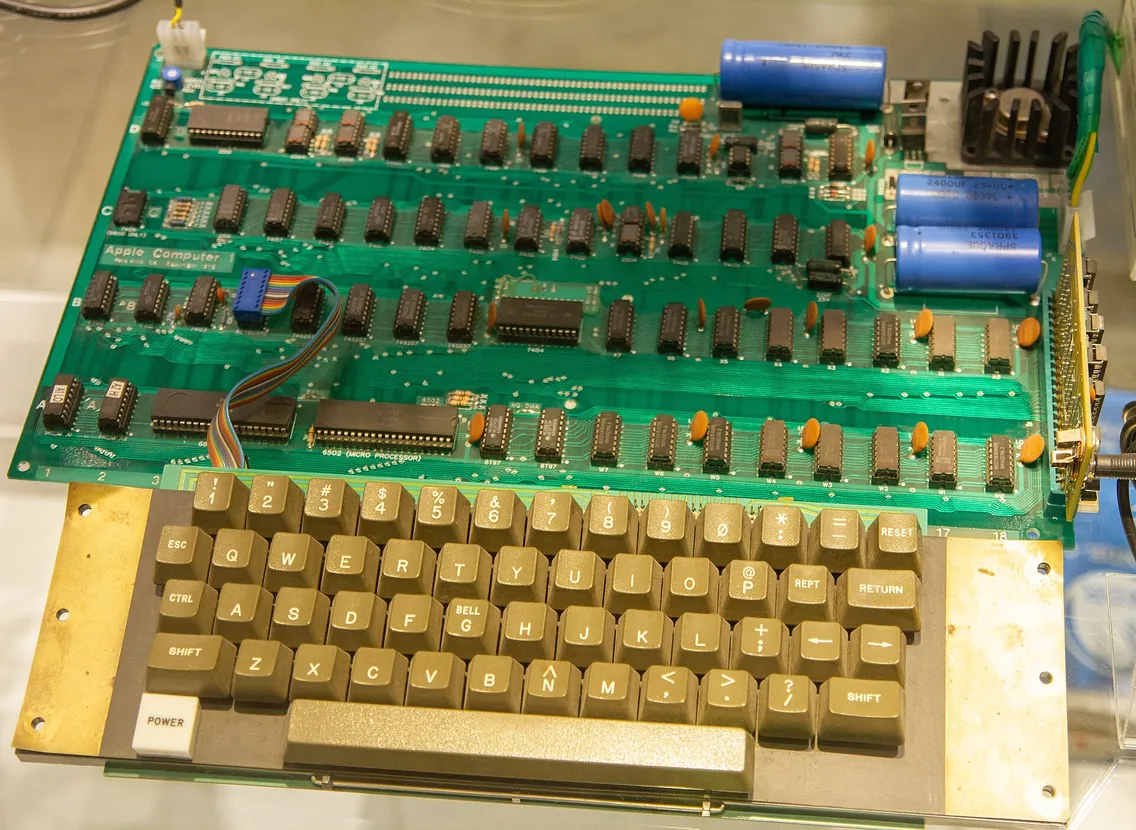
Apple’s first real customer was Paul Terrell, who ran a new computer store in Mountain View called the Byte Shop. Terrell did not want bare boards. He wanted 50 fully assembled computers, at $500 each, paid on delivery. That was $25,000, far more money than the partners had.
Jobs found a way. He persuaded a parts supplier to give him about $15,000 worth of components on 30-day credit, after the supplier called Terrell to confirm the order was real. If the computers were built and delivered on time and Terrell paid, Apple would make a profit. If not, the partners owed the money.
Wayne saw the risk clearly. In a partnership every partner is personally responsible for the business’s debts, with no limit. Jobs and Wozniak had almost nothing a creditor could take. Wayne had a house and savings. And the Byte Shop, he later said, had a reputation for paying its bills slowly.
The amendment
On April 12, 1976, Wayne filed a statement of withdrawal with Santa Clara County. He and the two Steves signed an amendment to the agreement. Jobs and Wozniak took over his obligations, and his 10% returned to them. In exchange he received $800.
He kept his job at Atari, which paid well and which he liked. The Byte Shop did pay, and Apple made a profit on the order.
In 1977, after Apple had found investors and turned itself into a corporation, Wayne was asked to sign away any future claim against the company. The offer came with $1,500. He told the BBC he thought of it as found money, and signed. In total, his part in founding Apple had earned him $2,300.
What 10% became
Apple went public in December 1980. It nearly went broke in the 1990s, came back, and became one of the most valuable companies in history. In fiscal 2025 it reported revenue of $416 billion and net income of $112 billion.
Every few years someone calculates what Wayne’s 10% would be worth, and the numbers keep growing. Those figures assume his share would never have been diluted, which it would have been, as Apple raised money and issued new shares. Even so, a fraction of 10% of Apple would have been an enormous fortune.
Wayne has said many times that he does not regret leaving. His argument is that he made the best decision he could with what he knew in April 1976. He told the BBC in 2010 that had he stayed, the pressure would have worn him down: “I would have been the richest man in the cemetery.”
The one regret
He does admit to one regret, and it is a smaller one. He kept his copy of the founding contract for years. In the 1990s he sold it to a collector. He told the BBC in 2016 that he got $500 for it.
In December 2011, Sotheby’s in New York put the contract and the April 12 amendment up for auction, estimated at $100,000 to $150,000. Six bidders went after it. It sold for $1,594,500.
Wayne lives in Pahrump, Nevada, an hour’s drive from Las Vegas. Interviewers who have visited describe a modest life, supported by Social Security and a sideline selling rare coins and stamps. In April 2026, at 91, he told The Washington Times that he still stood by his decision.
What the record shows
- The decision was rational at the time. Apple was three people, one order and a 30-day debt.
- Liability is part of ownership. In a partnership, Wayne’s house was on the line along with the business.
- Old scars shape new choices. A failed slot machine business made Wayne wary of debt.
- The cost of safety can stay hidden for decades. $800 looked sensible for years.
- Keep the paperwork. The founding contract alone sold for about 2,000 times what Wayne was paid for his stake.
Apple itself came close to ruin two decades later, when it was months from running out of cash. For another deal that looks tiny today, read how Microsoft bought the software that became MS-DOS. And for an offer turned down rather than a stake given up, see Blockbuster’s $50 million chance to buy Netflix.
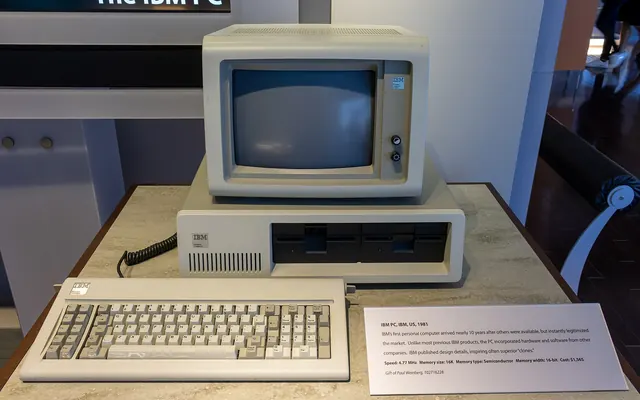 $50,000Read nextHow Microsoft Bought DOS for $75,000In 1980 IBM needed an operating system for its first PC. Microsoft didn't have one, so it bought one from a small Seattle company for a total of $75,000. In fiscal 2026 Microsoft had revenue of $331.8 billion.Microsoft · 5 min read
Questions readers ask
- Who was the third founder of Apple?
- Ronald Wayne, a 41-year-old engineer who had worked with Steve Jobs at Atari. On April 1, 1976, he signed the Apple Computer partnership agreement with Jobs and Steve Wozniak, taking 10% so he could break ties between them. He wrote the agreement, drew Apple's first logo and wrote the Apple I manual.
- How much did Ronald Wayne sell his Apple shares for?
- $800 for his 10% of the partnership, under an amendment signed on April 12, 1976. After Apple became a corporation he accepted another $1,500 to give up any future claims, for a total of $2,300.
- Why did Ronald Wayne leave Apple?
- In a partnership, each partner is personally liable for the business's debts. Jobs had bought parts on credit to fill an order from the Byte Shop, a store with a reputation for paying slowly. Wayne had a house and savings to lose, and a failed slot machine business behind him.
- What is Ronald Wayne's net worth?
- There is no published figure. Interviews over the years, including with BBC News in 2016, describe a modest life in Pahrump, Nevada, living on Social Security and selling rare coins and stamps.
- Is Ronald Wayne still alive?
- Yes. In April 2026, at 91, he was interviewed by The Washington Times about the 50th anniversary of Apple's founding, and said again that he does not regret leaving.
- How much would Ronald Wayne's 10% of Apple be worth today?
- Estimates run to hundreds of billions of dollars, but they assume his 10% was never diluted. In practice it would have shrunk as Apple raised money and issued shares, so no simple figure is accurate.
Run the numbers yourself
- Investment CalculatorProject what a starting balance and monthly investing could grow to, before and after inflation.
- Stock Profit CalculatorWork out profit or loss on a trade after commissions, with return, annualized return and break-even price.
- Compound Interest CalculatorSee how a deposit grows with compounding, extra contributions and different compounding frequencies.
People and companies in this story
People
- Ronald Wayne
- Steve Jobs4 stories
- Steve Wozniak
- Paul Terrell
Companies
- Apple5 stories
- Atari
- Byte Shop
This story is on these lists
Share this story
Send the link to someone who would like this story, or keep it for later.
The timeline
Drawn to scale: the gaps are the years in between. Choose a year.
Sources & further reading 10
- The Original Apple Partnership Agreement, signed 1 April 1976 (lot 241)Sotheby's, 2011
- Apple founding documents sell for $1.6 millionAppleInsider, December 2011
- Sotheby's sells Apple founding contract for $1.6MComputerworld, December 2011
- Here's What Happened to Apple's Third Co-FounderTIME, April 2016
- Apple at 40: The forgotten founder who gave it all awayBBC News, April 2016
- The Sad Tale of a Forgotten Apple Co-FounderThe Motley Fool, April 2013
- Ronald Wayne: On Co-founding Apple and Working With Steve JobsNextShark, 2013
- Missing Link: The first Byte Shop opened 50 years agoheise online, 2025
- Apple's third founder sold 10% stake for $800 in 1976, has no regretsThe Washington Times, April 2026
- Apple reports fourth quarter resultsApple Newsroom, October 2025
Spot an error? Send a correction. Corrections are dated and noted here.
Photographs are credited under each picture; licenses are listed on the image credits page.