Yahoo
Yahoo Could Have Bought Google for $1 Million
In 1998 Google's founders reportedly offered their search technology to Yahoo for $1 million. Yahoo declined. In 2017 Yahoo's core business sold for $4.48 billion. In 2025 Google's parent took in $402.8 billion.
- Asking price, 1998
- $1MAsking price, 1998. The price Larry Page and Sergey Brin reportedly asked when they offered their search technology to Yahoo in 1998.
- Alphabet revenue, 2025
- $402.8BAlphabet revenue, 2025. Alphabet's revenue for 2025, the first year it passed $400 billion.
In this story · 6 chapters
The short answer
In 1998 Larry Page and Sergey Brin reportedly offered their search technology to Yahoo for about $1 million, and Yahoo said no. Talks in 2002 failed over price. Yahoo later rejected Microsoft's $44.6 billion offer in 2008 and sold its core business to Verizon for $4.48 billion in 2017. Alphabet took in $402.8 billion in 2025.
In 1998 the internet had a front door, and it belonged to Yahoo. Two Stanford graduate students, Jerry Yang and David Filo, had started it in 1994 as a list of their favorite websites. Four years later it was a directory, a news site, an email service and a search page in one. For millions of people, going online meant going to Yahoo.
Back at Stanford, two more graduate students had built something better at one particular job. Larry Page and Sergey Brin ranked web pages by how many other pages linked to them, and how important those pages were in turn. The results were startlingly good. Page and Brin also wanted to finish their doctorates. So they did what students with a clever piece of software often do. They tried to sell it.
The first no
In 1998, according to many accounts, Page and Brin offered their technology to Yahoo for about $1 million. Yahoo said no.
From Yahoo’s side, the decision had a logic. Yahoo earned its money from advertising on its own pages. The longer people stayed, the more ads they saw. A search engine that worked too well would send them somewhere else, fast. Search was a useful feature, like the weather. It was not the business.
Yahoo was not alone. In early 1999 the founders tried Excite, then one of the biggest search sites. The investor Vinod Khosla, who backed Excite, said in 2010 that Excite’s chief executive, George Bell, rejected the $1 million price. Khosla talked Page and Brin down to $750,000. Bell said no again.
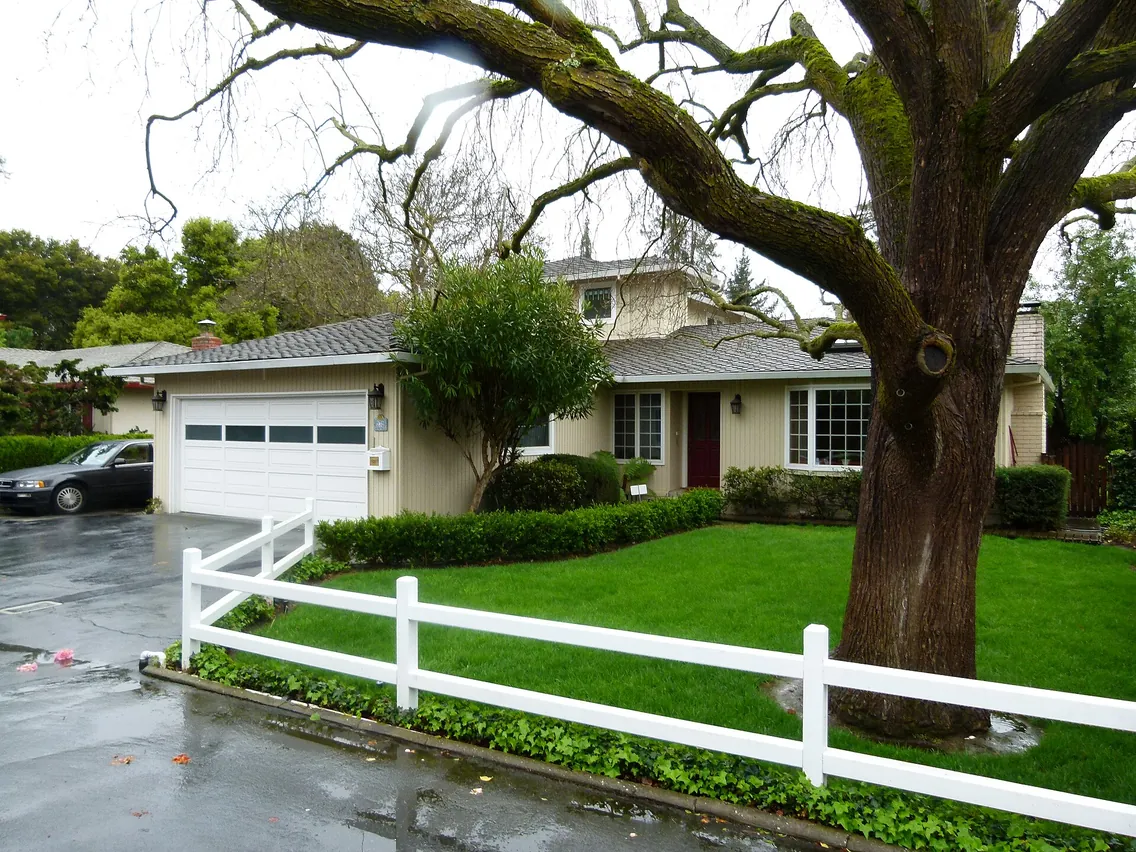
So the students kept their company and called it Google. They incorporated it in September 1998 and moved into a rented garage in Menlo Park, with a handful of employees and a check from one early backer. In June 1999 it raised $25 million from two of Silicon Valley’s best-known venture firms, Kleiner Perkins and Sequoia Capital, and the founders stopped trying to sell.
Paying the competitor
A year later Yahoo came back, this time as a customer. On June 26, 2000, the two companies announced that Google would become Yahoo’s default search provider, replacing Inktomi. Yahoo said it had chosen Google because of its focus on users. Google, which said its index now covered more than a billion web addresses, called the deal a major milestone.
On paper Yahoo kept the valuable part. Under the agreement, the pages of Google results seen on Yahoo became part of Yahoo’s own advertising inventory. Google was a supplier, paid to work in the background.
In practice, every search on the busiest site on the web was quietly teaching people what Google could do. Yahoo’s results carried a small credit to Google. Plenty of users noticed, and some started going to Google directly.
Two billion-dollar answers
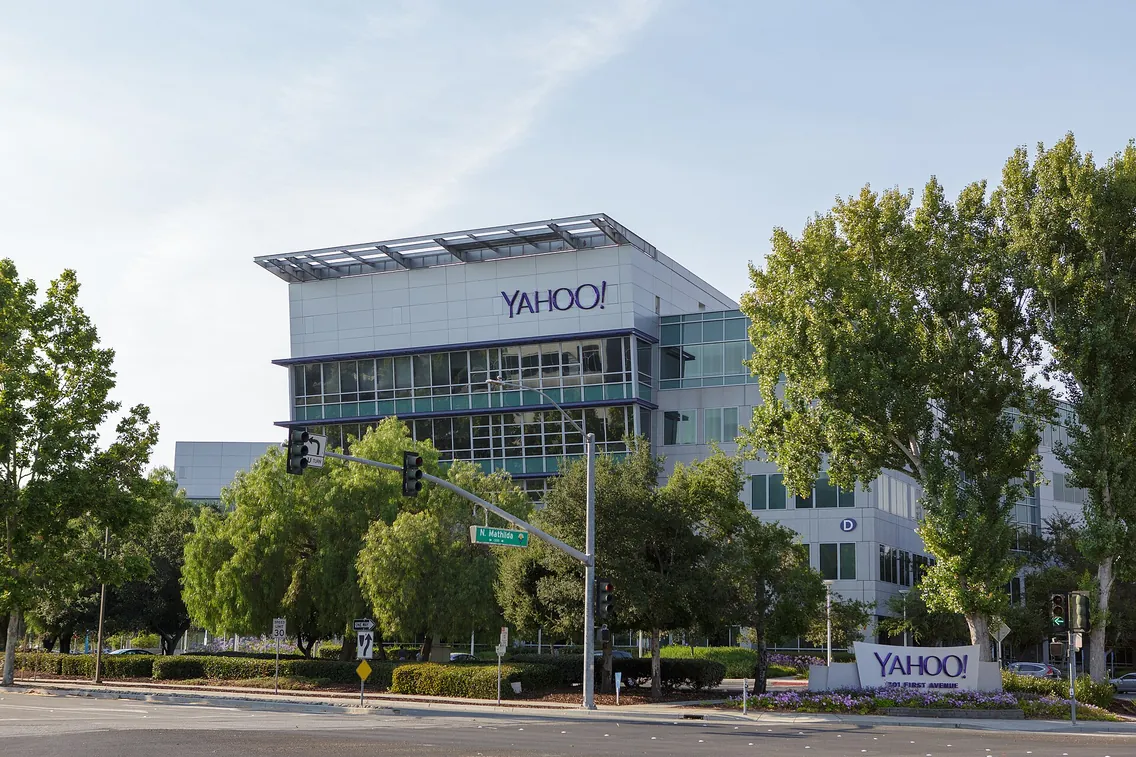
By 2002 Google had found what Yahoo had missed: a way to make search itself pay. Small text ads, matched to the words people typed, turned every query into a sale. Yahoo, now led by the former Hollywood executive Terry Semel, wanted to buy the company it had once turned down.
Accounts of the 2002 talks differ on the numbers. The most common version says Yahoo offered about $3 billion and Google wanted $5 billion; other accounts put the figures lower. They agree on the result. There was no deal.
Yahoo chose to build instead, by buying. In December 2002 it agreed to buy Inktomi, the search company Google had replaced, for about $235 million. Inktomi had been worth $25 billion at its peak in 2000, CBS News noted. In 2003 Yahoo bought Overture, the company that had pioneered paid search ads, for more than $1.6 billion, picking up the old search engines AltaVista and AllTheWeb along the way.
In February 2004 Yahoo switched off Google and launched its own search engine. It was a serious piece of work. It was also too late. Google had become the place people went to search, and in August 2004 it went public.
The offer Yahoo turned down
Yahoo’s next big chance came from Redmond. On February 1, 2008, Microsoft offered to buy Yahoo for $31 a share, half in cash and half in stock. The offer valued Yahoo at about $44.6 billion, a 62% premium over its closing price the day before. In his letter to Yahoo’s board, Microsoft’s chief executive, Steve Ballmer, said the online advertising market was increasingly dominated by one player. He did not need to name it.
Yahoo’s board, with co-founder Jerry Yang back as chief executive, rejected the offer, saying it undervalued the company. Talks dragged on through the spring. In May 2008 Microsoft withdrew.
The value never came back. Yahoo went through a series of chief executives, the last of them Marissa Mayer, an early Google employee. In July 2016 Verizon agreed to buy Yahoo’s core internet business for $4.83 billion. Then Yahoo disclosed two huge data breaches, and the price was cut by $350 million.
What was left
Verizon completed the purchase on June 13, 2017, for about $4.48 billion. That was roughly a tenth of what Microsoft had offered nine years earlier.
What remained of Yahoo was renamed Altaba. It was little more than a holding company for Yahoo’s most successful bet: stakes in the Chinese e-commerce group Alibaba and in Yahoo Japan. The company that had owned the internet’s front door ended its public life as an investment fund.
Google’s parent company, Alphabet, reported revenue of $402.8 billion for 2025. The $1 million that Yahoo would not pay in 1998 is about what Alphabet now takes in every 80 seconds.
What the record shows
- Don’t measure new technology by your old business. Yahoo judged search by what it did to page views, not by what it could become.
- Your supplier can become your rival. Powering Yahoo’s searches for nearly four years helped make Google a household name.
- Missed chances get more expensive. A $1 million decision in 1998 was a multibillion-dollar one by 2002.
- Waiting for a better price can backfire. Yahoo turned down $44.6 billion and sold for $4.48 billion.
Google kept buying what others passed over, including YouTube, for $1.65 billion. Blockbuster made Yahoo’s mistake with Netflix: read how it turned down a $50 million offer. And Microsoft, the company that tried to buy Yahoo, got its own start with a cheap purchase: an operating system it bought for $75,000.
 1975Read nextKodak Invented the Digital Camera, Then Went BankruptIn 1975 a Kodak engineer built the first digital camera and was told to keep quiet about it. Kodak made about $16 billion a year, mostly from film. In 2012 it filed for bankruptcy.Kodak · 5 min read
Questions readers ask
- Did Yahoo really have the chance to buy Google?
- Yes, according to many accounts. In 1998 Larry Page and Sergey Brin reportedly offered their search technology to Yahoo for $1 million, and Yahoo said no. The two companies discussed a deal again in 2002 but could not agree on a price.
- Did anyone else turn down Google?
- Yes. The investor Vinod Khosla said in 2010 that Excite's chief executive, George Bell, rejected Google at $1 million in early 1999, and again after Khosla talked the founders down to $750,000.
- How much did Yahoo offer for Google in 2002?
- Accounts differ. The most common version says Yahoo offered about $3 billion and Google wanted $5 billion; other accounts give lower numbers. All agree that no deal was made.
- Did Yahoo use Google for search?
- Yes. In June 2000 Yahoo made Google its default search provider. It switched to its own technology, built on the companies it had bought, in February 2004.
- What happened to Yahoo?
- Yahoo rejected Microsoft's $44.6 billion offer in 2008. In June 2017 Verizon completed its purchase of Yahoo's core internet business for $4.48 billion.
Run the numbers yourself
- Business Valuation CalculatorEstimate what a business could be worth with earnings multiples, a revenue multiple and a DCF.
- Compound Interest CalculatorSee how a deposit grows with compounding, extra contributions and different compounding frequencies.
- Budget CalculatorPlan a monthly budget, see what is left over and compare it with the 50/30/20 rule.
People and companies in this story
People
- Larry Page
- Sergey Brin
- Jerry Yang
- David Filo
- Terry Semel
- Vinod Khosla
- George Bell
- Steve Ballmer
Companies
- Yahoo3 stories
- Google5 stories
- Alphabet2 stories
- Excite
- Inktomi
- Overture
- Microsoft5 stories
- Verizon
This story is on these lists
Share this story
Send the link to someone who would like this story, or keep it for later.
The timeline
Drawn to scale: the gaps are the years in between. Choose a year.
Sources & further reading 8
- Google: Yahoo!'s default search engine providerBetaNews, June 2000
- When Google wanted to sell to Excite for under $1 million, and they passedTechCrunch, September 2010
- Online search engine shake-up? (Yahoo to buy Inktomi for $235 million)CBS News, December 2002
- Yahoo! dumps GoogleMIT Technology Review, February 2004
- Microsoft proposes acquisition of Yahoo! for $31 per shareMicrosoft, February 2008
- What went wrong with Yahoo!?TechSpot
- Yahoo completes sale of business to VerizonMediaPost, June 2017
- Alphabet annual revenue surpasses $400 billion for the first timeTheWrap, February 2026
Spot an error? Send a correction. Corrections are dated and noted here.
Photographs are credited under each picture; licenses are listed on the image credits page.