Monopoly
Monopoly's Real Inventor Was Paid $500
A Washington stenographer patented a board game in 1904 to show how landlords get rich from rent. About 30 years later a Pennsylvania man sold a version of it as his own and became a millionaire. She got $500.
- Inventor's payment
- $500Inventor's payment. What Parker Brothers paid Lizzie Magie in 1935 for her Landlord's Game patent, with no royalties.
- Sold by 1974
- 80M setsSold by 1974. Monopoly sets Parker Brothers had sold by 1974.
In this story · 4 chapters
The short answer
Monopoly grew out of The Landlord's Game, patented in 1904 by Lizzie Magie, a follower of the economist Henry George, to show how rent enriches property owners. Versions spread hand to hand. Charles Darrow sold one to Parker Brothers in 1935 and kept royalties. Parker Brothers bought Magie's patent for $500.
Elizabeth Magie, known as Lizzie, was born in Illinois in 1866 and worked in Washington as a stenographer and typist. She wrote, acted and campaigned. She was also a follower of Henry George, a 19th-century economist who argued that land values should be taxed because landowners grow rich from rents while tenants stay poor.
She wanted to make that argument through play. In 1903 she applied for a patent on a board game, and in January 1904 she received it. She called it The Landlord’s Game. Players bought property and collected rent, and the game was meant to show how rents enrich property owners and impoverish tenants.
Two sets of rules
Magie’s game had two sets of rules. Under one, the object was to spread wealth around. Under the other, it was to build a monopoly. What Magie meant as a warning, The Public Domain Review notes, later became Monopoly’s only objective.
A New York company began publishing the game in 1906. Magie patented a revised version in 1924. Meanwhile, people were making their own boards at home, changing the street names and the rules. A version using Atlantic City street names spread among friends, and the game was also played in Quaker circles.
1935: Darrow’s deal
Charles Darrow, a Pennsylvanian, learned the Atlantic City version from friends. He began producing it as Monopoly. The rules matched what his friends played, down to a misspelling of Marven Gardens as “Marvin Gardens,” The Public Domain Review notes.
Parker Brothers turned Darrow’s game down in October 1934. After it sold well over Christmas, the company changed its mind and bought it on March 18, 1935. Darrow kept a royalty agreement. Monopoly became a huge seller, and he became a millionaire.
Parker Brothers then needed to deal with the woman who held a patent on the game’s ancestor. Later in 1935 the company offered Magie a flat $500 for The Landlord’s Game and two other games she had invented. She received no royalties. The aim, The Baltimore Sun reported in 2019, was for the company to own the full legal rights to Monopoly and any spinoffs.
Magie was not happy for long. In 1936 interviews she complained that the millions of people playing Monopoly were not learning about Henry George’s ideas, the point of her game. She died in 1948.
The lawsuit that found her
For decades Parker Brothers credited Darrow as the inventor. Magie’s role came back to light through a fight over another game. In 1974 Parker Brothers and its then owner, General Mills, moved against Ralph Anspach, an economics professor who had made a game called Anti-Monopoly. His research for the case turned up Magie’s patents. The courts ruled in his favor, and in 1983 the Supreme Court declined to hear the case.
By 1974 Parker Brothers had sold 80 million Monopoly sets. Hasbro has owned the brand since 1991.
What the record shows
- The deal mattered more than the idea. Magie sold her patent outright for $500; Darrow kept royalties.
- The seller got the credit. For decades the company’s story named Darrow as the inventor.
- Buyers protect what they buy. Parker Brothers bought Magie’s patent to secure a game it already owned.
- The game reversed its own message. A warning about monopoly became a game about winning one.
Other inventors in this archive also earned far less than their ideas. Ronald Wayne sold his 10% of Apple for $800, and Laszlo Hanyecz paid 10,000 bitcoin for two pizzas.
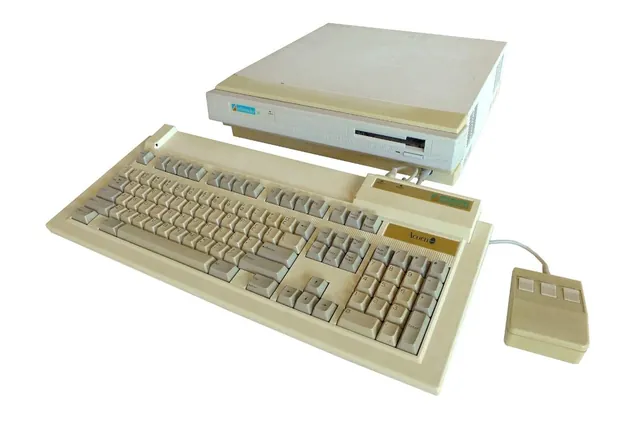 350B+Read nextHow Acorn and Apple Created Arm in a Turkey BarnArm built a chip empire without making chips. It started in 1990 with twelve engineers from a struggling computer maker and a converted barn near Cambridge. Its designs are now inside most of the world's phones.Arm · 6 min read
Questions readers ask
- Who really invented Monopoly?
- Monopoly descends from The Landlord's Game, patented by Lizzie Magie in 1904. The game was changed by players over the following decades, and Charles Darrow sold one version to Parker Brothers in 1935 as Monopoly.
- How much was Lizzie Magie paid?
- $500, with no royalties. In 1935 Parker Brothers offered her a flat $500 for The Landlord's Game and two other games she had invented, and it took over her patent.
- Did Charles Darrow get rich from Monopoly?
- Yes. He kept a royalty agreement with Parker Brothers and became a millionaire, while Magie's income from her invention was reported to be $500.
- What was The Landlord's Game for?
- Teaching. Magie followed the economist Henry George, who argued for a tax on land values. The game was meant to show how rents enrich property owners and impoverish tenants.
- How was Magie's role rediscovered?
- Through a lawsuit. In the 1970s Parker Brothers fought economist Ralph Anspach over his Anti-Monopoly game, and his research turned up Magie's patents. The courts ruled in his favor, and the Supreme Court declined to hear the case in 1983.
Run the numbers yourself
- Compound Interest CalculatorSee how a deposit grows with compounding, extra contributions and different compounding frequencies.
- Budget CalculatorPlan a monthly budget, see what is left over and compare it with the 50/30/20 rule.
- Emergency Fund CalculatorSize an emergency fund from essential expenses and see how long it will take to build it.
People and companies in this story
People
- Lizzie Magie
- Charles Darrow
- Ralph Anspach
- Henry George
Companies
- Parker Brothers
- Hasbro2 stories
This story is on these lists
Share this story
Send the link to someone who would like this story, or keep it for later.
The timeline
Drawn to scale: the gaps are the years in between. Choose a year.
Sources & further reading 8
- The Landlord's GameWikipedia
- History of the board game MonopolyWikipedia
- The Landlord's Game: Lizzie Magie and Monopoly's Anti-Capitalist Origins (1903)The Public Domain Review
- Review of The Monopolists by Mary PilonThe New Republic, 2015
- The Twisted History of Your Favorite Board Game (interview with Mary Pilon)Longreads, March 2015
- Do not pass go: the tangled roots of MonopolyNew Statesman, June 2015
- 'Ms. Monopoly' puts feminism on boardThe Baltimore Sun, September 2019
- Lizzie MagieWikipedia
Spot an error? Send a correction. Corrections are dated and noted here.