Trader Joe's
Trader Joe's Began With a Store That Lost to 7-Eleven
Joe Coulombe was running a small chain of Los Angeles convenience stores in the 1960s when he realized 7-Eleven was going to crush him. His answer was a shop for people with degrees and not much money.
- Stores at start
- 6 storesStores at start. The number of Pronto Markets running when Rexall told Coulombe to liquidate them. He bought them instead.
- Stores today
- 661 storesStores today. Trader Joe's locations across 43 states and Washington, D.C., as of August 2026.
In this story · 5 chapters
The short answer
Trader Joe's is owned by the family of Theo Albrecht, a co-founder of Aldi, who bought it in 1979. It belongs to the Aldi Nord side of the business and is run separately from the Aldi stores in the United States, which belong to Aldi Süd. Joe Coulombe opened the first Trader Joe's in Pasadena in 1967.
Some time in the mid-1960s, Joe Coulombe looked at his business and saw that it was going to lose. He owned a small chain of convenience stores around Los Angeles called Pronto Markets. They sold everyday basics to people in a hurry. They were also, he realized, a smaller and weaker copy of 7-Eleven, the chain he later called the “800-pound gorilla” of convenience stores. 7-Eleven and other convenience chains were far better financed, and they would win any fight on their own terms.
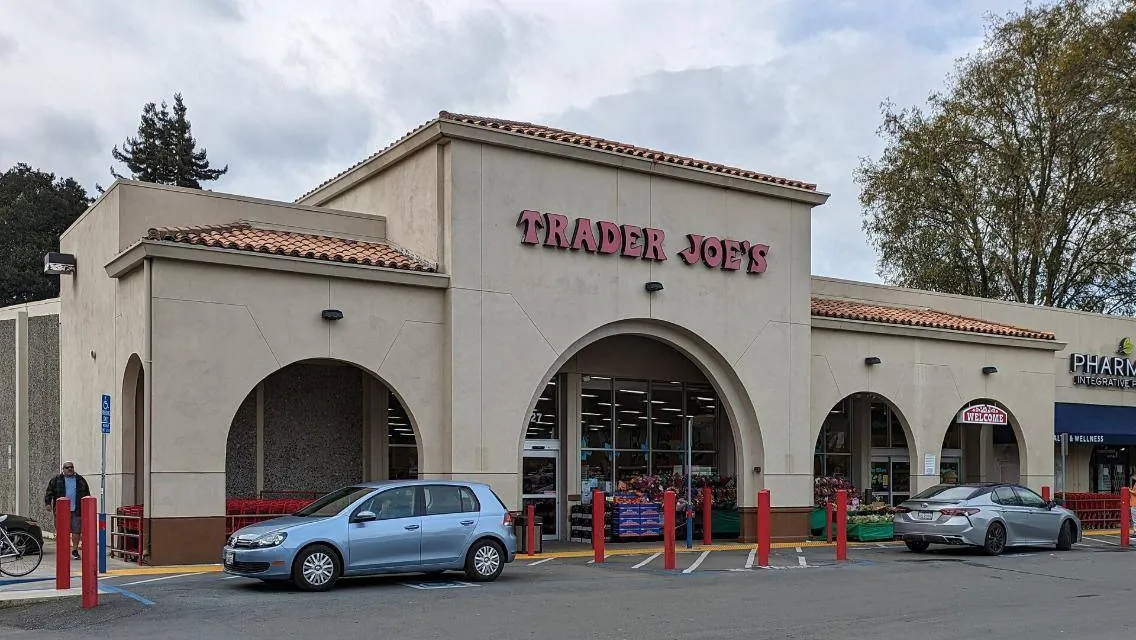
So Coulombe stopped fighting on those terms. In 1967 he opened a different kind of shop in Pasadena, built around wine and affordable gourmet food, with a nautical theme and staff who would come to wear Hawaiian shirts. He called it Trader Joe’s. Today there are 661 of them.
The way he got there is one of the clearest examples in American retail of a founder choosing a customer before choosing a product.
A drugstore’s side project
Coulombe was born in San Diego, served in the Air Force and earned an economics degree and an MBA at Stanford. In 1958 the drugstore chain Rexall hired him to test a new idea. Through its Owl Drug unit, Rexall wanted to try convenience stores. The pilot was called Pronto Markets.
It was a busy year for Rexall. The same year, its chief, Justin Dart, bought a plastics company from a reclusive inventor named Earl Tupper for $16 million. That deal, which ended with Tupperware’s star saleswoman Brownie Wise fired and written out of the company’s history, shows a drug company in the late 1950s trying to grow by buying into new kinds of selling.
Pronto didn’t fit Rexall for long. After Coulombe had six stores running, the company changed direction and told him to liquidate them. According to The New York Times obituary, he borrowed money and bought them himself instead, and left Rexall. He was now an owner, with a format that worked well enough until a much larger competitor arrived.
Two trends and a tiki bar
Coulombe’s memoir, Becoming Trader Joe, published after his death, describes the moment he realized Pronto was doomed. The rescue came from reading the numbers.
He noticed two things. More Americans than ever were going to college, many of them on the G.I. Bill. And international travel was about to get much cheaper: the new jumbo jets due around 1970 would carry ordinary people to Europe and beyond, where they would taste wine, cheese and food they couldn’t find at home. Put together, those trends described a new kind of shopper: educated, curious, well traveled and not especially well paid.
He said it most plainly in later interviews. “Trader Joe’s is for overeducated and underpaid people,” he told one interviewer, “for all the classical musicians, museum curators, journalists.” He added, with some satisfaction, that this was why the company had always had good press. Pasadena was the right place for the first store because, as he put it, it was “the epitome of a well-educated town.”
Trader Joe’s is for overeducated and underpaid people, for all the classical musicians, museum curators, journalists.
Joe Coulombe
The theme came from a different direction. Coulombe had been on vacation in the Caribbean, and the tiki craze was still running in the US. The name was a play on Trader Vic’s, the famous and expensive tiki restaurant in Beverly Hills. Trader Joe’s would offer some of the same exotic feel without the bill. The shop’s crew became “traders on the high seas,” and the Hawaiian shirts stayed.
A store with fewer things
The first Trader Joe’s leaned heavily on wine, an area where a knowledgeable shopkeeper could make a real difference. Coulombe tasted constantly. “I must sample about 4,000 wines a year,” he told The New York Times in 1987. “Of course, we don’t buy them all.”
Over time the formula narrowed. In 1972 the company introduced its first own-label product, Trader Joe’s Granola, and private label became the backbone of the business. Coulombe later cut many household items that didn’t suit his customers, concentrating on food and drink. When California changed its pricing rules for milk and alcohol in the 1970s, he adjusted again.
The result was a small store with a short list. Trader Joe’s today carries about 4,000 items, compared with roughly 50,000 in a typical American supermarket, and about 80% of them carry its own brand names. That restraint is the core of the economics. With fewer products, each one sells in large volume, which gives Trader Joe’s strong bargaining power with suppliers. Suppliers are required not to publicize the arrangement, so shoppers rarely know who made what.
The density of sales shows how well it works. BusinessWeek reported in 2008 that Trader Joe’s sold more per square foot than any other American grocer, and Fortune estimated the figure at about $1,750 a square foot in 2010, more than double Whole Foods.
Who owns Trader Joe’s: the sale to Aldi
By the late 1970s Trader Joe’s had attracted a very particular admirer. Theo Albrecht, who with his brother Karl had built the German discount chain Aldi, made an offer. Coulombe decided, according to his memoir, that his family’s interests were best served by accepting. The sale closed in 1979.
Albrecht left the business largely alone. Coulombe remained chief executive until he retired in the late 1980s, when the chain still had only a couple of dozen stores, almost all in Southern California. Accounts differ on the exact count. His successor, John Shields, and later Dan Bane, expanded it across the country. Today the company is owned by Theo Albrecht’s heirs through the Aldi Nord side of the family. The Aldi stores in the United States belong to the other branch, Aldi Süd, so America’s two Aldi-linked grocers are, in effect, cousins rather than siblings.
The format has hardly changed. Trader Joe’s still sells mostly its own label from a deliberately short list. Its staff are still called crew and still wear Hawaiian shirts. Its biggest single product legend, Charles Shaw wine, sold as “Two Buck Chuck” for $1.99 in California, has sold more than a billion bottles, according to The New York Times.
What the losing chain teaches
Coulombe’s story is useful because it starts from defeat. He did not have a brilliant idea in a garage. He had a business that was about to be squeezed out by a stronger rival, and he faced it honestly.
His response was to move to ground the rival couldn’t occupy. 7-Eleven sold convenience to everyone. Trader Joe’s sold discovery to a particular slice of people, identified from public data on education and travel, at prices they could afford. Then he narrowed the shelves so each product mattered more, and made the company’s own label the thing customers came back for.
There is a Rexall footnote here, too. The drug company that started Pronto Markets in 1958, and later wanted them closed, ended up owning Tupperware for decades. Coulombe, the employee it let go, ended up building one of the most admired retailers in America. Large companies are not always the best judges of which of their small experiments will last. Huy Fong Foods, the sriracha maker that never advertised, is another reminder that a product with a clear identity can find its own customers.
Joe Coulombe died in Pasadena on February 28, 2020, at 89. The first Trader Joe’s, in Pasadena, is still open.
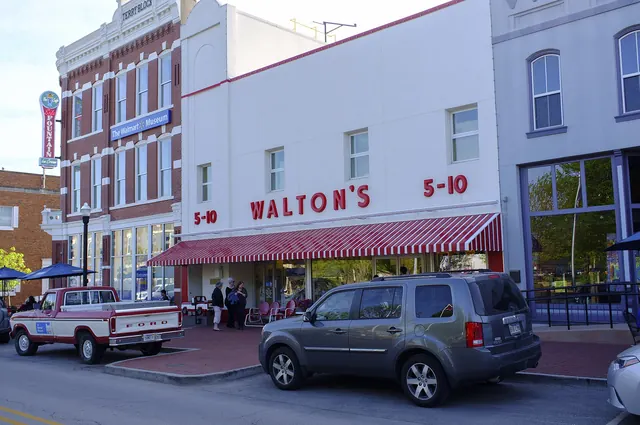 $25,000Read nextSam Walton Lost His First Store. Then He Built Walmart.In 1945 Sam Walton borrowed $20,000 from his father-in-law to buy a variety store in a small Arkansas town. He made it a success, then lost it because of a missing clause in the lease. In fiscal 2026 Walmart had revenue of $713 billion.Walmart · 4 min read
Questions readers ask
- Who founded Trader Joe's?
- Joe Coulombe, a Stanford MBA, opened the first Trader Joe's in Pasadena, California, in 1967. He had previously run a chain of convenience stores called Pronto Markets, which began as a Rexall venture in 1958.
- Who owns Trader Joe's? Is it Aldi?
- Trader Joe's was bought in 1979 by Theo Albrecht, co-founder of Aldi, and is now owned by his family through the Aldi Nord side of the business. It is run separately from the Aldi stores in the United States, which belong to the Aldi Süd group.
- Why is it called Trader Joe's?
- The name combines Coulombe's first name with a South Seas trading theme. It was a nod to Trader Vic's, a famous and pricier tiki restaurant of the era.
- Who was Trader Joe's designed for?
- Coulombe said the store was for 'overeducated and underpaid people,' naming classical musicians, museum curators and journalists as examples.
- How many Trader Joe's stores are there?
- There were 661 Trader Joe's stores across 43 states and Washington, D.C., as of August 2026.
Run the numbers yourself
- Profit Margin CalculatorTurn cost and price into profit, margin and markup, or find the price that hits a target margin.
- Discount CalculatorWork out a sale price, the money saved and stacked discounts, with sales tax added if you want.
- Business Valuation CalculatorEstimate what a business could be worth with earnings multiples, a revenue multiple and a DCF.
People and companies in this story
People
- Joe Coulombe
- Theo Albrecht
- Justin Dart2 stories
- John Shields
- Dan Bane
Companies
- Trader Joe's
- Pronto Markets
- Rexall2 stories
- Aldi Nord
- 7-Eleven
This story is on these lists
Share this story
Send the link to someone who would like this story, or keep it for later.
The timeline
Drawn to scale: the gaps are the years in between. Choose a year.
Sources & further reading 7
- Joe Coulombe, founder and namesake of Trader Joe's, dies at 89NPR via WGBH, February 2020
- Joe Coulombe: leveraging emerging consumer trendsSupermarket News, December 2010
- Remembering Trader Joe's founder Joe CoulombeSupermarket News, March 2020
- Joe Coulombe, founder of Trader Joe's marketsThe Boston Globe (New York Times obituary), February 2020
- Trader Joe's founder offered shoppers novel goods, cool vibeStanford Magazine
- Becoming Trader Joe: How I Did Business My Way and Still Beat the Big GuysJoe Coulombe with Patty Civalleri, HarperCollins Leadership, 2021
- Trader Joe'sWikipedia
Spot an error? Send a correction. Corrections are dated and noted here.
Photographs are credited under each picture; licenses are listed on the image credits page.