Tupperware
Brownie Wise: The Woman Tupperware Tried to Erase
Brownie Wise invented the Tupperware party, built a sales force of thousands and became the first woman on the cover of BusinessWeek. When the founder fired her, she found she owned no shares, not even the house she lived in.
- Her settlement
- $30,000Her settlement. What Wise settled for after suing Tupperware for $1.6 million in 1958, about a year's salary.
- Company sold for
- $16MCompany sold for. What Rexall paid Earl Tupper for the company the same year.
In this story · 7 chapters
The short answer
Brownie Wise invented the Tupperware party and, as vice president of Tupperware Home Parties from 1951, built a sales force of thousands. In January 1958 the founder, Earl Tupper, fired her. She owned no shares and settled for $30,000. Later that year he sold the company to Rexall for $16 million.
At a Tupperware party in the 1950s, the demonstration usually ended with a stunt. The host would fill a bowl with water, press down the lid until it let out a little sigh of air, and then turn it upside down, toss it or drop it on the floor. Nothing spilled.
The person who made that stunt famous, and built the system around it, was Brownie Wise. For most of the 1950s she ran Tupperware’s sales operation from Florida, turned a plastic bowl that wasn’t selling into a household name and became the first woman to appear on the cover of BusinessWeek. Then, in January 1958, the company’s founder fired her. She found out she owned no shares in the business she had built. Even the house she lived in belonged to the company.
A bowl nobody understood
Earl Tupper was an inventor from New Hampshire who had gone bankrupt in the Depression and found work in the plastics factories of Leominster, Massachusetts. After the war he developed a lightweight polyethylene container with an airtight lid, modeled on the inverted rim of a paint can. Magazines admired the design. Shoppers didn’t buy it.
The problem was the lid. To seal a Tupperware bowl properly, you had to press the center to push out the air, the “burp.” Sitting on a department store shelf, the product couldn’t show anyone how to do that. Most people didn’t see what the fuss was about.
The secretary from Detroit
Brownie Mae Humphrey was born in rural Georgia in 1913. Her parents divorced when she was small, and her mother, a union organizer for hat makers, was often away; Brownie was largely raised by an aunt. According to PBS’s American Experience, she left school after eighth grade and wanted to be a writer and illustrator.
In 1936 she won a contest to paint a mural at the Texas Centennial in Dallas, where she met Robert Wise, who ran the Ford Motor Company’s exhibit. They married that December and moved to Detroit. Under the pen name “Hibiscus” she wrote for a Detroit News column, describing a happy home that, PBS notes, was largely wishful thinking. Her husband drank and was violent. They divorced in 1942, and she supported herself and her son as a secretary at Bendix Aviation.
On the side she sold Stanley Home Products at parties held in other women’s homes. She was very good at it and quickly became one of the company’s top sellers. In the late 1940s she and other Stanley dealers came across Tupperware and saw the obvious solution to its problem. The burp needed a demonstration. A party was a demonstration.
Patio parties
In 1949 Wise and her team in Detroit sold more than $150,000 worth of Tupperware, more than any department store, and she was offered the distribution rights for Florida. In 1950 she moved there with her son and mother and started her own business, Patio Parties. She recruited women to host gatherings and sell to their friends.
Tupper noticed. In 1951 he invited her to Massachusetts and, after the meeting, made her vice president and general manager of a new company, Tupperware Home Parties. On her advice he took the product out of stores completely. From then on, the only way to buy Tupperware was at a party. Late in 1951 Tupper bought a thousand acres of pasture and swamp near Kissimmee, Florida, and the two of them broke ground on a headquarters.
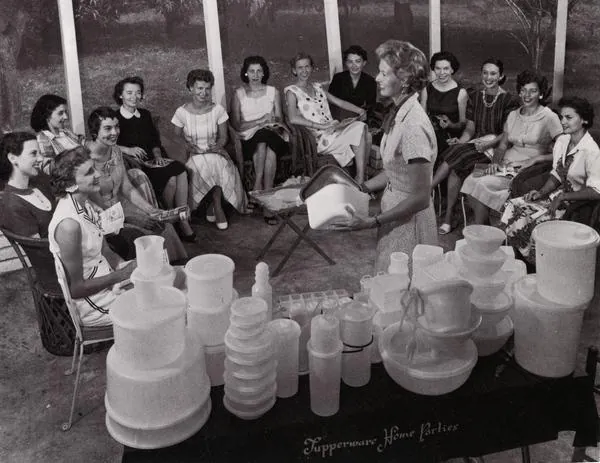
The division of labor suited both. Tupper stayed in New England designing products and running the factory with a perfectionist’s eye. Wise ran sales. The number of dealers grew from about 200 in 1951 to around 20,000 within three years, according to Bob Kealing, who has written two books about her.
The Jubilee
Wise understood something about her sales force that the business world of the 1950s mostly ignored. Many of her dealers were housewives with no other chance to earn money or be recognized for good work. She gave them both.
Her best-known invention was the Jubilee, a four-day annual gathering at the Florida headquarters that mixed training with entertainment, costume nights and prizes. Dealers competed for prizes ranging from electric irons to a trip to Europe with Wise herself. PBS describes her as a good, if sentimental, writer and an excellent speaker. The press loved her. When Tupper met a high-end Manhattan public relations firm, PBS reports, they told him the most marketable thing about his company was its charismatic female executive.
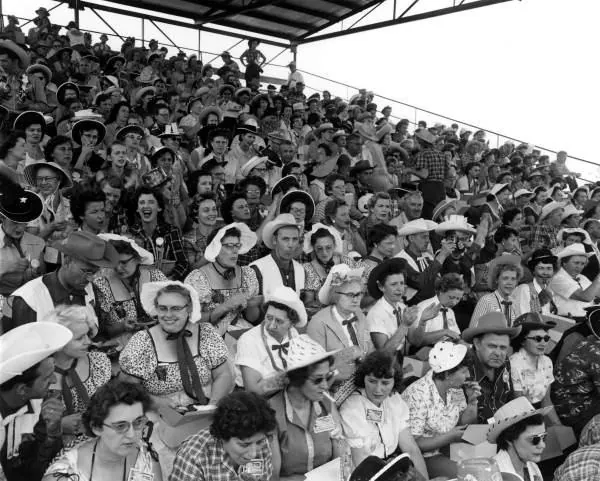
In 1954 BusinessWeek put her on its cover. In 1957 she published an autobiography, Best Wishes, Brownie Wise.
Fired with nothing
The attention did not sit well with Tupper. He avoided publicity and, according to most accounts, resented seeing Wise credited with Tupperware’s success. He also objected to her management style and the cost of her incentives. By 1957 he was getting lucrative offers to buy the company, and their working relationship had turned cold.
In January 1958 he fired her. He gave no public reason. Wise discovered how little protected her. She had no employment contract and no stock. Even her house was company property. She sued for $1.6 million and settled for $30,000, about a year’s salary.
According to Kealing’s account, Tupper then removed mentions of Wise from the company’s materials, and copies of her autobiography were buried in a pit on the headquarters grounds. Later in 1958 he sold Tupperware Home Parties to Justin Dart of the Rexall Drug Company for $16 million. He divorced his wife, bought an island in Central America and eventually moved to Costa Rica, giving up his American citizenship to avoid taxes. He died in 1983.
The same Rexall, that same year, was launching a small chain of convenience stores in Los Angeles called Pronto Markets. Its young manager, Joe Coulombe, would later buy them and turn them into Trader Joe’s.
After the parties
Justin Dart at first wanted to cut the expensive Jubilee, but he let the sales team carry on in its own way, and Wise’s formula survived almost intact. Tupperware spread to Britain in 1960, then across the world, and for two decades it was one of Rexall’s most profitable holdings. Its dealers still held Jubilees and still competed for prizes, even if most of them had never heard of the woman who started the tradition.
Wise never repeated her success. She started home-party cosmetics businesses that failed, consulted for direct sales firms, dabbled in Florida real estate and worked in ceramics. Her model was copied by companies such as Mary Kay. She died in Kissimmee in 1992. In 2016, as interest in her story revived, Tupperware gave $200,000 to create Brownie Wise Park in Osceola County, Florida.
The company itself reached the end of its run as an independent business in 2024. On September 17 that year Tupperware Brands filed for Chapter 11 bankruptcy, reporting more than $1.2 billion in debts. Its filing noted that customers were moving away from direct sales, which still made up most of its revenue, and toward glass containers. In October a judge approved the sale of the brand and core operations to a group of lenders for $23.5 million in cash and more than $63 million in debt relief.
The rule she broke
Wise’s story is often told as a tale about a jealous founder. That’s true as far as it goes. The more useful reading is about what she held when it ended, which was nothing.
She ran the most important part of the business: the part that brought in the money. She was its public face and its best recruiter. But her position rested entirely on one man’s goodwill. She had a title and a salary. She had no shares, no contract and no claim on the value she created. When the company was sold for $16 million, the person most responsible for its growth had already left with a year’s pay.
Every founder and early employee faces some version of her situation. A salary pays for work done. Ownership pays for what the work builds. Wise had the first and not the second, and no amount of talent or fame made up for it. The same theme appears in the story of Bette Nesmith Graham, who invented Liquid Paper and nearly lost her royalties when she lost control of the company. Graham fought her way back. Wise never got the chance.
 3B cansRead nextPlay-Doh Started as a Wallpaper CleanerFor twenty years a Cincinnati soap company lived on a putty that wiped coal soot off wallpaper. Then the soot went away, the company nearly went with it, and a nursery school teacher saw what the putty was really for.Play-Doh · 4 min read
Questions readers ask
- Who was Brownie Wise?
- Brownie Wise, who lived from 1913 to 1992, was the saleswoman who created the Tupperware party system. She was vice president of Tupperware Home Parties from 1951 until Earl Tupper fired her in 1958.
- Did Brownie Wise invent the Tupperware party?
- She didn't invent home-party selling, which she had learned at Stanley Home Products, but she turned it into Tupperware's entire sales system. On her suggestion, Tupperware was taken out of shops and sold only at home parties.
- Why was Brownie Wise fired?
- Earl Tupper never gave a public reason. Accounts point to his resentment of the press attention she received, her management style and the cost of her lavish sales incentives.
- How much did Brownie Wise get when she left Tupperware?
- She owned no stock. She sued for $1.6 million and settled for $30,000, roughly one year's salary.
- Is Tupperware still in business?
- Tupperware Brands filed for Chapter 11 bankruptcy in September 2024. A court approved the sale of the brand and core operations to its lenders that October, and the business continued under new ownership.
Run the numbers yourself
- Commission CalculatorWork out commission on sales with a flat rate, tiers or base pay plus commission.
- Profit Margin CalculatorTurn cost and price into profit, margin and markup, or find the price that hits a target margin.
- Business Valuation CalculatorEstimate what a business could be worth with earnings multiples, a revenue multiple and a DCF.
People and companies in this story
People
- Brownie Wise
- Earl Tupper
- Justin Dart2 stories
Companies
- Tupperware
- Rexall2 stories
- Stanley Home Products
This story is on these lists
Share this story
Send the link to someone who would like this story, or keep it for later.
The timeline
Drawn to scale: the gaps are the years in between. Choose a year.
Sources & further reading 7
- Tupperware!: Brownie Wise biographyPBS American Experience
- Tupperware!: Tupperware Home PartiesPBS American Experience
- Tupperware!: Earl Silas TupperPBS American Experience
- Tupperware Unsealed: Brownie Wise, Earl Tupper, and the Home Party Pioneers (review)Foreword Reviews, on Bob Kealing's book
- Tupperware gets court approval for lender saleReuters, October 2024
- Court approves Tupperware's sale to lendersAssociated Press, October 2024
- Brownie WiseWikipedia
Spot an error? Send a correction. Corrections are dated and noted here.
Photographs are credited under each picture; licenses are listed on the image credits page.