Liquid Paper
Liquid Paper: From a Kitchen Bottle to a $47.5 Million Sale
Bette Nesmith Graham was a single mother typing letters at a Dallas bank when she started hiding her typos with white paint. In 1979 Gillette paid $47.5 million for the company built on that bottle.
- Monthly salary
- $300Monthly salary. Her monthly pay as a bank secretary in Dallas in the mid-1950s.
- Sold for
- $47.5MSold for. What Gillette paid for the Liquid Paper company in 1979, plus royalties.
In this story · 7 chapters
The short answer
Bette Nesmith Graham, a single mother working as a secretary at a Dallas bank, invented Liquid Paper after she began hiding her typing mistakes with white paint. She mixed it in her kitchen blender and built a company around it. In 1979 Gillette bought that company for $47.5 million, plus a royalty on every bottle.
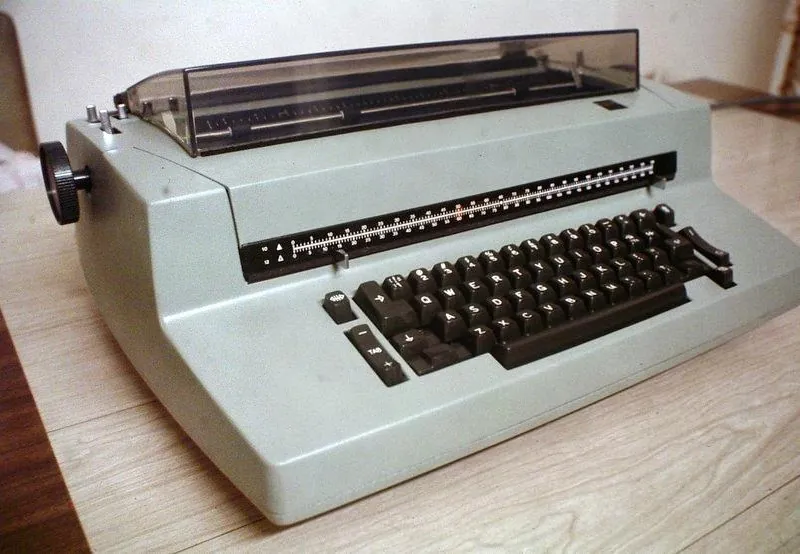
Electric typewriters were supposed to make secretaries faster. In the Dallas offices of Texas Bank and Trust they mostly made them nervous. Erasing a mistake on the new machines left a smudge that no executive wanted to sign. Bette Nesmith, a divorced single mother typing letters for the bank’s chairman, made her share of mistakes, and she had a better idea than the eraser.
She had trained, informally, as an artist. Painters don’t erase. They paint over. So she poured some white tempera paint into a small bottle and took it to work with a brush. When she hit the wrong key, she dabbed the letter out, waited for it to dry and typed the right one on top.
The secretaries around her noticed. Within a couple of years she was making bottles for half the office. That bottle became Liquid Paper, and in 1979 the Gillette Corporation bought the company built around it for $47.5 million.
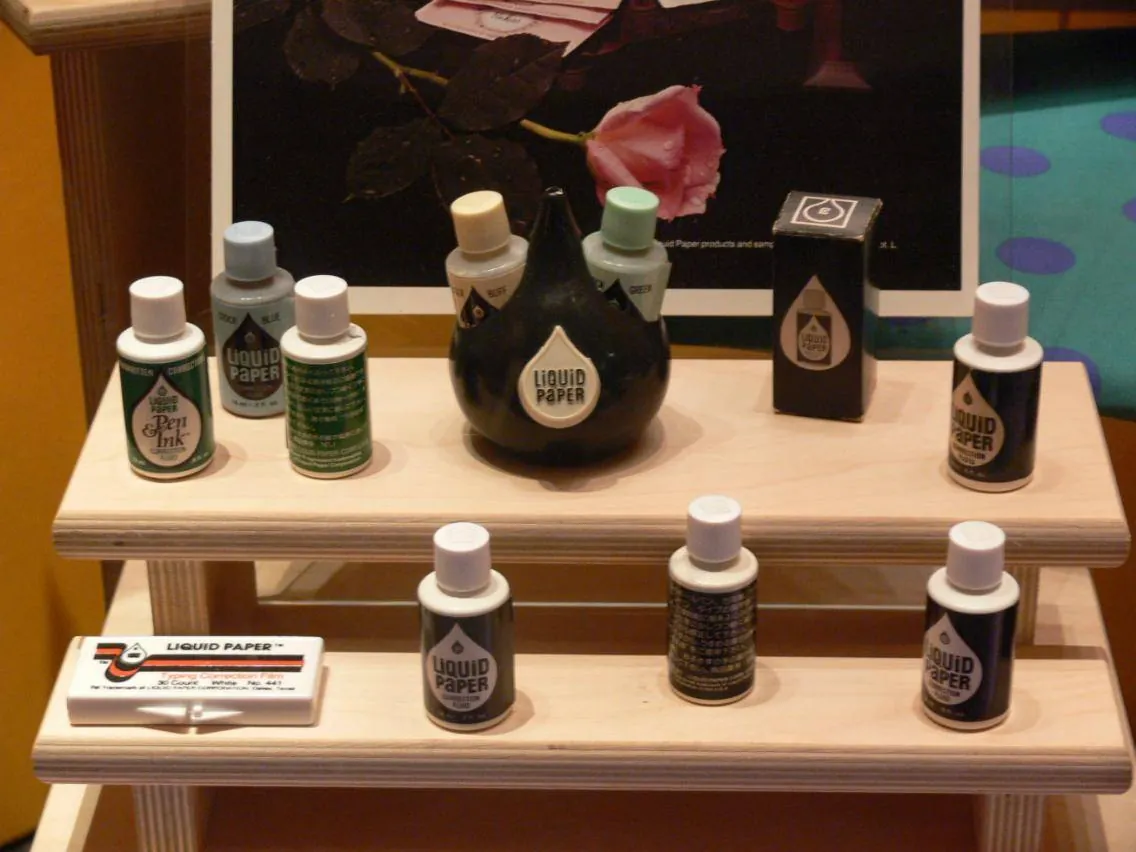
A sign painter, a blender and a bank job
The origin story usually told involves a sign painter. One Christmas season she watched a painter working on the windows of the bank across the street, and when he slipped, he simply painted over the error. Mental Floss, in its retrospective obituary, places the moment in December 1951. The Texas State Historical Association’s Handbook of Texas, the most careful account of her life, says she began using tempera on her typing in 1954. Both agree on what came next.
She was earning around $300 a month and raising her son Michael alone. Money was tight, which helps explain why the product stayed a side project for so long. She mixed the paint in her kitchen blender and filled small bottles in the garage at night. By 1956 she was supplying other secretaries with what she called “Mistake Out.”
It needed very little money. It did need a lot of evenings. Michael and his friends filled bottles. A local chemistry teacher helped her improve the formula so it dried faster and didn’t flake. An office-supply dealer gave advice on selling it. Someone from a paint company helped too. The Handbook of Texas credits all three by role; their names are mostly lost.
The big company that said no
In 1957 she tried the obvious shortcut. She offered the product to IBM, the company whose electric typewriters were creating the problem in the first place. IBM declined. It is easy to see why from their side: a bottle of paint mixed in a Dallas kitchen was a tiny accessory, and IBM sold machines.
The rejection mattered less than she might have feared. In 1958 an office trade magazine listed her product in a roundup of new items. That one short mention brought in roughly 500 orders from around the country. She renamed the product Liquid Paper, applied for a trademark, and started thinking of it as a company instead of a favor for friends.
Then General Electric called. The order, according to the Handbook of Texas, was for more than 400 bottles in three colors, to match GE’s different stationery. It was about four times what she could make in a month. Large customers like GE did more than pay invoices; they showed smaller offices that the product was safe to trust with their paperwork.
Fired for typing her own company’s name
For a while she held both jobs. The bank paid the rent; Liquid Paper took the nights. The arrangement ended by accident. Typing a letter for her employer, she put the name of her own company on it instead of the bank’s. Several accounts, including the Handbook of Texas and Mental Floss, say she was fired for it.
It is a good story partly because it is so ordinary. She lost the salary before the business could replace it, and the Handbook notes that in 1960 the company’s expenses were still larger than its income. Liquid Paper was not an overnight success. For roughly the first decade it was a small product with a loyal following and very thin margins, run by a woman with no business training and no investors.
What changed in the 1960s was volume. In 1962 she married Robert Graham, who joined the business. Weekly production went from about 500 bottles to about 5,000 in 1963 and 1964. By 1967 Liquid Paper was doing more than $1 million a year in sales, according to the Lemelson-MIT Program. In 1968 it sold a million bottles and moved into its own plant in Dallas.
A patent, a plant and a different kind of company
The Liquid Paper name followed the product into offices across the country. Competitors arrived, Wite-Out among them, but Liquid Paper held the larger share of the market it had created.
By 1975 the company had a 35,000-square-foot international headquarters in Dallas. Machines there could fill 500 bottles a minute. It produced 25 million bottles a year. A profile in the book The Lives, Loves and Deaths of Splendidly Unreasonable Inventors puts the staff at about 200 people and the market at 31 countries.
The headquarters said a lot about how she wanted to run it. The Handbook of Texas describes employee committees drawn from every level of the company, a child-care center, a library, a greenbelt and art on the walls. Graham, raised Methodist, had become a Christian Scientist and credited her faith for her success. She called herself a “feminist who wants freedom for myself and everybody else.”
The fight for her own formula
Success brought a problem she had not planned for. In 1975 she and Robert Graham divorced. She resigned as chairman, and he took over the company she had started.
According to the Handbook of Texas, the board then changed the Liquid Paper formula and cut off her royalties on it. For an inventor, that is the worst kind of loss: the product carries on, and the person who made it stops being paid for it. Graham disputed the decision. WRAL’s account describes a power struggle in which she, despite failing health, regained control and pushed the company toward a sale that restored her royalties.
The buyer was Gillette, better known for razors. In 1979 it paid $47.5 million for the Liquid Paper company. Most sources give that figure; the Handbook of Texas rounds it to nearly $48 million. The deal also paid Graham a royalty on every bottle sold, an arrangement that, according to Invention & Technology, continued to benefit her heirs until 2000.
At the time of the sale, the computer was already coming for the typewriter. Word processors would eventually make correction fluid a niche product. Gillette bought anyway, at a price that reflected a business producing tens of millions of bottles a year. The timing, from Graham’s side, was close to perfect.
What she left behind
Graham did not get to enjoy the money for long. She died on May 12, 1980, aged 56, about six months after the sale closed. The Handbook of Texas says she later regretted selling, believing the company’s culture would not survive without her.
Her estate was worth more than $50 million. Half went to her son. The other half went largely to two foundations she had set up with her royalties: the Bette Clair McMurray Foundation in 1976 and the Gihon Foundation in 1978. They funded career help for single mothers, shelters for women escaping violence, college scholarships for older women and an art collection of works by women artists, including Georgia O’Keeffe and Mary Cassatt.
Michael Nesmith had already found fame as a member of the Monkees. In 1977 he made a video for his song “Rio” that is often counted among the first modern music videos, and he went on to create PopClips, a music-video program on Nickelodeon. Mental Floss credits PopClips with helping lead to MTV, and links the whole venture back to the family’s Liquid Paper money. That chain of cause is the magazine’s reading, but the family money was real.
Gillette kept the brand for two decades and sold it to Newell Rubbermaid in 2000. Liquid Paper still sits in office-supply aisles under the Newell Brands name, long after the typewriters it was made for have gone.
Why Liquid Paper worked
Read in order, Graham’s story turns more on habit than on luck. She found the problem while doing the job, and she was her own first customer. Her next customers were the women at the desks around her, who had the same problem every day and could tell her straight away whether the product worked.
She needed very little money to start, so she didn’t raise any. That kept her in control through the slow years, when the company barely covered its costs. When a giant like IBM said no, she kept selling to the people who said yes. And the single trade-magazine mention that brought 500 orders paid off because she already had a product good enough to ship.
The hardest lesson came later. Owning the formula and the chair turned out to matter as much as inventing the product. The year she lost the chairmanship, she also lost her royalties, and she had to fight her way back to get them. A founder who builds a company with a partner, in business or marriage, is wise to settle who owns what while everyone is still getting along. Another 1950s saleswoman learned a version of the same lesson the hard way, when Tupperware fired Brownie Wise and she found she owned no shares at all.
The bottle itself has outlived its purpose. Few people under 30 have used a typewriter. But the order of events still holds up: a real problem, a cheap test among people who had it, years of small sales, and only then the big buyer at the door.
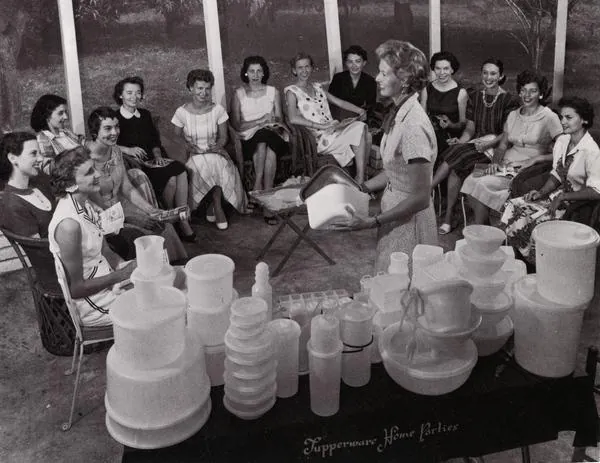 $30,000Read nextBrownie Wise: The Woman Tupperware Tried to EraseBrownie Wise invented the Tupperware party, built a sales force of thousands and became the first woman on the cover of BusinessWeek. When the founder fired her, she found she owned no shares, not even the house she lived in.Tupperware · 6 min read
Questions readers ask
- Who invented Liquid Paper?
- Bette Nesmith Graham, a secretary at Texas Bank and Trust in Dallas, created the correction fluid in the 1950s. She first called it Mistake Out and renamed it Liquid Paper in 1958.
- How much did Gillette pay for Liquid Paper?
- Gillette bought the Liquid Paper company in 1979 for $47.5 million, according to most accounts, plus a royalty on every bottle sold. The Texas State Historical Association gives the figure as nearly $48 million.
- Was Bette Nesmith Graham the mother of Michael Nesmith of the Monkees?
- Yes. Michael Nesmith was her only son. As a teenager he helped fill bottles of correction fluid, and he later inherited half of her estate.
- What was Liquid Paper made of at first?
- Her first version was white water-based tempera paint, mixed in her kitchen blender. An office-supply dealer, a chemistry teacher and a paint-company employee helped her refine it.
- Who owns Liquid Paper today?
- Gillette sold the brand to Newell Rubbermaid in 2000. It is now part of Newell Brands' office products business.
Run the numbers yourself
- Break-Even Point CalculatorFind the units and sales needed to cover fixed costs, and the volume needed for a profit target.
- Business Loan CalculatorPrice a business loan with fees and weekly or monthly payments, and turn a factor rate into an APR.
- Profit CalculatorWalk from revenue to gross profit, operating profit and net profit, with the margin at each step.
People and companies in this story
People
- Bette Nesmith Graham
- Michael Nesmith
- Robert Graham
Companies
- Liquid Paper
- Gillette2 stories
- Texas Bank and Trust
- IBM3 stories
- General Electric
This story is on these lists
Share this story
Send the link to someone who would like this story, or keep it for later.
The timeline
Drawn to scale: the gaps are the years in between. Choose a year.
Sources & further reading 8
- Graham, Bette Clair McMurrayHandbook of Texas, Texas State Historical Association
- Overlooked No More: Bette Nesmith GrahamThe New York Times, 2018
- Bette Graham: Liquid PaperLemelson-MIT Program
- Bette Graham, Liquid PaperInvention & Technology
- How the inventor of Liquid Paper helped launch MTVMental Floss
- Liquid Paper inventor's storyWRAL archive
- Disappearing Act (excerpt)The Lives, Loves and Deaths of Splendidly Unreasonable Inventors
- Bette Nesmith GrahamWikipedia
Spot an error? Send a correction. Corrections are dated and noted here.
- Correction, : An earlier version gave an incorrect US patent number for the formula, misnamed the Lemelson-MIT Program, and said Gillette paid $47.5 million for the bottle rather than for the company. These have been corrected.
Photographs are credited under each picture; licenses are listed on the image credits page.