Berkshire Hathaway
Warren Buffett's $200 Billion Berkshire Hathaway Mistake
In 1964 a textile boss tried to pay Warren Buffett 12.5 cents a share less than they had agreed. Buffett was so annoyed he bought the whole company. He later called it the dumbest stock he ever bought, and put the cost at $200 billion.
- Price per share
- $11.375Price per share. The price per share in Berkshire's May 1964 tender offer, an eighth of a point below the $11.50 Buffett said he had agreed.
- Cost, by his estimate
- $200BCost, by his estimate. What Buffett told CNBC in 2010 the textile business had cost him in lost returns over 45 years.
In this story · 7 chapters
The short answer
In 1964 Berkshire Hathaway, a dying textile mill, offered to buy back Warren Buffett's shares at $11.375 instead of the $11.50 he says had been agreed. Annoyed, he bought control of the company. In 2010 he told CNBC that putting the money into insurance from the start would have left Berkshire worth about $200 billion more.
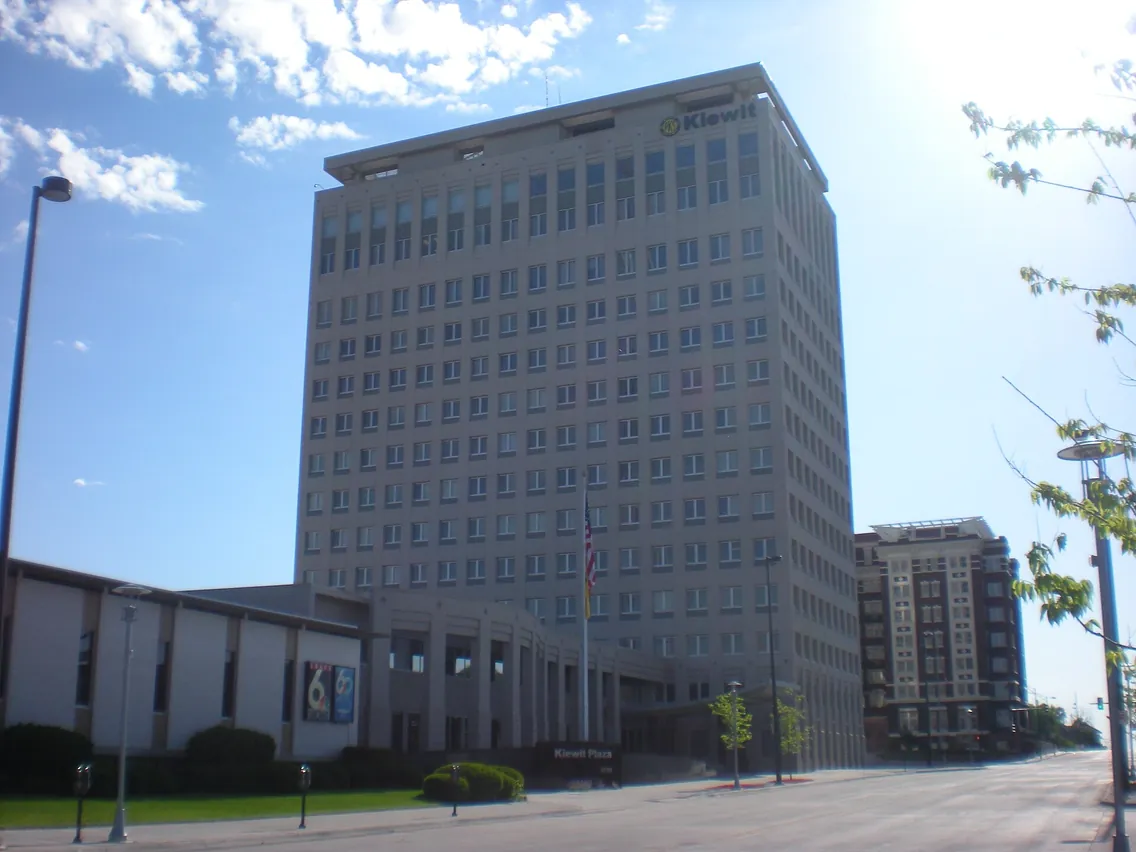
On May 6, 1964, a letter arrived for the investors of Berkshire Hathaway, a struggling textile maker in Massachusetts. The company offered to buy back 225,000 of its shares at $11.375 each.
One of those investors was a 33-year-old money manager in Omaha named Warren Buffett. He had been expecting the letter. He had not been expecting the price.
A trade, not an investment
Buffett had started buying Berkshire for his investment partnership in 1962, at about $7.50 a share. It wasn’t a vote of confidence. Berkshire was a northern textile company in a dying industry, losing ground to mills in the American South. It kept closing plants, and with the money from each closure it bought back its own stock.
That was the whole trade. Buffett would buy shares cheaply, wait for the next buyback, and sell them back to the company at a profit.
Shortly before the 1964 offer, Berkshire’s president, Seabury Stanton, asked Buffett at what price his partnership would sell. Buffett told the story in his 2014 letter to shareholders: he answered $11.50, and Stanton said, “Fine, we have a deal.”
Then came the letter. The price was $11.375, an eighth of a point, or 12.5 cents, less.
The decision
At $11.375 the partnership would still have made a profit of about 50% on its original purchases. Buffett could have taken the money and moved on.
He didn’t. “I bristled at Stanton’s behavior and didn’t tender,” he wrote fifty years later. “That was a monumentally stupid decision.”
Instead he began buying more Berkshire stock, aggressively. By 1965 Buffett controlled the company. Stanton and his son left. Buffett had won the argument, and with it a textile business that, by his own account, he knew very little about. The mill that had been a short-term trade now held more than a quarter of his partnership’s capital.
Twenty years of looms
Buffett tried to make the textile business work. It didn’t. The economics of New England cloth making were poor, and getting worse. Capital spent on the mills earned little.
What saved Berkshire was what Buffett did with the rest of its money. In March 1967 the company bought National Indemnity, an insurance firm in Omaha, for $8.6 million. Insurance gave Berkshire something the mills never could: a steady flow of cash, called float, that Buffett could invest. More insurers and more businesses followed. The textile company became a holding company that happened to own some textile mills.
The mills hung on far longer than they should have. Berkshire finally shut its last textile operations in 1985, more than twenty years after the dispute that brought Buffett in.
The $200 billion estimate
In 2010 CNBC’s Becky Quick asked Buffett about his worst investment. His answer, delivered with a laugh: Berkshire Hathaway itself.
His reasoning was about the cost of the detour. The money he had poured into the textile business could have gone straight into insurance from the start. Had it done so, he told CNBC, the company would have been worth roughly twice as much as it was then. Berkshire’s market value at the time was a little over $200 billion, so the mistake, by his arithmetic, was about $200 billion in compounded returns lost over 45 years. “Because the genius here thought he could run a textile business,” he said.
His lesson was blunt: if you get into a lousy business, get out of it.
What Berkshire became
The irony, of course, is that the “mistake” became one of the most successful companies in history. Buffett never split the original Class A shares, which his partnership had bought for a few dollars each. On August 28, 2024, with the shares trading close to $700,000 apiece, Berkshire became the first company in the United States outside the technology industry to be worth $1 trillion. A single share cost more than the typical American house.
The insurance float that rescued Berkshire from its mills became its engine. Over the decades the company bought Geico, the BNSF railroad, utilities, Dairy Queen, Duracell and dozens of other businesses, and built a stock portfolio worth hundreds of billions of dollars. In the autumn of 2025 it reported a record $381.7 billion in cash and short-term investments.
The handover
On May 3, 2025, in the last minutes of Berkshire’s annual meeting in Omaha, Buffett surprised his shareholders. He said he would ask the board to replace him as chief executive at the end of the year. The board agreed unanimously the next day. Greg Abel, who had run Berkshire’s energy business and then all of its non-insurance operations, took over on January 1, 2026. Buffett, then 95, stayed on as chairman and said he would keep coming to the office in Omaha every day.
He had run the company for sixty years. It had started with an argument over 12.5 cents.
What the record shows
- Anger is expensive. Buffett turned down a 50% gain over 12.5 cents, and by his own estimate it cost $200 billion in what might have been.
- Price doesn’t fix a bad business. Berkshire was cheap because textiles were in decline. Being cheap didn’t make them a good investment.
- What you do with the cash matters more than where it comes from. The insurance money Buffett invested, not the mills, built the company.
- Know when to quit. Even Buffett kept a failing business going for twenty years. His advice afterward was to get out of a bad business quickly.
Other stories in this archive show the same tension between a business and its money. Bubble Wrap became a small part of a much bigger company. McDonald’s found its fortune in the land under its restaurants. Berkshire found its fortune by leaving the business it was named for.
 $4.43BRead nextMichael Bloomberg Was Fired With $10 Million. Then Came the Terminal.In 1981 Salomon Brothers was sold and one of its partners was shown the door with $10 million for his stake. The next morning he started a company to sell Wall Street the data it didn't know it needed. Merrill Lynch later paid $4.43 billion just to get out.Bloomberg · 4 min read
Questions readers ask
- Why did Warren Buffett buy Berkshire Hathaway?
- Out of anger. In 1964 its boss, Seabury Stanton, offered to buy back Buffett's shares at $11.375 instead of the $11.50 Buffett says they had agreed. Buffett refused, bought more shares, and took control in 1965.
- What is Warren Buffett's $200 billion mistake?
- Buying Berkshire Hathaway. In a 2010 CNBC interview he estimated that putting the money into insurance instead of the textile business would have left the company worth about $200 billion more.
- When did Berkshire Hathaway stop making textiles?
- Its last textile operations closed in 1985.
- Who runs Berkshire Hathaway now?
- Greg Abel, who succeeded Warren Buffett as chief executive on January 1, 2026.
Run the numbers yourself
- Compound Interest CalculatorSee how a deposit grows with compounding, extra contributions and different compounding frequencies.
- Dividend CalculatorEstimate dividend income, yield and the effect of reinvesting dividends over the years.
- S&P 500 CalculatorSee what money invested in the S&P 500 grew to in any period since 1928, with dividends and inflation.
People and companies in this story
People
- Warren Buffett
- Seabury Stanton
- Greg Abel
Companies
- Berkshire Hathaway
- Buffett Partnership Ltd.
- National Indemnity
This story is on these lists
Share this story
Send the link to someone who would like this story, or keep it for later.
The timeline
Drawn to scale: the gaps are the years in between. Choose a year.
Sources & further reading 8
- Warren Buffett: buying Berkshire Hathaway was $200 billion blunderCNBC, October 2010
- Full text of Warren Buffett's annual letter to shareholders (2014 letter)ForexLive, February 2015
- Warren Buffett's Berkshire Hathaway tops $1 trillion in market valueThe National, August 2024
- Buffett's Berkshire Hathaway hits $1 trillion market value, first U.S. company outside of tech to do soCNBC, via WOWT, August 2024
- Berkshire Hathaway Inc. news release: Greg Abel to become CEO on January 1, 2026Berkshire Hathaway, via Business Wire, May 2025
- Berkshire Hathaway enters post-Buffett era as shares drift lowerReuters, via Virginia Business, January 2026
- Buffett's biggest investment mistakeThe Motley Fool, October 2010
- Capital Allocation: The Financials of a New England Textile MillThe Rational Walk
Spot an error? Send a correction. Corrections are dated and noted here.
Photographs are credited under each picture; licenses are listed on the image credits page.