Bubble Wrap
Bubble Wrap Was Supposed to Be Wallpaper
Two engineers in New Jersey sealed a pair of shower curtains together in 1957 and tried to sell the result as wallpaper. Then as greenhouse insulation. It took an IBM computer to find out what it was for.
- First prototype
- Two shower curtainsFirst prototype. The first prototype, sealed together in a garage in Hawthorne, New Jersey, in 1957.
- Enterprise value
- $10.3BEnterprise value. The enterprise value at which Clayton, Dubilier & Rice took Sealed Air private, completed in April 2026.
In this story · 6 chapters
The short answer
Bubble Wrap was invented in 1957 by Alfred Fielding, an engineer, and Marc Chavannes, a Swiss chemist, in Hawthorne, New Jersey. They meant it as textured wallpaper, then tried greenhouse insulation, and both failed. Their company, Sealed Air, found its first real use in 1961: protecting IBM's 1401 computer in shipping.
The plan was to sell it to people with taste. In 1957 Alfred Fielding, an engineer with a machine shop in Hawthorne, New Jersey, and Marc Chavannes, a Swiss chemist, were working on a new kind of wallpaper. It would be textured, washable and modern, the sort of thing, as Smithsonian Magazine later put it, that might appeal to the young Beat generation.
Their method was crude and clever. They ran two layers of plastic through a heat-sealing process that trapped pockets of air between them. The first experiments are usually described as two shower curtains sealed together. They backed the result with paper and showed it around.
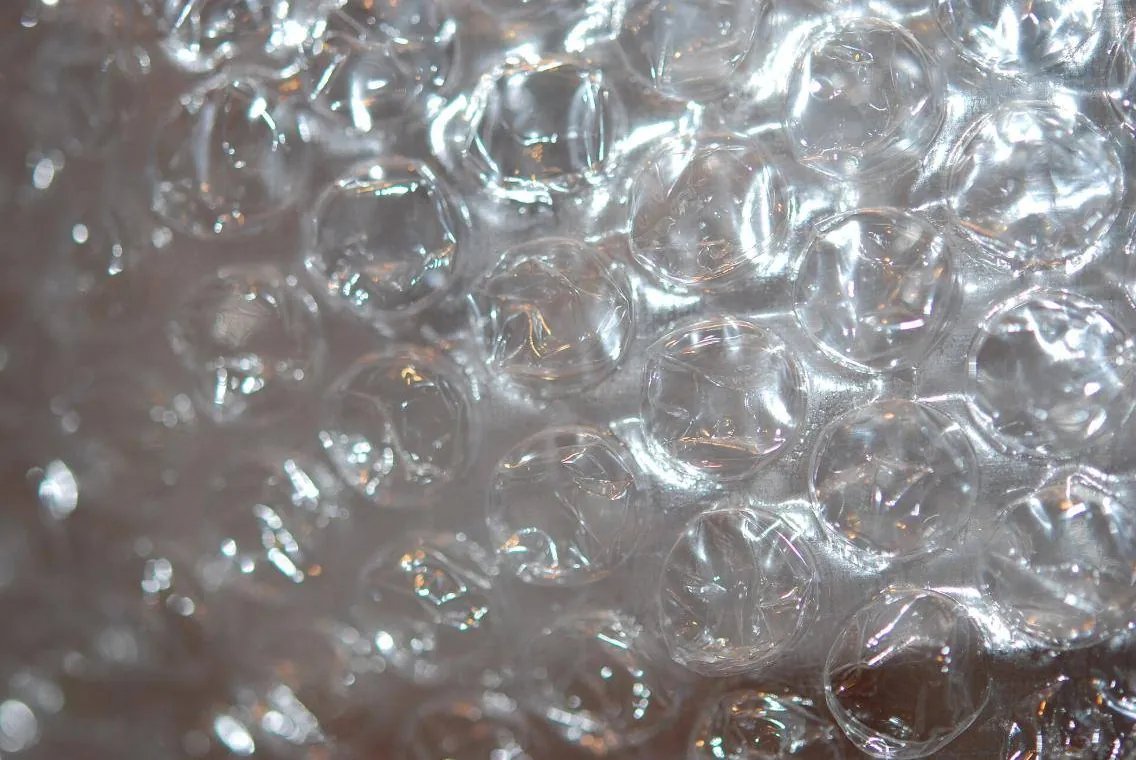
Nobody wanted it on their walls. The two men had invented a material that would one day be used by shippers everywhere, and their first product was a flop.
Failure number two
Fielding and Chavannes didn’t give up on the material. They looked for another use. Plastic with air in it insulates, so they tried greenhouses. Smithsonian reports that the material was actually tested in greenhouses and proved ineffective.
That made two markets and two failures, and they set up a company anyway. In 1960 they founded Sealed Air Corporation to keep developing what they were calling Air Cap. The name Bubble Wrap came later, and stuck.
Their patent for the process, “Method for Making Laminated Cushioning Material,” was granted on July 28, 1964, as US patent 3,142,599. By then the material had found its purpose. The person who found it was neither inventor.
IBM’s delicate machine
Frederick W. Bowers was Sealed Air’s marketing man. On October 5, 1959, IBM had announced the 1401 Data Processing System, a business computer that would become one of its biggest early successes. Smithsonian describes it as the Model T of the computer industry. Computers then were large, expensive and fragile, and IBM needed to ship a great many of them to customers without damage.
Bowers saw the fit. He pitched the material to IBM and demonstrated how well it protected delicate equipment. IBM bought in, and in 1961 began using it to cushion the 1401 in transit. “It was the answer to IBM’s problems,” Chad Stephens, then a Sealed Air vice president, told Smithsonian in 2019. “They could ship their computers without damage.”
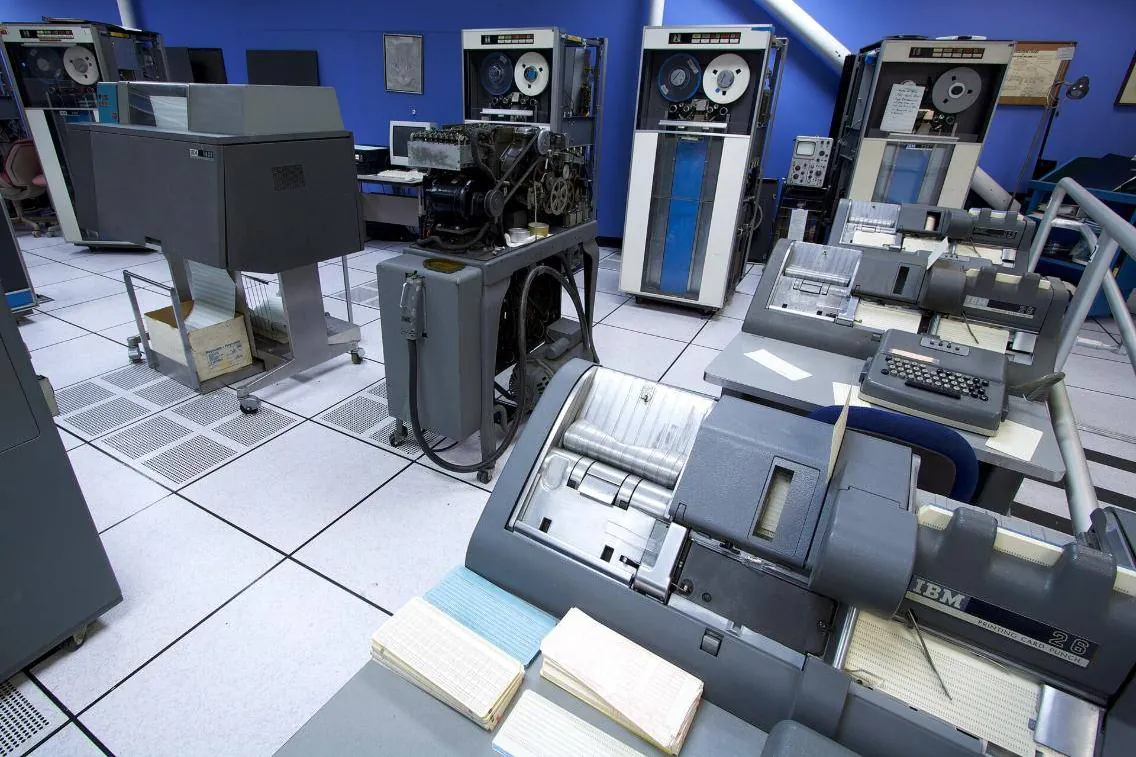
It is hard to imagine a better first customer. IBM was the leading computer company of the day, and its machines were among the most valuable things a business could have delivered. If Bubble Wrap was good enough for a 1401, it was good enough for almost anything. Other manufacturers of fragile goods followed.
Bigger than the bubbles
Sealed Air grew with the packaging industry. Over the following decades it added other packaging lines, above all food packaging under the Cryovac brand. Bubble Wrap became a household name, a trademark that most people use as a generic word, and a minor cultural object. Sealed Air’s own offices kept “stress relief boxes” full of it for staff to pop.
In money terms, though, the famous product shrank. When The Wall Street Journal looked at the business in 2015, it reported that Bubble Wrap accounted for only 3.6% of Sealed Air’s sales, down from 5.7% in 2010, and that its profit margins had narrowed sharply. Most of the company’s business by then came from food packaging.
The Journal also pointed to a basic problem with the product. Bubble Wrap is mostly air, and shipping air is expensive. Because of its bulk, Sealed Air didn’t ship the classic product to customers more than about 150 miles from its plants.
The bubble that doesn’t pop
The answer, in 2015, was iBubble Wrap. It is sold as flat plastic sheets with columns of connected chambers. The customer fills them with air on site, using a pump Sealed Air sold for about $5,500. Before inflation a roll takes up roughly one-fiftieth of the space of the classic product, by the Journal’s figure, which suited online retailers packing huge volumes in crowded warehouses.
Because the air can move between the chambers, the bubbles don’t burst under a thumb. The internet reacted as if something sacred had been taken away. Sealed Air had to reassure the public, in a statement quoted by CBC News and others, that the original poppable version wasn’t going anywhere.
The episode said a lot about the product. Its most loved feature, the pop, has nothing to do with the job customers pay it to do, which is protecting goods in transit.
A $10.3 billion wallpaper company
Sealed Air is now headquartered in Charlotte, North Carolina. In 2025 it had net sales of $5.4 billion and about 16,100 employees serving customers in 119 countries and territories, according to a company filing. Its brands include Cryovac, Sealed Air, Liquibox, Autobag and Bubble Wrap.
In November 2025 the private equity firm Clayton, Dubilier & Rice agreed to buy the company in an all-cash deal that valued it at $10.3 billion, or $42.15 a share. That was a 41% premium to the share price in mid-August, before reports of the talks emerged. The deal was completed on April 9, 2026, and Sealed Air’s shares stopped trading on the New York Stock Exchange.
So the wallpaper nobody wanted ended up as part of a company worth more than $10 billion, even if the bubbles themselves are now a small slice of the business.
What the bubbles teach
The usual moral drawn from Bubble Wrap is “keep trying.” The more precise lesson is about what to keep and what to change. Fielding and Chavannes kept the material and the process, which were good. They changed the market, twice, until they found buyers who needed exactly what the material did best.
The second lesson concerns the first customer. Sealed Air didn’t just find a buyer in IBM; it found one whose name made every later sale easier. The third is less comfortable. A product can become famous and still matter less and less to the company that makes it. By 2015, Bubble Wrap was a brand and a habit more than a profit engine.
The same pattern turns up elsewhere in this archive. Corning’s strengthened glass sat on a shelf for decades until the iPhone gave it a purpose. Stewart Butterfield built two successful companies out of the leftovers of two failed games. In each case the invention was sound, and the first market was simply the wrong one.
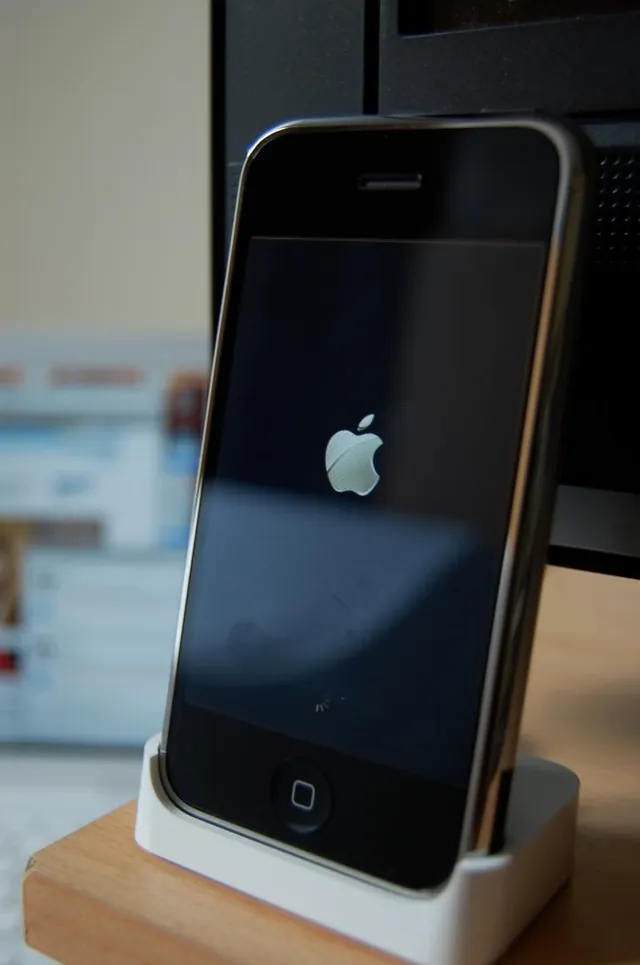 1971Read nextGorilla Glass Waited 40 Years for the iPhoneIn the 1960s Corning invented a glass so tough it could survive a car crash, then shelved it because nobody would buy it. In 2007 Steve Jobs needed a screen that wouldn't scratch, and the old formula came back out of the drawer.Gorilla Glass · 6 min read
Questions readers ask
- Who invented Bubble Wrap?
- Alfred W. Fielding, an American engineer, and Marc A. Chavannes, a Swiss chemist, in Hawthorne, New Jersey, in 1957. They were trying to make a textured plastic wallpaper.
- What was Bubble Wrap originally used for?
- Nothing successful at first. It was pitched as wallpaper and then as greenhouse insulation, and both failed. Its first real use, in 1961, was protecting IBM's 1401 computer during shipping.
- When was Bubble Wrap patented?
- The key US patent, No. 3,142,599, 'Method for Making Laminated Cushioning Material,' was granted to Fielding and Chavannes on July 28, 1964.
- Who owns Bubble Wrap now?
- The Bubble Wrap brand belongs to Sealed Air, which was taken private by the investment firm Clayton, Dubilier & Rice in a $10.3 billion deal completed on April 9, 2026.
- Does Bubble Wrap still pop?
- Yes. In 2015 Sealed Air launched iBubble Wrap, a version that is shipped flat, inflated by the customer and doesn't pop. The company said the original poppable product would stay on sale.
Run the numbers yourself
- Profit Margin CalculatorTurn cost and price into profit, margin and markup, or find the price that hits a target margin.
- Business Valuation CalculatorEstimate what a business could be worth with earnings multiples, a revenue multiple and a DCF.
- ROI CalculatorMeasure return on investment and the annualized return, and compare two investments side by side.
People and companies in this story
People
- Alfred Fielding
- Marc Chavannes
- Frederick Bowers
Companies
- Sealed Air
- IBM3 stories
- Clayton Dubilier & Rice
- Cryovac
This story is on these lists
Share this story
Send the link to someone who would like this story, or keep it for later.
The timeline
Drawn to scale: the gaps are the years in between. Choose a year.
Sources & further reading 8
- The Accidental Invention of Bubble WrapSmithsonian Magazine, 2019
- Tools of the trade: How Bubble Wrap became a pop idolRetail Brew, 2022
- Bubble Wrap: From Wallpaper To Stress RelieverInvention & Technology
- Bubble Wrap loses its popPlasticsToday, July 2015 (on The Wall Street Journal's report)
- New bubble wrap doesn't pop, but original poppable version here to stayCBC News, July 2015
- Sealed Air announces completion of regulatory approvals for acquisition by CD&RSealed Air, SEC Form 8-K, March 2026
- Sealed Air to go private in $10.3 billion dealBusiness North Carolina, 2025
- Bubble Wrap (brand)Wikipedia
Spot an error? Send a correction. Corrections are dated and noted here.
Photographs are credited under each picture; licenses are listed on the image credits page.