Spanx
Sara Blakely Started Spanx With $5,000
Sara Blakely sold fax machines door to door. She put $5,000 of her savings into an idea she had cutting the feet off her pantyhose, kept 100% of the company for 21 years, and sold a majority to Blackstone at a $1.2 billion valuation.
- Her savings
- $5,000Her savings. Sara Blakely's savings from selling fax machines, the only money she put into the company.
- Valuation
- $1.2BValuation. The valuation at which Blackstone bought a majority stake in Spanx, announced in October 2021.
In this story · 6 chapters
The short answer
Sara Blakely started Spanx with $5,000 she had saved selling fax machines door to door. She wrote her own patent, launched from Atlanta in 2000 and took no outside money for 21 years. In October 2021 Blackstone bought a majority stake in a deal that valued Spanx at $1.2 billion.
The problem was a pair of white pants. Sara Blakely, then in her late twenties and selling fax machines door to door in Florida, had bought them and couldn’t wear them. Everything she put underneath showed through: lines, seams, bulges. Pantyhose smoothed things out, but she didn’t want the feet in her open-toed shoes.
So she took a pair of scissors and cut the feet off her control-top pantyhose. The result looked right, and she had the idea and she would build a company worth more than a billion dollars on it.
The fax machine years
Blakely’s day job was the best business school she had. For seven years she sold fax machines for an office supply company called Danka, cold-calling offices and knocking on doors. Most of the answers were no, often delivered rudely. It was hard work, and it taught her how to keep asking.
It also gave her savings. By the time she decided to make the footless hose into a product, she had $5,000.
That was all the capital Spanx would ever raise from her. “I started it with five grand from selling fax machines and self-funded the entire 21 years,” she told an audience in remarks reported by Fortune in 2025.
Spending $5,000 carefully
Five thousand dollars doesn’t go far in clothing. Blakely decided to spend it where she had no alternative and do everything else herself.
Patent lawyers were expensive, so she wrote her own patent. Blackstone’s account of the company’s founding, published when its deal was completed, says she “wrote her own patent and invented the first SPANX undergarment in her apartment.” She learned patent law from a book she bought in a bookstore, which she said saved her about $3,000 in legal fees. She chose the name herself too, a made-up word whose spelling she changed to end in an x at the last minute, after reading that invented names sold better.
She needed a factory, and the hosiery mills she approached turned her down. Eventually one, Highland Mills in Charlotte, North Carolina, agreed to make her prototypes.
Ten minutes in Dallas
The breakthrough came from the skill she had learned at Danka. Blakely kept calling the hosiery buyer at Neiman Marcus until she agreed to a meeting. According to Fortune, she was given ten minutes and had to pay her own flight from Atlanta to Dallas to get them.
Halfway through, she asked the buyer to come with her to the ladies’ room. There she changed into the product, before and after, so the buyer could see the difference for herself. Neiman Marcus ordered Spanx for seven stores. Bloomingdale’s, Saks and Bergdorf Goodman followed.
Blakely was not leaving the result to chance. She later admitted, in Fortune’s telling, that she asked friends to go into Neiman Marcus and buy the product so the first order wouldn’t flop.
Spanx launched from Atlanta in 2000. That November, it appeared in “Oprah’s Favorite Things,” the annual list on Oprah Winfrey’s television show. Demand jumped.
The economics of owning everything
Here the money story becomes unusual. Most consumer brands that grow fast take venture capital or private equity along the way, trading pieces of the company for cash. Spanx didn’t. Blakely owned it outright, and the company paid for its own growth.
The numbers were big enough to do that. Sales were $4 million in the first year and $10 million in the second. In 2012 Forbes reported that Spanx had revenue just under $250 million and net margins of about 20%. Blakely owned 100% of it, it had no debt, it had never taken outside money and it had never paid for advertising. Forbes put her on the cover and on its billionaires list, at 41, as the youngest self-made woman ever to appear there.
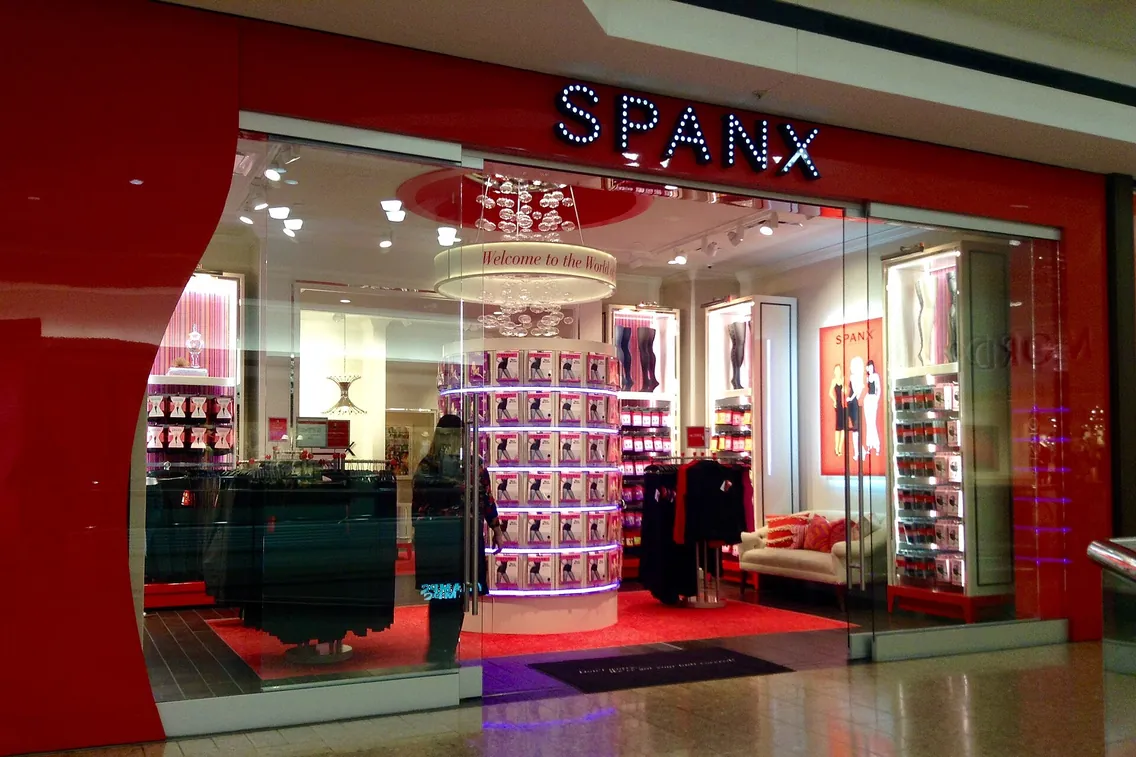
The free publicity did the work advertising would have done. Spanx grew from one product into more than 200, sold in about 11,000 stores in 40 countries, TIME reported that year, when it named her one of the 100 most influential people in the world. In 2012 Spanx also opened its first stand-alone stores, in shopping malls on the East Coast.
The cost of control was slower growth than outside money might have paid for. The benefit was that every dollar of value the company created stayed with its founder.
The $1.2 billion deal
In 2021, after more than twenty years, Blakely finally brought in outside capital. On October 20 Spanx announced that funds managed by Blackstone would buy a majority stake in a deal that valued the company at $1.2 billion. The deal team at Blackstone was all women. Blakely kept a significant stake and became executive chair.
She celebrated in a way that went viral: every Spanx employee received $10,000 and two first-class plane tickets.
Do the arithmetic on the original investment. Five thousand dollars in 2000 became a company valued at $1.2 billion in 2021.
What the record shows
- Ownership is the multiplier. Plenty of founders build billion-dollar companies. Few still own all of it when it gets there. Blakely’s refusal to raise money is why the valuation became personal wealth.
- Cash goes where you can’t substitute effort. She paid for prototypes and product. She wrote the patent, made the calls and did the sales herself.
- A demonstration beats a pitch. The deal that launched Spanx was made in a restroom, with the product on.
- Rejection is training. Seven years of slammed doors selling fax machines made a ten-minute meeting in Dallas easy.
The thread runs through other stories in this archive. Huy Fong Foods built a hot sauce business without spending on advertising. Brownie Wise sold Tupperware by showing it in living rooms rather than shop windows. In each case the founder sold the product by putting it in front of people.
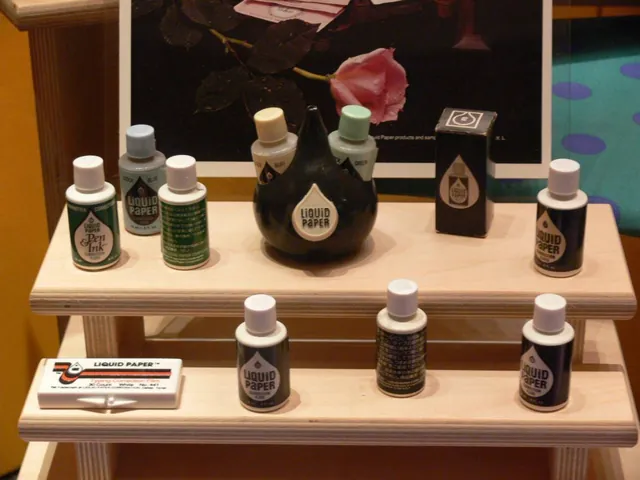 $47.5MRead nextLiquid Paper: From a Kitchen Bottle to a $47.5 Million SaleBette Nesmith Graham was a single mother typing letters at a Dallas bank when she started hiding her typos with white paint. In 1979 Gillette paid $47.5 million for the company built on that bottle.Liquid Paper · 7 min read
Questions readers ask
- How much money did Sara Blakely start Spanx with?
- $5,000 of her own savings from selling fax machines. She never took outside investment until Blackstone bought a majority stake in 2021.
- How much is Spanx worth?
- Blackstone's majority investment, announced in October 2021, valued Spanx at $1.2 billion.
- Who owns Spanx now?
- Funds managed by Blackstone hold a majority stake. Sara Blakely kept a significant stake and became executive chair.
- How did Spanx get into Neiman Marcus?
- Blakely flew to the Neiman Marcus buying office in Dallas and, during the meeting, changed into the product in the ladies' room to show the buyer the difference. The buyer ordered it for seven stores.
Run the numbers yourself
- Savings Goal CalculatorFind the monthly saving needed for a goal by a date, or how long your current saving will take.
- Personal Loan CalculatorPrice a personal loan with its origination fee, see the real APR and compare two offers.
- Net Worth CalculatorAdd up what you own and owe, then compare your net worth with U.S. households your age.
People and companies in this story
People
- Sara Blakely
- Oprah Winfrey
Companies
- Spanx
- Danka
- Neiman Marcus
- Blackstone2 stories
This story is on these lists
Share this story
Send the link to someone who would like this story, or keep it for later.
The timeline
Drawn to scale: the gaps are the years in between. Choose a year.
Sources & further reading 9
- Sara Blakely: the 2012 TIME 100TIME, April 2012
- Spanx's Sara Blakely: America's youngest female billionaireThe Week, on Forbes reporting, March 2012
- Tights made entrepreneur Sara Blakely a billion dollarsMoneyWeek, on Forbes reporting, 2012
- Forbes' 100 most powerful women: Sara BlakelyGeorgia Public Broadcasting
- Spanx creator named youngest self-made female billionaireSmartCompany, on Forbes reporting, March 2012
- Spanx case study: completion of majority investmentBlackstone
- Blackstone buying majority stake in SpanxChain Store Age, 2021
- Billionaire Sara Blakely says she launched Spanx with just $5,000 from selling fax machinesFortune, September 2025
- 6 'unhinged' things Spanx founder Sara Blakely didFortune, June 2025
Spot an error? Send a correction. Corrections are dated and noted here.
Photographs are credited under each picture; licenses are listed on the image credits page.