Ford
Henry Ford Failed Twice Before Ford Motor Company
Henry Ford's first car company built 20 vehicles and was dissolved. His second became Cadillac after he walked out. His third was down to $223.65 in the bank when its first customer paid.
- Cash raised, 1903
- $28,000Cash raised, 1903. The cash twelve investors, including the Dodge brothers, put into the Ford Motor Company when it was incorporated on June 16, 1903.
- Revenue, 2025
- $187.3BRevenue, 2025. Ford Motor Company's revenue for 2025, a record.
In this story · 6 chapters
The short answer
Not in the way the myth says. His first two car companies failed, but neither was a personal bankruptcy. The Detroit Automobile Company built 20 vehicles and was dissolved in 1901. He walked out of the Henry Ford Company in 1902, and it became Cadillac. His third, Ford Motor Company, was down to $223.65 in July 1903.
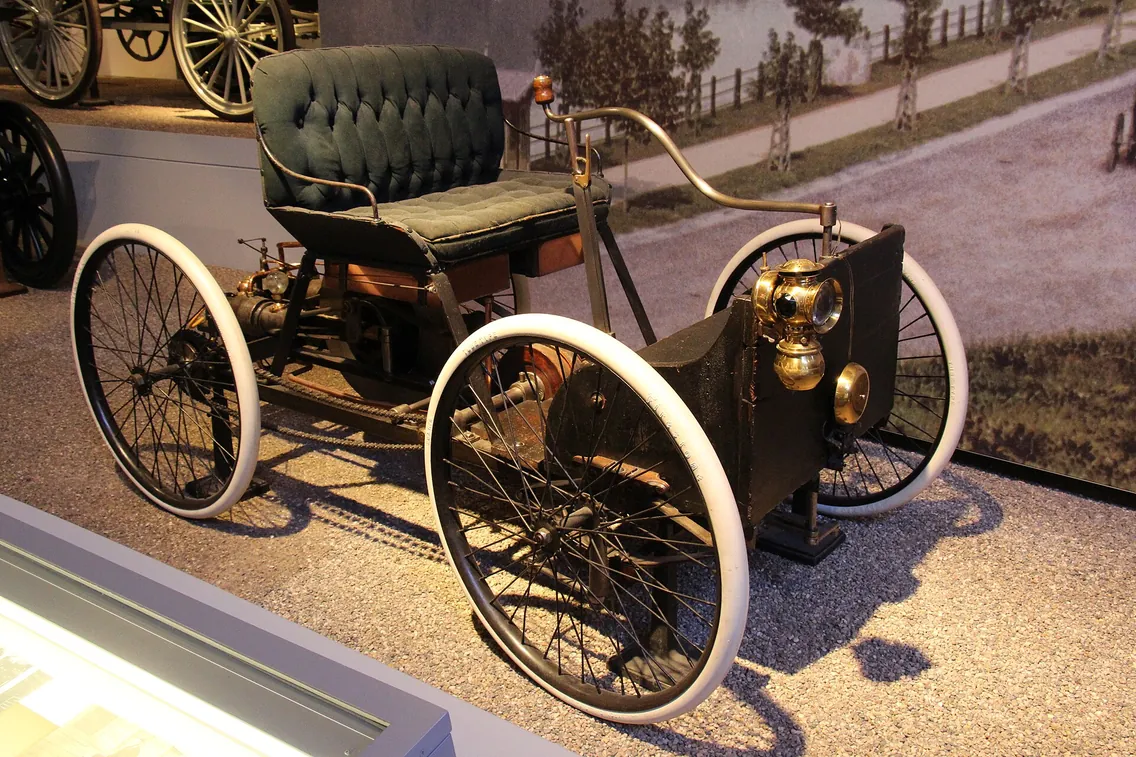
In 1896 Henry Ford was a 32-year-old engineer at the Edison Illuminating Company in Detroit, and in his spare time he built a car. He called it the Quadricycle. It ran on four bicycle wheels, and it worked.
Three years later, men with money took notice. On August 5, 1899, a group of Detroit investors, including the lumber businessman William H. Murphy and the city’s mayor, founded the Detroit Automobile Company. Ford quit his steady job at Edison to become its chief engineer.
He was 36. He had a family, an idea, and other people’s money. Within two years the money was gone.
Twenty cars
The company’s first vehicle, a gasoline delivery wagon, was finished in January 1900. Local newspapers praised it. Ford did not. Assembly was slow and done largely by hand, and he wanted to make better cars than the ones coming out of the shop. His backers wanted cars they could sell now.
The company built 20 vehicles in all, and they sold poorly. In 1901 the stockholders voted to dissolve it. The investors never saw a return.
Ford was out of a job, and his reputation hardly reached beyond Detroit.
One race
He decided the fastest way to change that was to win something. Americans, he believed, still saw the automobile as a fast toy, and the way to get their attention was on a racetrack.
With a few former backers’ support, he and a small team built a racing car with a two-cylinder engine. They named it Sweepstakes, after the type of race it was built for. On October 10, 1901, at a horse-racing track in Grosse Pointe, Michigan, Ford drove it against Alexander Winton, a successful car manufacturer from Cleveland and the best-known racing driver in America. Nobody gave Ford a chance.
Winton’s car was more powerful and took the lead. Then it began to smoke and falter. Ford passed him and won. He took home a $1,000 prize and a cut-glass punch bowl. It was the only race he ever drove.
The newspapers loved it, and so did investors.
The second company
Within weeks, Murphy and other backers formed a new firm around him: the Henry Ford Company. It had his name on the door. It did not keep him long.
Ford and his investors argued again. He did not think the cars were ready for the public, and he wanted to build more racing cars. In March 1902 he walked out. The backers brought in a precision engineer named Henry Leland to appraise the plant, and Leland persuaded them to keep making cars instead. The company dropped Ford’s name and took the name of Detroit’s founder: Cadillac.
Ford had now started two car companies and had neither.
Down to $223.65
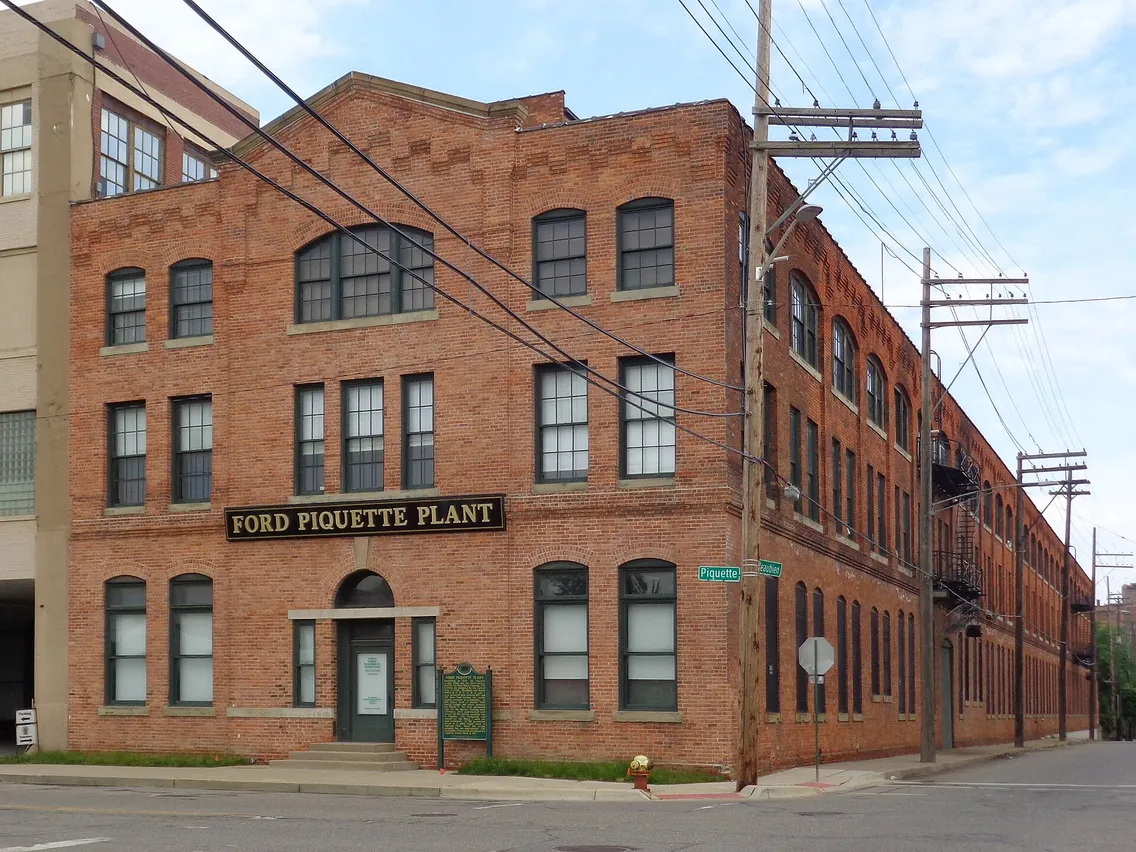
The third time, the money came from a coal dealer, Alexander Malcomson, and his circle. On June 16, 1903, the Ford Motor Company was incorporated, with twelve investors and 1,000 shares. They subscribed $28,000 in cash. Among them were John and Horace Dodge, machinists whose shop would build the engines and chassis for the new car, and Malcomson’s clerk, James Couzens, who put in $2,500, $100 of it borrowed from his sister.
The plan was lean. Ford Motor would not make its own parts at first; it would buy them and assemble the cars in a rented building on Mack Avenue. Couzens’s budget put the cost of each car’s parts at $250 to the Dodges for the engine and chassis, $52 for the body, $26 for the wheels and $40 for the tires.
Couzens also kept the checkbook. When he opened it on June 26 there was $14,500 in the account. The first check, for $10,000, repaid Malcomson for money already advanced to the Dodge brothers. Sixty checks later, on July 10, the balance was $223.65.
Then, on July 15, an order arrived from a Chicago dentist named Ernst Pfennig. He wanted a Model A and paid $850. More orders followed. By October 1903 the company had made a profit of $37,000.
The payoff
This time Ford got his way on the cars. In 1906 he bought out Malcomson and became the majority owner. In 1908 he launched the Model T, a simple, tough car meant for ordinary buyers. A few years later the moving assembly line made it cheaper still, and Ford became one of the largest companies in the world.
The early investors who sold out quickly made a little money. Albert Strelow sold his stake to Couzens in 1905 for $25,000; had he waited, it would have been worth more than $17 million. The ones who stayed did far better. The Dodge brothers, who later sued Ford over dividends and started their own car company, sold their 10% to him in 1919 for $25 million. Couzens received about $29 million for his $2,500. His sister’s $100 became about $262,000.
That year Ford bought out every remaining minority shareholder, at about $12,500 a share, and the company became his family’s alone.
In 2025 Ford Motor Company reported record revenue of $187.3 billion. It began with twelve people, $28,000, and a bank balance that once fell to $223.65.
What the record shows
- Investors’ patience has limits. Ford’s perfectionism cost his first backers their money and their confidence.
- A public win can restore trust. One race in 1901 brought investors back after the first failure.
- Who controls the company matters. Ford left his second venture over how it should be run, and bought out his partners in the third.
- Cash is the clock. Ford Motor was days from empty when its first customer paid.
- The patient investor wins. Couzens’s $2,500 became about $29 million.
For another founder who failed twice before succeeding, read about Milton Hershey. Sam Walton also lost his first store before building Walmart: see how a lease clause cost him his business. And for a giant that protected its old business for too long, see Kodak.
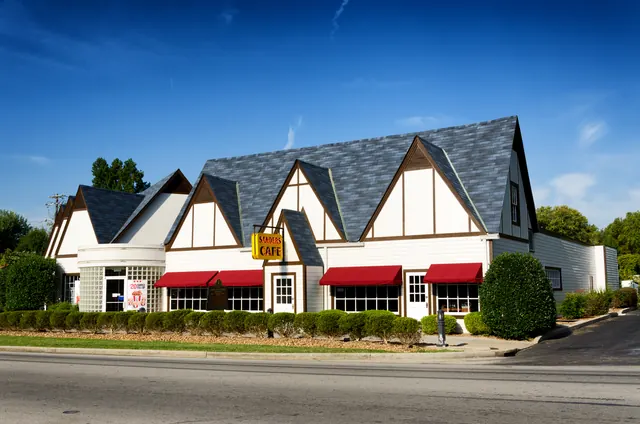 $105Read nextColonel Sanders at 65: A $105 Check, Then a $2 Million SaleAt 65 Harland Sanders lost the business he'd built when a new highway bypassed his town. He had savings and a $105 monthly Social Security check. Nine years later he sold Kentucky Fried Chicken for $2 million.KFC · 4 min read
Questions readers ask
- How many times did Henry Ford fail before Ford Motor Company?
- Twice. The Detroit Automobile Company, founded in 1899, built 20 vehicles that sold poorly, and its stockholders voted to dissolve it in 1901. His second venture, the Henry Ford Company, lasted only months with him; he walked out in March 1902 and it became Cadillac.
- Did Henry Ford go bankrupt five times?
- No. The popular claim is not supported by the record. Ford had two failed car companies before Ford Motor. The first was dissolved by its stockholders and he left the second, but neither was a personal bankruptcy.
- How much money started Ford Motor Company?
- Twelve investors subscribed $28,000 in cash when it was incorporated on June 16, 1903. The money went fast: by July 10 the bank balance was $223.65. The first car sold days later for $850.
- How much did the first Ford investors make?
- Those who held on until 1919, when Henry Ford bought out every minority shareholder, made fortunes. The Dodge brothers received $25 million for their 10% stake, and James Couzens, who had invested $2,500, received about $29 million.
- How big is Ford today?
- Ford Motor Company reported record revenue of $187.3 billion for 2025, though it posted a net loss of $8.2 billion after large charges on its electric vehicle plans.
Run the numbers yourself
- Car & Auto Loan CalculatorEstimate an auto loan payment with down payment, trade-in, sales tax and fees.
- Net Worth CalculatorAdd up what you own and owe, then compare your net worth with U.S. households your age.
- Compound Interest CalculatorSee how a deposit grows with compounding, extra contributions and different compounding frequencies.
People and companies in this story
People
- Henry Ford
- William H. Murphy
- Alexander Winton
- Henry Leland
- Alexander Malcomson
- James Couzens
- John Dodge
- Horace Dodge
Companies
- Ford Motor Company2 stories
- Detroit Automobile Company
- Henry Ford Company
- Cadillac
- Dodge
This story is on these lists
Share this story
Send the link to someone who would like this story, or keep it for later.
The timeline
Drawn to scale: the gaps are the years in between. Choose a year.
Sources & further reading 12
- Henry Ford: three attempts at a business revolutionFord Motor Company, From the Road, 2026
- 1901 Ford Sweepstakes Race CarThe Henry Ford
- Ford Motor Company Checkbook, 1903The Henry Ford
- Ford Motor Company Stockholders and Stock, 1903-1956The Henry Ford, Benson Ford Research Center
- The story of Henry Ford and his 1901 racer SweepstakesFord Racing, via Motorsport.com, October 2011
- August 5, 1899: Henry Ford starts his first car businessAutomotive History Preservation Society
- 23 July 1903: Henry Ford sells his first carMoneyWeek
- The car that created Henry Ford: secrets of the 1903 Model AMac's Motor City Garage
- Albert Strelow and the Ford Motor CompanyMichigan Historical Review, 2016
- Business: Ford SagaTIME (archive)
- The Dodge Brothers and Henry FordAmerican Car Historian
- Ford Reports Fourth-Quarter, Full-Year 2025 Financial ResultsFord Motor Company, SEC filing, February 2026
Spot an error? Send a correction. Corrections are dated and noted here.
Photographs are credited under each picture; licenses are listed on the image credits page.