Dyson
James Dyson's 5,127 Vacuum Prototypes
James Dyson built 5,127 prototypes of a bagless vacuum cleaner and went deep into debt. British manufacturers turned it down. Fifteen years after his first cardboard model, he put his own name on it.
- Prototypes
- 5,127Prototypes. Prototypes James Dyson built in about five years, working from a shed behind his house, before his cyclone vacuum worked as he wanted.
- Fortune, 2026
- £12BFortune, 2026. The Sunday Times Rich List estimate of James Dyson's wealth, May 2026.
In this story · 6 chapters
The short answer
James Dyson built 5,127 prototypes of his bagless vacuum cleaner over about five years from 1979, mostly in a shed behind his house. British manufacturers would not license it, partly because they profited from selling dust bags. A Japanese company sold it as the G-Force from 1986, and his own DC01 reached shops in 1993.
In 1978 James Dyson was annoyed by his vacuum cleaner. It was a Hoover Junior, and the more dust its paper bag collected, the weaker its suction became. The dust clogged the pores of the bag. The machine got worse the more you used it.
Dyson was an industrial designer. He had already invented the Ballbarrow, a garden wheelbarrow with a ball instead of a wheel, and at the Ballbarrow factory he had run into the same problem in a bigger form. The filter in the spray-painting room kept clogging with powder. Sawmills solved this kind of problem with a cyclone: a tall cone that spins air so fast the dust flies out to the edges and drops away.
Could a small cyclone do the same inside a vacuum cleaner? Dyson tore the bag out of his Hoover and taped a rough cardboard cyclone in its place. It worked.
His partners at the Ballbarrow company were not convinced. If a better vacuum cleaner were possible, Dyson later recalled them reasoning, Hoover or Electrolux would already have made one. He left the company, and took the idea with him.
The shed
Making it work properly was another matter. In 1979 he set up a research company with money from one backer, his payout from the Ballbarrow business, and a second mortgage on the family home, which by then also housed three small children. His wife, Deirdre, an artist, taught art to bring in money.
Then he started building. Each prototype was tested, measured and changed, one variable at a time. Most were made by hand in a shed behind the house. He changed the shape of a cyclone, the size of an inlet, the angle of a pipe, and built another.
In his own account, written in 2021, he describes himself in those years as usually covered in dust and getting deeper into debt, but happy. Deirdre let him put the house at risk, and the bank kept lending.
By 1983, about five years in, he had built 5,127 prototypes. That is close to three for every day of those five years, weekends included. The last one worked. “There were 5,126 failures,” he told Fast Company in 2007. “But I learned from each one.”
Nobody wanted it
Dyson did not want to manufacture the machine himself. He wanted to license it to the companies that already made vacuum cleaners. They turned him down, one after another.
There was a simple commercial reason. Replacement dust bags were a profitable business in their own right, sold again and again to every owner of a bagged machine. A cleaner with no bag threatened that income. A small first batch built under his former employer’s name sold poorly. A deal in the United States collapsed, and Dyson spent years in patent litigation over a machine he believed copied his design.
Japan says yes
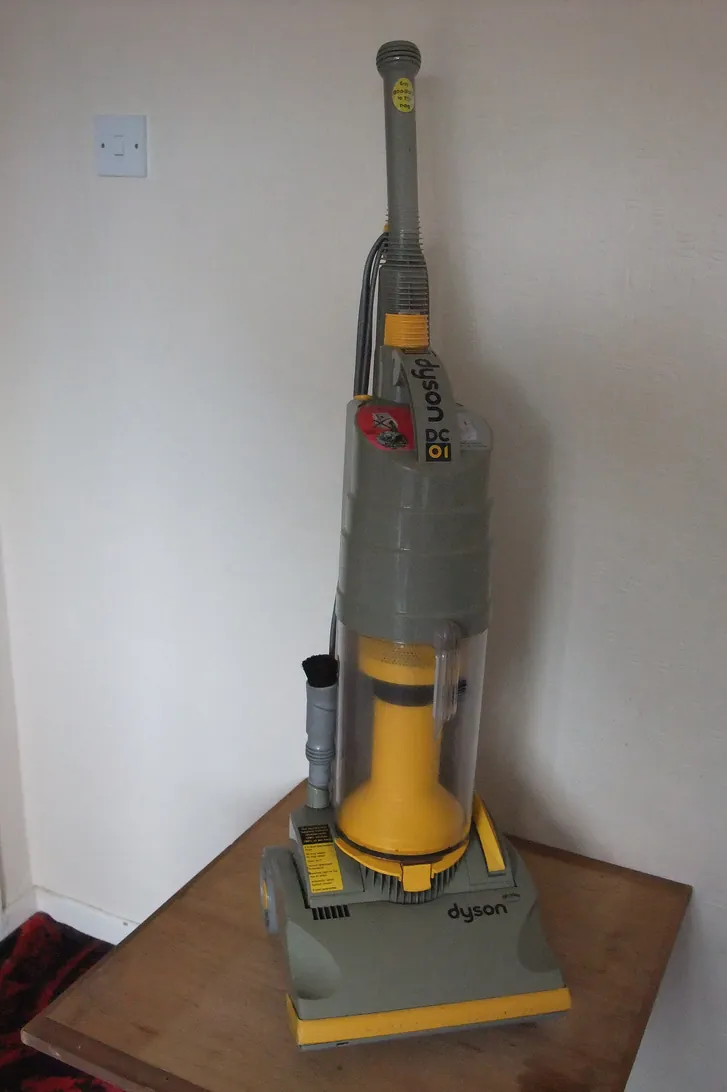
The breakthrough came from Japan. A company called Apex licensed the design and, from 1986, made and sold it as the G-Force. It was bright pink and expensive, selling for the equivalent of about $2,000. It became a cult favorite and later won a major Japanese design prize. A license in North America brought in more royalties.
The money was not a fortune, but it was enough to change his plan. If no one would make his machine in Britain, he would make it himself.
His own name on it
In 1993 Dyson launched the DC01 under his own name, built in Wiltshire. It cost more than its rivals and looked nothing like them. Its clear bin showed the dirt it had collected, so owners could see the machine working. The advertising promised that you could say goodbye to the bag.
By early 1995 the DC01 was the best-selling vacuum cleaner in Britain. The companies that had rejected the design now had to compete with it, and some tried to copy it. Dyson sued Hoover over its Triple Vortex bagless cleaner. In October 2000 the High Court ruled that Hoover had infringed Dyson’s patent. Hoover paid £4 million in damages, which Dyson said was the largest award in British patent history.
The empire
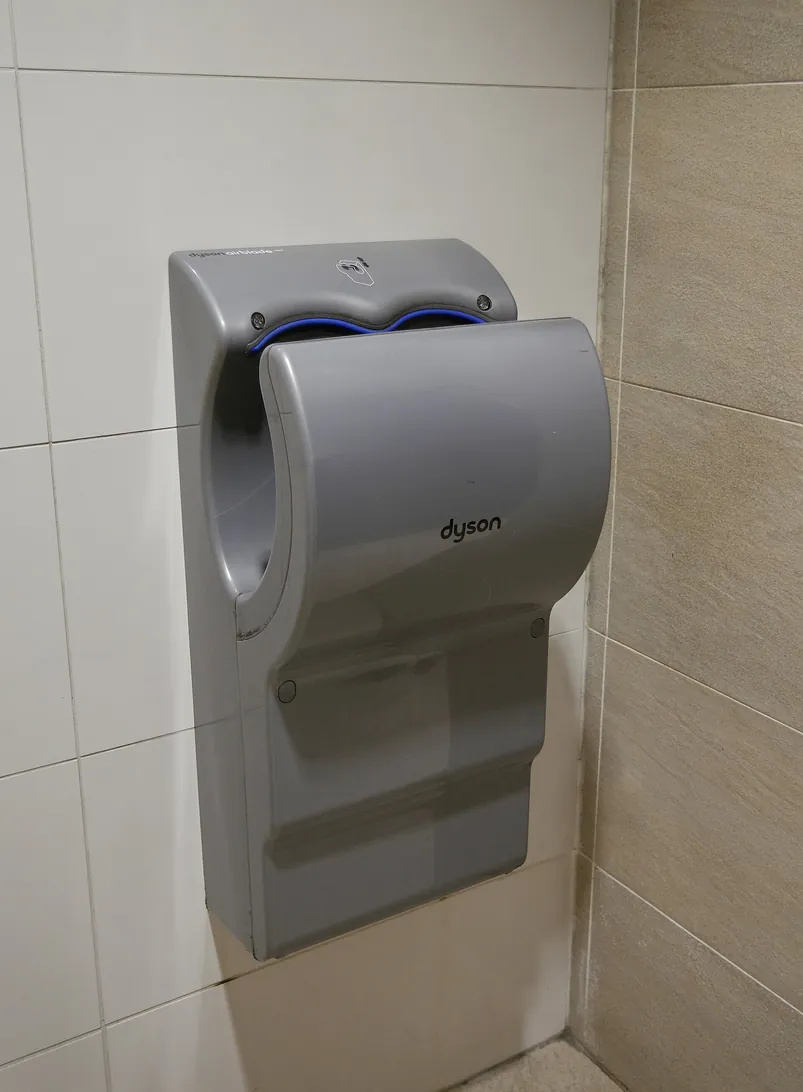
Dyson went on to make hand dryers, bladeless fans, hair dryers and robot vacuums. The company stayed private, owned by Dyson and his family. He kept talking about failure as a method. “You never learn from success, but you do learn from failure,” he told Entrepreneur in 2012. In 2025 the company reported EBITDA of £1.11 billion and operating profit of about £600 million, on revenue of about £6.1 billion, though sales were falling as Chinese rivals pushed into premium appliances.
In May 2026 the Sunday Times Rich List estimated his wealth at £12 billion. It all goes back to a cardboard cone taped to a Hoover, and to 5,126 prototypes that did not quite work. The machine that annoyed him in 1978 carried the name of the company he would beat in court 22 years later.
What the record shows
- Persistence is a number. 5,127 prototypes means 5,126 failures, each one useful.
- Fund the work however you can. A backer, a payout, a second mortgage and a teacher’s salary kept the shed running.
- Incumbents protect their profits. A bagless cleaner threatened the money rivals made from bags.
- One market’s no can be another’s yes. Britain rejected the cleaner; Japan bought it.
- Licensing can pay for freedom. Royalties funded Dyson’s own factory.
Another founder who kept going after rejection was Sara Blakely, with Spanx. Milton Hershey also failed twice before his caramels paid off. And for a company that could have saved itself by backing its own invention, see Kodak and the digital camera.
 $5,000Read nextSara Blakely Started Spanx With $5,000Sara Blakely sold fax machines door to door. She put $5,000 of her savings into an idea she had cutting the feet off her pantyhose, kept 100% of the company for 21 years, and sold a majority to Blackstone at a $1.2 billion valuation.Spanx · 4 min read
Questions readers ask
- How many prototypes did James Dyson make?
- 5,127, built over about five years from 1979, mostly in a shed behind his house. He has said there were 5,126 failures and that he learned from each one.
- How long did it take James Dyson to invent the bagless vacuum?
- The first cardboard test was in 1978, and the prototypes took about five years. But the first vacuum sold under his own name, the DC01, did not reach shops until 1993, about 15 years after the idea.
- Why did Dyson launch in Japan first?
- British manufacturers would not license his design, partly because replacement dust bags were a profitable business for them. A Japanese company, Apex, made and sold it as the G-Force from 1986 for the equivalent of about $2,000.
- Did Dyson sue Hoover?
- Yes. In October 2000 the High Court ruled that Hoover's Triple Vortex cleaner infringed Dyson's dual cyclone patent. Hoover paid £4 million in damages, which Dyson said was the largest award in British patent history.
- How much is James Dyson worth?
- The Sunday Times Rich List estimated his wealth at £12 billion in May 2026.
Run the numbers yourself
- Break-Even Point CalculatorFind the units and sales needed to cover fixed costs, and the volume needed for a profit target.
- Net Worth CalculatorAdd up what you own and owe, then compare your net worth with U.S. households your age.
- Compound Interest CalculatorSee how a deposit grows with compounding, extra contributions and different compounding frequencies.
People and companies in this story
People
- James Dyson
- Deirdre Dyson
Companies
- Dyson
- Hoover
- Apex
This story is on these lists
Share this story
Send the link to someone who would like this story, or keep it for later.
The timeline
Drawn to scale: the gaps are the years in between. Choose a year.
Sources & further reading 10
- Our storyJames Dyson Foundation
- The Dyson storyDyson
- How it took me 5,126 failures before I created the ultimate vacuum cleanerJames Dyson, The Scottish Mail on Sunday, August 2021
- Dyson, JamesEncyclopedia.com (Newsmakers)
- Failure Doesn't SuckFast Company, May 2007
- James Dyson on Using Failure to Drive SuccessEntrepreneur, November 2012
- Dyson accepts £4m damages from HooverDesign Week, October 2002
- Dyson 2025 resultsDyson, March 2026
- Dyson lifts dividend to billionaire's family holding companyBloomberg, via The Edge Malaysia, October 2026
- Sir James Dyson still at the top of South West's Sunday Times Rich ListHits Radio, May 2026
Spot an error? Send a correction. Corrections are dated and noted here.
Photographs are credited under each picture; licenses are listed on the image credits page.