Hershey
Milton Hershey Failed Twice, Then Sold Caramel for $1 Million
Milton Hershey's first two candy businesses failed. His third, a caramel company, sold for $1 million in 1900. He spent it on a chocolate factory, a town, and a school that still controls the company.
- Failed businesses
- 2Failed businesses. Candy businesses Milton Hershey lost before his success: Philadelphia (1876 to 1882) and New York (1883 to 1886).
- Sold for, 1900
- $1MSold for, 1900. The price the American Caramel Company paid for the Lancaster Caramel Company on August 10, 1900. Hershey kept the chocolate side.
In this story · 6 chapters
The short answer
Milton Hershey's first candy business, in Philadelphia, closed in 1882 after six years, and his second, in New York, closed in 1886. Back in Lancaster with bad credit, he built the Lancaster Caramel Company on one large British order. In 1900 he sold it to the American Caramel Company for $1 million and put the money into chocolate.
In May 1876 an 18-year-old from rural Pennsylvania arrived in Philadelphia to start a candy business. The city was crowded with visitors to the Centennial Exposition, America’s first world’s fair, and Milton Hershey had his business cards printed with a picture of one of the fair’s great halls. He had spent four years as an apprentice to a confectioner in Lancaster. He had very little money of his own. His mother’s family put up most of it.
The shop lasted six years. Competition was tough and Hershey never managed to bring in enough cash to cover his costs. In the spring of 1882 he closed it, and the family money that had kept it going was gone.
The years on the road
His father was living in Denver, and Hershey went west. He did not have the money to start again, so he took a job with a local confectioner. It turned out to be the most valuable job of his life. In Denver he learned that caramel made with fresh milk tasted better and lasted longer on the shelf than the usual recipe.
He carried that idea through Chicago and New Orleans, without luck, and in 1883 settled in New York City. He opened his own business again, and for a while it did well. Then it ran out of money. In 1886, after three years, the second Hershey candy business closed.
He was in his late twenties. He had failed twice, in two of the biggest cities in America.
One order from Britain
Hershey went home to Lancaster and started a third time, making milk caramels. It was a hard start. According to the Hershey Community Archives, he came back with a bad credit rating from New York, and the only collateral he could offer a bank was a few cooking kettles in rented space in a rough part of town.
Then a British candy importer tasted the caramels and placed a large order. The importer is known today only by his cable address, “Decies.” Hershey needed a loan to buy the ingredients to fill it. The cashier at the Lancaster County National Bank was impressed enough to lend him the money and back the loan with his own signature. When the payment from Britain arrived, Hershey was so excited that he ran to the bank still wearing his apron.
That order was the turning point. The Lancaster Caramel Company sold its “Crystal A” caramels across the country and abroad. In 1891 Hershey bought a second factory in Mount Joy, Pennsylvania. In 1892, to compete with a Midwestern rival on shipping costs, he opened a western branch in Chicago, and later added a factory in Reading. By 1894 the company had about 1,300 workers. The man who had failed twice was now one of the richest in Lancaster.
“Caramels are a fad”
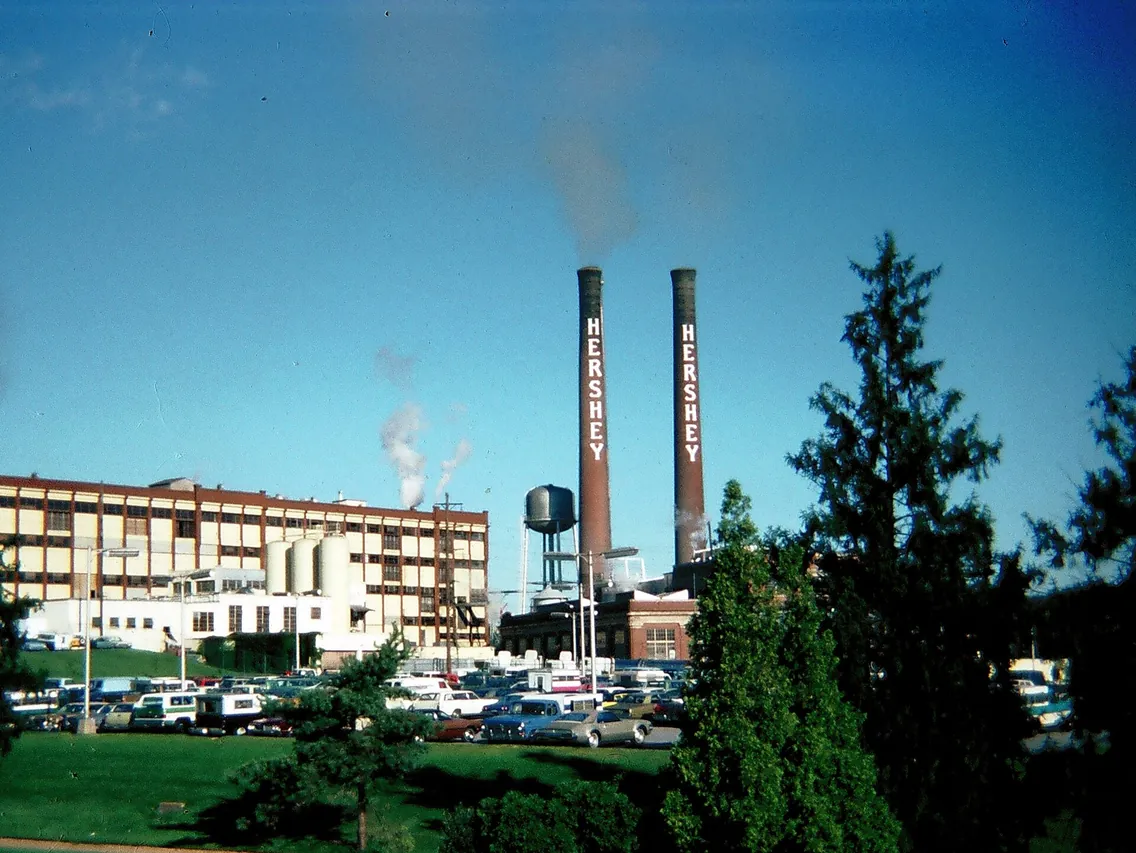
In 1893 Hershey visited the World’s Columbian Exposition in Chicago and was captivated by one exhibit: German machinery for making chocolate. According to the archives, he told his cousin Frank Snavely: “Caramels are a fad but chocolate is permanent.”
He bought the machines and shipped them to Lancaster. At first he used them to coat his caramels and to make cocoa and baking chocolate. When the caramel company was incorporated on February 8, 1894, the Hershey Chocolate Company was set up as its subsidiary. In February 1900 he brought what was thought to be Lancaster’s first automobile to town and used it to advertise his chocolate.
Then he made the bet. After months of negotiation, he agreed in the spring of 1900 to sell the caramel business to the American Caramel Company for $1 million. The sale closed on August 10, 1900. He gave up the factory, the machinery, the stock on hand, his formulas and the Crystal A trademark, and promised not to make caramels in Lancaster. He kept one thing: the Hershey Chocolate Company and all of its machinery.
The chocolate town
Milk chocolate was then a luxury, a Swiss specialty. Hershey wanted to make it cheaply enough for everyone. That needed fresh milk in huge quantities, so he bought farmland near Derry Church, the village where he was born, about 30 miles from Lancaster. The first Hershey milk chocolate bar went on sale in 1900, and he kept refining his own formula by trial and error for years.
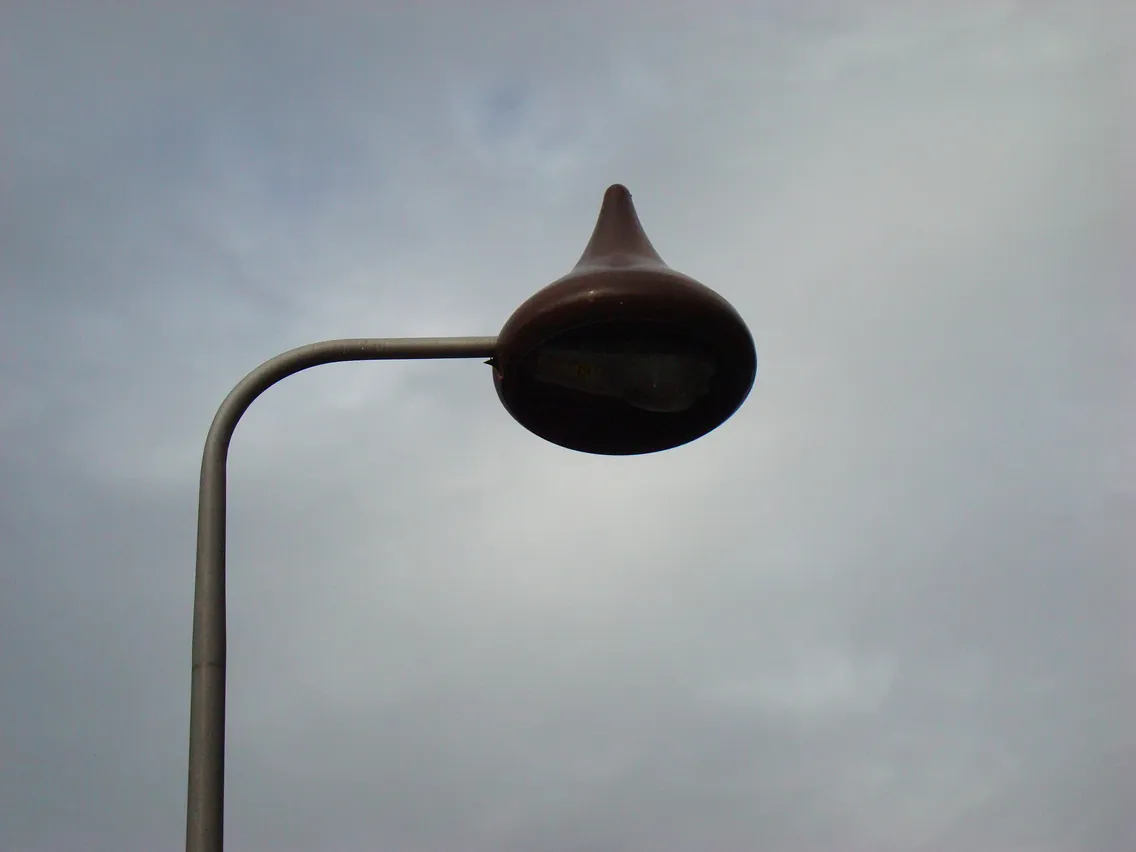
Construction of the factory began in 1903 and it opened in 1905. Around it Hershey built houses for his workers, along with schools, parks and a trolley line. In 1906 Derry Church was renamed Hershey. Kisses followed in 1907. By 1911 the company’s sales had reached $5 million, more than eight times its sales a decade earlier.
Where the money went
Milton and Catherine Hershey had no children. In 1909 they signed a deed of trust founding the Hershey Industrial School, a home and school for orphaned boys. Catherine died in 1915. In 1918 Hershey gave the school’s trust his stock in the chocolate company, then worth about $60 million. Almost all of his fortune went with it.
He died in 1945, aged 88. The school, renamed the Milton Hershey School in 1951, now teaches about 2,000 low-income children for free. Its trust is one of the richest school endowments in the world. Through Hershey Trust Company it still holds about 80% of the voting power in The Hershey Company, enough to turn down takeover offers, as it did with Mondelez in 2016.
In 2025 The Hershey Company reported net sales of $11.7 billion. The business was built on a $1 million sale by a man who had already gone broke twice.
What the record shows
- Two failures, one lesson. Philadelphia and New York both closed, but the fresh-milk caramel he learned in Denver became the product that made him rich.
- A loan backed by a stranger. Hershey had bad credit and almost no collateral. A bank cashier signed for him.
- One order changed everything. The British importer’s order paid off the loan and started the growth.
- He sold the winner. The caramel company was thriving when he sold it. The $1 million funded chocolate.
- The fortune still has a job. Hershey’s 1918 gift means a school controls one of America’s biggest candy makers.
Henry Ford also lost two companies before the one that worked: read how Ford failed before he succeeded. For another fortune built on a sweet product, see how Asa Candler bought Coca-Cola for $2,300. And for a founder who also had to start over late, read about Colonel Sanders and his $105 check.
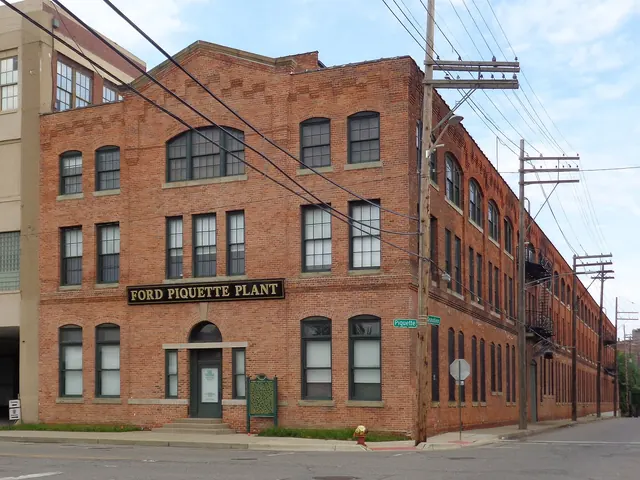 $223.65Read nextHenry Ford Failed Twice Before Ford Motor CompanyHenry Ford's first car company built 20 vehicles and was dissolved. His second became Cadillac after he walked out. His third was down to $223.65 in the bank when its first customer paid.Ford · 5 min read
Questions readers ask
- What businesses did Milton Hershey fail at?
- Two candy businesses. The first, in Philadelphia, ran from 1876 until it closed in the spring of 1882. The second, in New York City, started in 1883 and closed in 1886. In between he worked for a confectioner in Denver and tried his luck in Chicago and New Orleans.
- Did Milton Hershey go bankrupt?
- His Philadelphia business failed in 1882 after six years, despite money from his mother's family, and his New York business failed in 1886. He returned to Lancaster with a bad credit rating and almost nothing to offer a bank as collateral.
- Who did Milton Hershey sell the caramel company to?
- The American Caramel Company, for $1 million. The sale closed on August 10, 1900. Hershey gave up the factory, the formulas and the Crystal A trademark, and agreed not to make caramels in Lancaster, but kept the Hershey Chocolate Company and its machinery.
- How did Milton Hershey make his money?
- First with caramels. The Lancaster Caramel Company had about 1,300 workers by 1894. He sold it in 1900 and put the money into milk chocolate, building a factory that opened in 1905 in the town now called Hershey, Pennsylvania.
- Who owns Hershey?
- The Hershey Company is publicly traded, but Hershey Trust Company, as trustee for the Milton Hershey School Trust, holds about 80% of the voting power. Milton Hershey gave his stock to the school's trust in 1918.
Run the numbers yourself
- Millionaire CalculatorFind the age you could reach $1 million, and what that million would be worth after inflation.
- Profit Margin CalculatorTurn cost and price into profit, margin and markup, or find the price that hits a target margin.
- Business Valuation CalculatorEstimate what a business could be worth with earnings multiples, a revenue multiple and a DCF.
People and companies in this story
People
- Milton Hershey
- Catherine Hershey
Companies
- The Hershey Company
- Lancaster Caramel Company
- American Caramel Company
This story is on these lists
Share this story
Send the link to someone who would like this story, or keep it for later.
The timeline
Drawn to scale: the gaps are the years in between. Choose a year.
Sources & further reading 10
- Lancaster Caramel CompanyHershey Community Archives
- HersheyArchives@30, Part 4: Selling the Lancaster Caramel CompanyHershey Community Archives
- Milton Hershey's Philadelphia years (Fall 2021 newsletter)Derry Township, Pennsylvania
- Milton HersheyEBSCO Research Starters
- Milton S. Hershey: The Candy ManEntrepreneur
- Milton Hershey BiographyBiography.com
- Hershey Foods CorporationEncyclopedia.com (International Directory of Company Histories)
- Hershey Reports Fourth-Quarter and Full-Year 2025 Financial ResultsThe Hershey Company
- Related party transactions (2025 annual report)The Hershey Company, SEC filing
- What Is the Hershey Trust and Why Can It Block Takeover Deals?Bloomberg, via BNN Bloomberg
Spot an error? Send a correction. Corrections are dated and noted here.
Photographs are credited under each picture; licenses are listed on the image credits page.