Chobani
Chobani Began in a Yogurt Plant Kraft Threw Away
In 2005 Kraft was closing an old yogurt factory in upstate New York. A feta maker with no yogurt experience bought it with a government-backed loan. Twenty years later, Chobani was valued at $20 billion.
- Plant price
- $700KPlant price. The price of the closed Kraft plant in South Edmeston, New York, by Ulukaya's own account. He borrowed it with an SBA-backed loan.
- Valuation, 2025
- $20BValuation, 2025. Chobani's reported valuation after a $650 million equity raise in October 2025.
In this story · 6 chapters
The short answer
In 2005 Hamdi Ulukaya, who ran a small feta business, bought a closed Kraft yogurt plant in upstate New York for about $700,000, by his account, with a loan backed by the US Small Business Administration. The first Chobani went on sale in 2007. In October 2025 the company raised $650 million at a reported $20 billion valuation.
In 2005 Hamdi Ulukaya was running a small feta cheese company in upstate New York. Then a piece of mail caught his eye: an advertisement for a factory for sale. “It came in the junk mail,” he said years later.
He had grown up on a dairy farm in eastern Turkey, in a Kurdish family that made cheese, and a little yogurt, mostly from sheep’s milk. In 1994 he came to the United States to learn English, first at Adelphi University on Long Island, then in Albany. His family pressed him to go into business rather than study it. He started by importing their feta, and in 2002 opened a small feta plant of his own, Euphrates, in Johnstown, New York. It was a living, not a fortune.
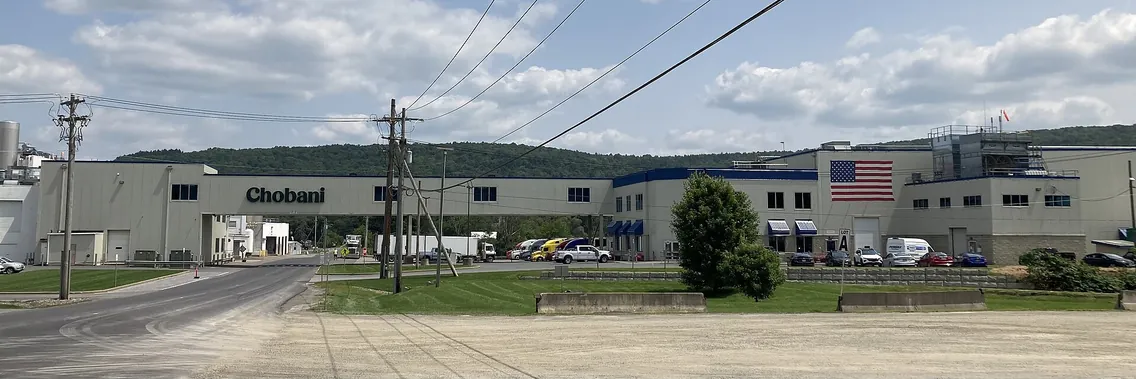
The seller was Kraft Foods. It was getting out of the yogurt business, and its plant in South Edmeston, a village in a dairy region southeast of Syracuse, was being shut down. The workers were being let go. The building was old, but it still held everything needed to make yogurt.
Ulukaya went to look at it. By his account, he decided to buy it the next day.
The loan
He did not have the money. What he had was a business plan, the first he had ever written, and a banker willing to take it to the Small Business Administration, the US agency that guarantees loans to small firms.
The loan came through. Ulukaya has said the plant cost $700,000, plus about $300,000 for everything else he needed. In August 2005 he had the keys to the factory.
It was a strange purchase on paper. A man with no yogurt experience had borrowed about $1 million to buy a plant that one of the biggest food companies in the world had decided it didn’t want.
Two years in the dark
The money could buy a factory but not a product. Ulukaya hired a handful of Kraft’s former workers, five people in total at the start, and brought in a yogurt maker. Together they spent the next two years on a recipe: Greek-style strained yogurt, thicker and higher in protein than the runny, sweet yogurt most American shoppers knew.
Nothing was being sold. The loan still had to be paid.
The first Chobani went on sale in 2007, in one grocery store. Then the orders started. By 2009 big supermarket chains such as Stop & Shop and ShopRite were carrying it, followed by Costco and BJ’s.
Within about five years of launch, Chobani was selling more than $1 billion of yogurt a year. In 2012 the US Small Business Administration named it its Entrepreneurial Success of the Year.
Growing too fast
Success brought a new problem. To keep up with demand, Chobani built a second plant in Twin Falls, Idaho, which opened in 2012. It was one of the largest yogurt factories in the world, and its cost kept rising.
In 2013 Chobani recalled some of its yogurt after reports of swollen cups. The next year, short of cash for its expansion, it took a $750 million deal from the private-equity firm TPG. As part of the deal, TPG also got the right to buy a large stake in the company.
The business Ulukaya had started with a small loan now needed a very large one to keep growing.
Giving away 10%
In April 2016 Ulukaya called his staff together, first in New York, then in Idaho. Each of about 2,000 full-time employees was handed a packet.
Inside were shares. Together they were worth up to 10% of Chobani, and they came out of Ulukaya’s own stake. The longer someone had worked there, the more they got. At a valuation of $3 billion, press reports estimated the average stake at about $150,000, and more than $1 million for some of the longest-serving workers. The shares would pay out if the company was sold or went public.
“I cannot think of Chobani being built without all these people,” Ulukaya told The New York Times.
The $20 billion yogurt company
Chobani filed to go public in 2021 and then pulled the plan in 2022, citing market conditions. It stayed private, bought the coffee company La Colombe for $900 million in 2023, and kept building.
In October 2025 it raised $650 million in new equity. According to reports of the deal, the round valued Chobani at $20 billion. Bloomberg reported that its revenue rose 29% in 2025, to $3.8 billion.
The money went into milk. Chobani announced a $500 million expansion of its Idaho plant and broke ground on a $1.2 billion plant in Rome, New York, on the site of a former Air Force base. It is designed to process about 12 million pounds of milk a day and to bring more than 1,000 jobs. At full capacity, Chobani expects to buy about 6 billion pounds of New York milk a year. About 30% of Chobani’s workers are immigrants, a share Ulukaya has said he wants to grow.
Ulukaya still owns most of the company. The plant Kraft sold off in 2005 for $700,000 became the start of a business worth many thousands of times that.
What the record shows
- One company’s cast-off is another’s start. For Kraft the plant was a cost to cut. For Ulukaya it was a ready-made factory at a fraction of what it would cost to build.
- Borrow to buy something that works. The loan paid for a building and equipment that could make product, not for an idea.
- Expect a long, empty stretch. Two years passed between buying the factory and selling the first cup.
- Fast growth needs fresh money. Even a hit product needed a $750 million outside deal to fund its next plant.
- Shared ownership has a real price. The 10% Ulukaya handed his staff came out of his own pocket.
Other founders in this archive also started with what someone else didn’t want. Play-Doh began as a wallpaper cleaner nobody needed anymore. Harry Sonneborn found McDonald’s real fortune in land under its restaurants. And Spanx started with $5,000 and no outside investors at all.
 $0Read nextSriracha: The Hot Sauce That Never Bought an AdDavid Tran built Sriracha into a business with an estimated $131 million a year in sales without spending a dollar on advertising. Then he fell out with the farmer who grew his peppers, and a jury handed the farmer $23.3 million.Huy Fong Foods · 7 min read
Questions readers ask
- How much did Chobani's first plant cost?
- Hamdi Ulukaya has said the closed Kraft plant in South Edmeston, New York, cost $700,000, with about $300,000 more for everything else. He paid for it with a loan backed by the US Small Business Administration.
- Did Hamdi Ulukaya have yogurt experience?
- No. He was running a small feta cheese business in upstate New York when he saw the ad for the Kraft plant. He hired some of Kraft's former workers and spent about two years on the recipe before Chobani went on sale in 2007.
- Did Chobani really give shares to its employees?
- Yes. In April 2016 about 2,000 full-time employees received shares worth up to 10% of the company, allocated by length of service. At a $3 billion valuation, press reports put the average stake at about $150,000.
- How much is Chobani worth?
- Chobani raised $650 million in October 2025 at a reported valuation of $20 billion. Bloomberg reported 2025 revenue of $3.8 billion.
Run the numbers yourself
- Break-Even Point CalculatorFind the units and sales needed to cover fixed costs, and the volume needed for a profit target.
- Business Loan CalculatorPrice a business loan with fees and weekly or monthly payments, and turn a factor rate into an APR.
- Profit CalculatorWalk from revenue to gross profit, operating profit and net profit, with the margin at each step.
People and companies in this story
People
- Hamdi Ulukaya
Companies
- Chobani
- Kraft Foods
- TPG
- La Colombe
This story is on these lists
Share this story
Send the link to someone who would like this story, or keep it for later.
The timeline
Drawn to scale: the gaps are the years in between. Choose a year.
Sources & further reading 11
- Processor of the Year: ChobaniFood Processing, 2012
- Chobani keeps expanding in New York and around the worldThe Daily Gazette
- An American dream: Chobani to build $1.2 billion plant in RomeSpectrum News, April 2025
- Turkish billionaire to transform New York air base into yoghurt plant with $1.2bn investmentbne IntelliNews, 2025
- SBA honors ChobaniCentral New York Business Journal
- People Over Profits: interview with Hamdi UlukayaSummit
- Chobani employees given 10 percent of companyFood Processing, April 2016
- Chobani employee sharesFortune, April 2016
- Chobani raises $650M to fund US plant expansionThe Dairy Site / Reuters, October 2025
- Chobani's tech-like valuation puts founder among the world's richestBloomberg, October 2025
- Yogurt maker Chobani expects over $1 billion in 2026 earningsBloomberg, March 2026
Spot an error? Send a correction. Corrections are dated and noted here.
Photographs are credited under each picture; licenses are listed on the image credits page.