Nike
Nike Was Always Broke: The Blue Ribbon Sports Years
Phil Knight and his old track coach started with $500 each. For more than a decade, the faster their company grew, the closer it came to running out of cash. In 1975 its own bank called the FBI. Last year Nike sold $46.4 billion of goods.
- Founders put in
- $1,000Founders put in. Phil Knight and Bill Bowerman each pledged $500 to form Blue Ribbon Sports in January 1964.
- Revenue, FY2026
- $46.4BRevenue, FY2026. Nike, Inc. revenues in fiscal 2026, the year ended May 31, 2026.
In this story · 7 chapters
The short answer
Phil Knight and Bill Bowerman each put $500 into Blue Ribbon Sports, the company that became Nike, in 1964. It grew so fast that it was always short of cash. In 1975 a late payment left it $75,000 short, and Bank of California froze its accounts and called the FBI. Its Japanese partner, Nissho Iwai, paid off the bank.
In January 1964, two men shook hands in Oregon and started a company. Phil Knight was a former University of Oregon runner with an accounting background and an idea from his time at Stanford: importing Japanese running shoes into the United States. Bill Bowerman was his old coach.
Each put in $500. There was no business plan and no lawyer. They called the company Blue Ribbon Sports, a name Knight had made up on the spot when a Japanese shoe company, Onitsuka, asked who he represented. Their first order was 300 pairs of Onitsuka Tiger shoes.
The trunk business
Knight sold them himself, from the trunk of his car at track meets around the Pacific Northwest. It was a side business. He worked as an accountant and later taught accounting at Portland State University. Bowerman kept coaching at Oregon and experimented with modified shoes for his runners. In its first year, Blue Ribbon sold about 1,300 pairs and grossed $8,000.
In 1965 Knight hired his first full-time employee, Jeff Johnson, a runner he knew from Stanford. In 1966 Johnson opened Blue Ribbon’s first store, in Santa Monica, California. For years Knight kept a day job alongside the company.
The shoes sold. That turned out to be the problem.
Why growth meant crisis
Blue Ribbon’s business had a structural flaw that every importer knows. It had to pay Onitsuka for each shipment of shoes before it could sell them, and it sold them months later. The more shoes customers wanted, the bigger the bill that arrived long before the money came in.
Knight’s answer was always to order more. Demand was growing, and he hated to leave sales on the table. So the company lived on borrowed money. By 1970 sales had reached $600,000, but the bank, First National, saw a business with almost no cash and growing debts. It capped Blue Ribbon’s credit line and imposed sales quotas.
Knight tried other routes. He asked for a $1.2 million loan, which the bank considered unrealistic. He tried to sell 30% of the company to the public for $300,000. According to the summary of his memoir by Shortform, the offering raised $300. The family of an early employee, Bob Woodell, lent the company $8,000.
A trading company steps in
Help came from an unexpected direction. Through the Portland branch of the Bank of Tokyo, Knight was introduced to Nissho Iwai, a giant Japanese trading company. Trading companies financed trade for a living: they bought goods from manufacturers and extended credit to importers, taking a cut in return.
In 1971 Nissho agreed to finance Blue Ribbon’s purchases. Its representative, Tom Sumeragi, became one of the company’s most important allies. Nissho also introduced Blue Ribbon to new factories, which mattered because the relationship with Onitsuka was falling apart.
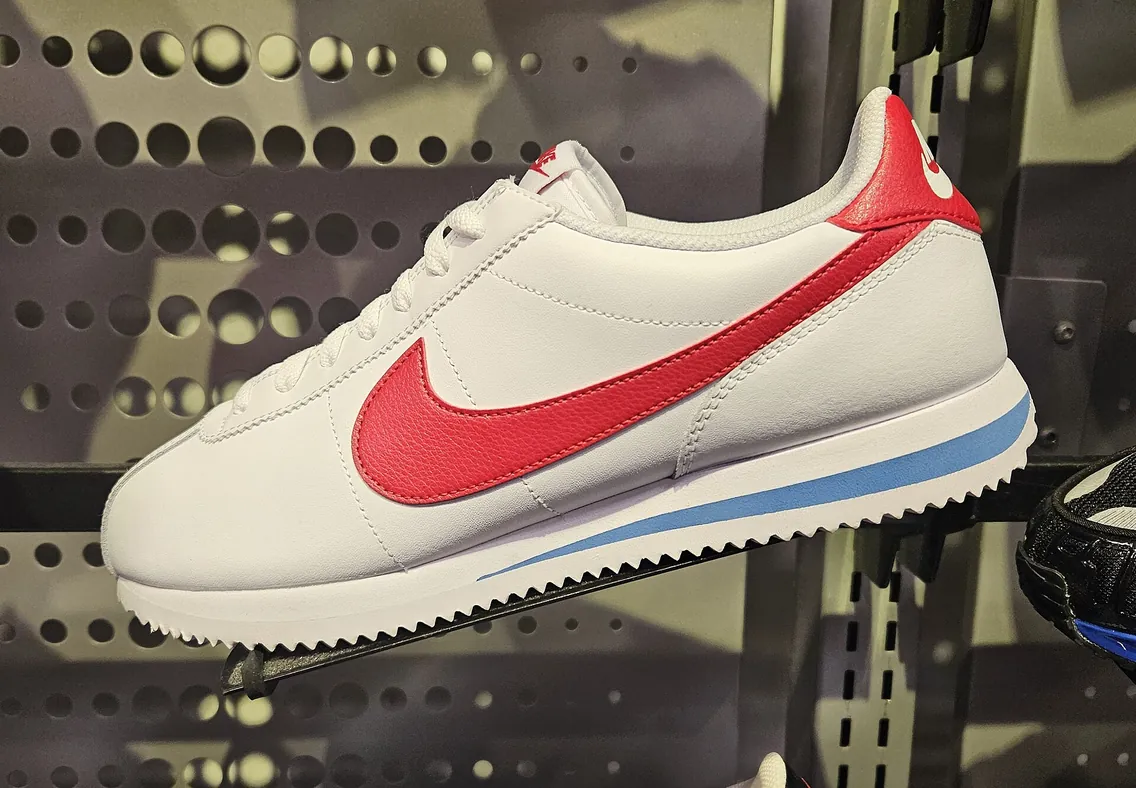
The same year Blue Ribbon launched its own brand. It needed a logo, and Knight paid a Portland State University design student, Carolyn Davidson, $35 for a curved mark. He didn’t love it, but production was about to start. The name, after the Greek goddess of victory, came to Jeff Johnson, who said it arrived in a dream. Nike running shoes were on sale by the 1972 U.S. Olympic trials, and by the end of the decade Nike held about half of the American running-shoe market.
1975: the FBI
By 1975 Blue Ribbon was much bigger and still permanently short of cash. It owed Nissho about $1 million for shoes. Then one retailer’s payment arrived late, and the company found itself $75,000 short.
To cover the gap, Knight’s team drained every account it had. Checks to factory workers and creditors bounced. Bank of California, which had given the company a small credit line, decided it had seen enough. It froze Blue Ribbon’s funds, told the company it no longer wanted its business, and contacted the FBI, because, as the bank saw it, the situation looked like fraud.
It was the closest the company came to dying.
Nissho’s answer
Nissho did its own audit. A senior manager, Ito, went through the books with Sumeragi. He found a company that had been reckless with its cash but honest, and growing fast.
Then Ito went to Bank of California with Knight and told the bankers that Nissho would pay off Blue Ribbon’s debt in full. The bank, which had been courting Nissho’s own business, backed down.
The company survived. In 1978 it renamed itself Nike, Inc., and on December 2, 1980, it went public.
Three years later Knight invited Carolyn Davidson to lunch at Nike’s offices. It turned into a surprise party. The designer who had been paid $35 for the Swoosh was given a gold ring in its shape, set with a diamond, and an envelope holding 500 shares of Nike stock. She never sold them. After decades of stock splits they had multiplied many times over.
Nike today
In the fiscal year that ended May 31, 2026, Nike, Inc. reported revenues of $46.4 billion. The company that couldn’t make payroll in 1975 now sells around the world.
What the record shows
- Growth consumes cash. A business that pays suppliers before it is paid by customers needs more money the faster it grows. Blue Ribbon’s success was the cause of its crises.
- Profit and liquidity are different things. Blue Ribbon was selling more every year. It still bounced its payroll.
- The right lender understands the business. A bank saw thin cash. A trading company that financed shoes for a living saw a fast-growing customer worth backing.
- Credit can protect ownership. Knight funded growth with borrowed money rather than selling most of the company, and he and Bowerman kept control until the stock market listing.
Other founders in this archive faced the same squeeze. Brownie Wise built Tupperware’s sales faster than anyone planned for. Amancio Ortega designed Zara’s supply chain so that cash came in quickly. Knight survived by finding a lender who believed in the growth that was nearly killing him.
 $27,000Read nextFred Smith's $27,000 Blackjack Win That Kept FedEx FlyingFedEx's founder spent his inheritance and tens of millions of investors' money on an overnight delivery airline. When a crucial loan was refused, he took the company's last $5,000 to Las Vegas. In fiscal 2026 FedEx had revenue of $94.7 billion.FedEx · 5 min read
Questions readers ask
- How much money did Nike start with?
- Phil Knight and Bill Bowerman each put $500 into Blue Ribbon Sports, the company that became Nike, in 1964. Their first order was 300 pairs of Onitsuka Tiger shoes.
- Why did Nike's bank call the FBI?
- In 1975 Blue Ribbon ran so short of cash that checks to workers and suppliers bounced. Bank of California froze its accounts and contacted the FBI, believing it looked like fraud. Its Japanese financier, Nissho Iwai, stepped in and paid off the bank.
- How much was the Nike Swoosh logo paid for?
- $35. Portland State University design student Carolyn Davidson created it in 1971. She later received Nike shares.
- How much revenue does Nike make?
- $46.4 billion in fiscal 2026, the year ended May 31, 2026.
Run the numbers yourself
- Business Loan CalculatorPrice a business loan with fees and weekly or monthly payments, and turn a factor rate into an APR.
- Emergency Fund CalculatorSize an emergency fund from essential expenses and see how long it will take to build it.
- Profit Margin CalculatorTurn cost and price into profit, margin and markup, or find the price that hits a target margin.
People and companies in this story
People
- Phil Knight
- Bill Bowerman
- Carolyn Davidson
Companies
- Nike
- Blue Ribbon Sports
- Onitsuka
- Nissho Iwai
- Bank of California
This story is on these lists
Share this story
Send the link to someone who would like this story, or keep it for later.
The timeline
Drawn to scale: the gaps are the years in between. Choose a year.
Sources & further reading 10
- NIKE Inc. company historyReference for Business
- NIKE Inc.: Special Contribution to SportsOregon Sports Hall of Fame
- Philip H. Knight: Special Contribution to SportsOregon Sports Hall of Fame
- Nike bought its iconic Swoosh logo design for a measly $35 in 1971Business Insider
- The $35 logo that launched a billion-dollar brandBeacon Senior News, July 2024
- Nissho Iwai: Nike's Financial Savior (summary of Shoe Dog by Phil Knight)Shortform
- Philip H. KnightReference for Business
- Nike: one-page summary of Shoe DogSummaries.com
- NIKE, Inc. Reports Fiscal 2026 Fourth Quarter and Full Year ResultsNIKE, Inc. (SEC Form 8-K), June 2026
- Methods of Prosperity, Part 71: Phil KnightMethods of Prosperity
Spot an error? Send a correction. Corrections are dated and noted here.
Photographs are credited under each picture; licenses are listed on the image credits page.