FedEx
Fred Smith's $27,000 Blackjack Win That Kept FedEx Flying
FedEx's founder spent his inheritance and tens of millions of investors' money on an overnight delivery airline. When a crucial loan was refused, he took the company's last $5,000 to Las Vegas. In fiscal 2026 FedEx had revenue of $94.7 billion.
- Last cash
- $5,000Last cash. The company's last cash, which Fred Smith took to a Las Vegas blackjack table after a crucial loan was refused, by his colleague Roger Frock's account.
- Revenue, FY2026
- $94.7BRevenue, FY2026. FedEx Corp.'s revenue for its fiscal year ended May 31, 2026.
In this story · 6 chapters
The short answer
In 1973, with a crucial loan refused and Federal Express down to its last $5,000, Fred Smith flew to Las Vegas and won $27,000 at blackjack, by his colleague Roger Frock's account. That kept the planes fueled for about another week. New investors and the 1977 deregulation of air cargo saved the company.
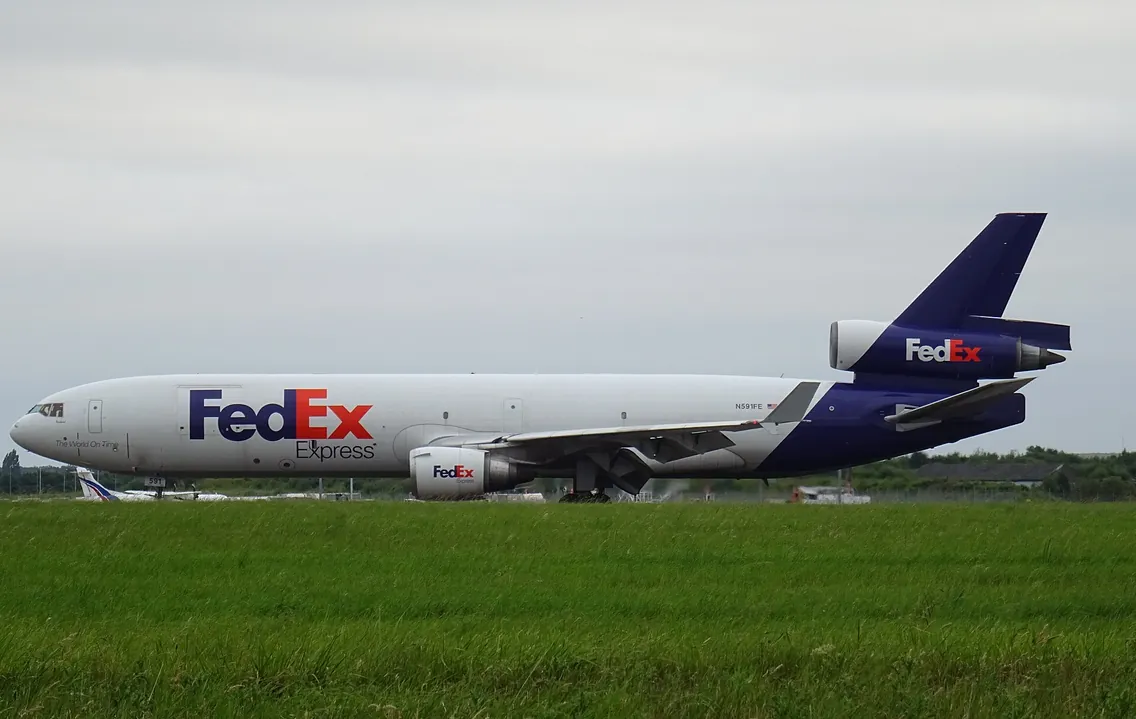
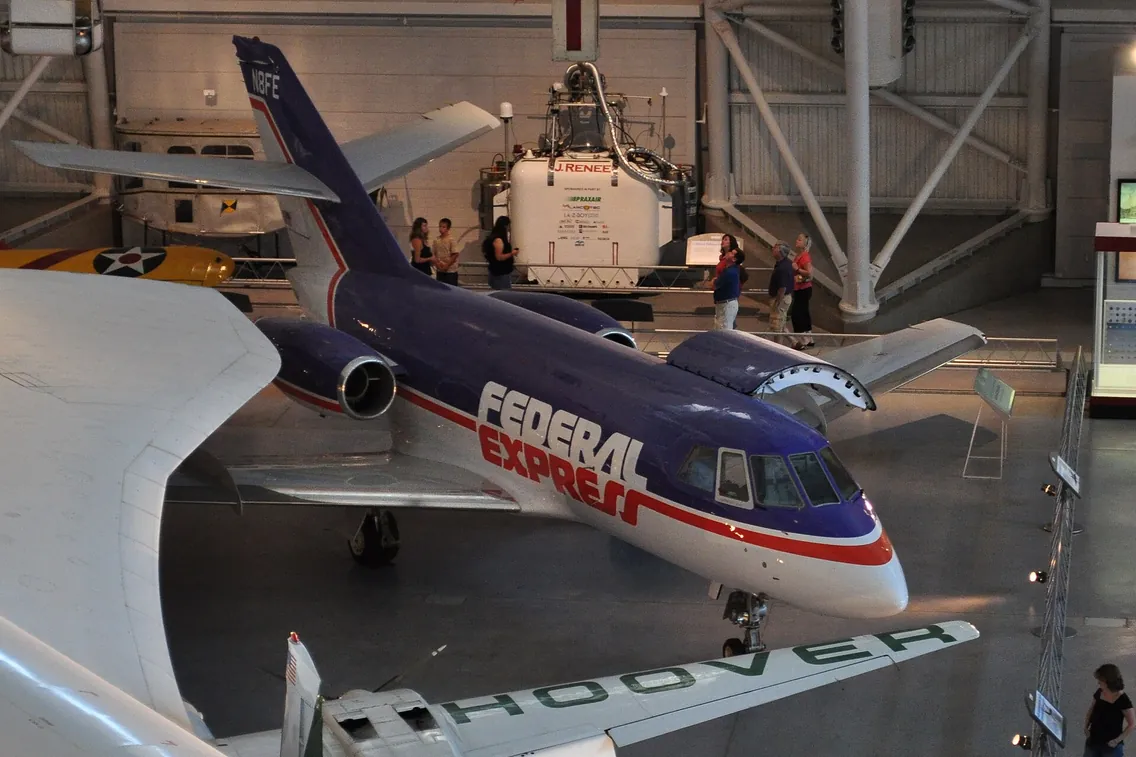
On the night of April 17, 1973, fourteen small French business jets took off from the old military hangars at Memphis airport. They had been converted to carry freight, and the company that owned them, Federal Express, had spent years and tens of millions of dollars getting to this point. Between them they carried 186 packages.
“It was a pretty grim night,” Fred Smith later recalled, according to Memphis Magazine. A few months later the company had almost no money left, and its founder was sitting at a blackjack table in Las Vegas.
An idea that only worked all at once
Smith’s idea was simple to describe and very expensive to build. Instead of sending packages from city to city on passenger flights, one company would fly everything to a single hub overnight, sort it, and fly it back out before morning. Any address in the network, by the next day.
He had written about the idea as a student at Yale. After the Marines and two tours in Vietnam, he went home to Arkansas and ran a business buying and selling used jets. In June 1971 he founded Federal Express in Little Rock.
The trouble with an overnight network is that it doesn’t work in pieces. A customer in Atlanta will only use it if it reaches the city they need. So the company had to buy planes, build a hub, hire couriers and sign up customers all at the same time, before any of it paid. Smith chose Memphis for the hub because it sat near the middle of the country and its airport was rarely closed by bad weather.
The money came from two places. Smith put in about $4 million from an inheritance left by his father, who had built a regional bus line. Then he went looking for investors. Accounts of the total vary, from about $72 million to $91 million. All agree that no new American company had ever raised so much venture capital.
Six packages, then 186
The first attempt was a disaster. In March 1973 a trial run with six jets carried exactly six packages. Smith postponed the official launch and his managers rebuilt the network around more cities.
The April 17 launch was better, but not by enough. With 389 employees and 14 Falcon jets, Federal Express served 25 cities from Rochester, New York, to Miami. The 186 packages it carried that night were nowhere near enough to pay for the flights.
Then the world changed around it. In October 1973 the Arab oil embargo sent fuel prices soaring. A company whose main cost was jet fuel was now paying far more for every flight, while still waiting for customers to discover it. Federal Express lost $29 million in its first 26 months.
The weekend in Las Vegas
The best account of what happened next comes from Roger Frock, the company’s first general manager. In his 2006 memoir, Frock described a moment in 1973 when the company was days from grounding its planes. Smith had gone to ask General Dynamics, the aerospace group, for money. Its board said no.
When Smith got back, Frock noticed there was more money in the company’s account than there should have been. He asked Smith where it had come from. Smith told him the meeting had been a bust, he knew they needed money for Monday, and so “I took a plane to Las Vegas and won $27,000.”
Frock was horrified that Smith had gambled the company’s last $5,000. Smith’s answer, as Frock tells it, was practical: without money for the fuel companies, the planes could not have flown anyway. In the version most often repeated since, the winnings covered a $24,000 fuel bill and kept Federal Express in the air for one more week.
It is one of the most famous stories in American business, and it is easy to tell it wrong. The blackjack money did not save FedEx. It bought a few days.
What actually saved it
The real rescue came from investors who were persuaded to put more money in. Shortly after the Las Vegas weekend, Smith raised another $11 million, The Motley Fool reported. More rounds followed, each one negotiated under pressure.
Federal Express began advertising nationally in 1975. It still lost $11.5 million that year on sales of $43.5 million. But the packages were coming. By late 1976 it carried about 19,000 a night, and it ended the year with its first profit, of $3.6 million.
The next turn came from Washington. Federal Express had been limited to small planes because it was not a certified air carrier. Smith lobbied Congress to change the rules, and in 1977 air cargo was deregulated. Federal Express could now fly big jets, and it bought Boeing 727s. That year it made $8 million on sales of $110 million. It went public in 1978, giving its investors their first chance to get money out. By 1979 profit had reached $21.4 million on sales of $258.5 million.
By late 1980 the company had 6,700 employees and flew 65,000 packages a night to 89 cities. It shortened its name to FedEx in 1994.
The empire
Smith ran the company for more than five decades. He stepped down as chief executive in 2022 and became executive chairman. He died in June 2025, at 80.
For the fiscal year ended May 31, 2026, FedEx reported revenue of $94.7 billion. The company that once could not pay a $24,000 fuel bill now takes in that much in less than ten seconds.
What the record shows
- Some businesses must be built whole. An overnight network is worthless until it reaches enough places. That made the early losses unavoidable.
- Cash is measured in days in a crisis. Federal Express had a working idea and still came within a weekend of grounding its fleet.
- Founders go first. Smith put his own inheritance in before asking investors for theirs.
- The famous rescue is rarely the real one. Blackjack bought a week. Patient investors and a change in the law built the company.
Nike’s founder lived through his own version of this: a shoe company that was always one bank meeting from collapse. For another founder who bet everything and lost twice before winning, read about Milton Hershey. And for a start-up that survived its cash crisis by selling cereal, see Airbnb’s Obama O’s.
 $40Read nextThe $30,000 of Cereal That Kept Airbnb AliveIn 2008 Airbnb's founders were deep in credit card debt and nobody wanted to invest. So they sold cereal at $40 a box. Twelve years later the company was worth $86.5 billion on its first day of trading.Airbnb · 5 min read
Questions readers ask
- Is the FedEx blackjack story true?
- The account comes from Roger Frock, FedEx's first general manager, who wrote in his 2006 memoir that Smith told him he had flown to Las Vegas after a failed meeting with General Dynamics and won $27,000. Frock had asked where the money in the account had come from. Most retellings add a $24,000 fuel bill.
- How much money did Fred Smith win at blackjack?
- $27,000, starting from the company's last $5,000, by Frock's account. It was enough to keep the planes fueled for about another week.
- How much money did Fred Smith put into FedEx?
- He put in about $4 million from his inheritance. Accounts of the venture capital he raised range from about $72 million to $91 million, at the time the largest sum ever raised for a new American company.
- When did FedEx start flying?
- On April 17, 1973. That night 389 employees and 14 Dassault Falcon jets delivered 186 packages to 25 American cities through a hub in Memphis.
- How big is FedEx now?
- FedEx reported revenue of $94.7 billion for the fiscal year ended May 31, 2026.
Run the numbers yourself
- Break-Even Point CalculatorFind the units and sales needed to cover fixed costs, and the volume needed for a profit target.
- Emergency Fund CalculatorSize an emergency fund from essential expenses and see how long it will take to build it.
- Business Loan CalculatorPrice a business loan with fees and weekly or monthly payments, and turn a factor rate into an APR.
People and companies in this story
People
- Fred Smith
- Roger Frock
Companies
- FedEx
- Federal Express
- General Dynamics2 stories
This story is on these lists
Share this story
Send the link to someone who would like this story, or keep it for later.
The timeline
Drawn to scale: the gaps are the years in between. Choose a year.
Sources & further reading 7
- Changing How the World Does Business: FedEx's Incredible Journey to Success (publisher's excerpt)Roger Frock, Berrett-Koehler Publishers, 2006
- The big idea that delivered a business legendThe Motley Fool, April 2013
- Federal Express Corporation (International Directory of Company Histories)Encyclopedia.com
- Federal Express begins operationsEBSCO Research Starters
- FedEx at forty: Fred Smith's million-dollar dream machineMemphis Magazine
- FedEx founder and parcel industry pioneer dead at 80Flying Magazine, June 2025
- FedEx Reports Strong Fourth Quarter and Full-Year ResultsFedEx, June 2026
Spot an error? Send a correction. Corrections are dated and noted here.
Photographs are credited under each picture; licenses are listed on the image credits page.