Gorilla Glass
Gorilla Glass Waited 40 Years for the iPhone
In the 1960s Corning invented a glass so tough it could survive a car crash, then shelved it because nobody would buy it. In 2007 Steve Jobs needed a screen that wouldn't scratch, and the old formula came back out of the drawer.
- Shelved in
- 1971Shelved in. Corning shelves Chemcor, its strengthened glass, after carmakers decline to use it.
- Apple commitment
- $2.5BApple commitment. Apple's 2025 commitment to have all iPhone and Apple Watch cover glass made at Corning's Kentucky plant.
In this story · 6 chapters
The short answer
Gorilla Glass grew out of Project Muscle, a Corning research program started in 1960. An early version, sold as Chemcor, was shelved in 1971. In early 2007 Steve Jobs asked Corning for a scratch-resistant cover, and the first iPhone shipped with its glass that June. The revived material was named Gorilla Glass in 2008.
In January 2007, around the time he unveiled the iPhone, Steve Jobs had a problem in his pocket. He had been carrying a prototype around, and the plastic screen was getting scratched by his keys. A phone that was all screen could not look battered after a week. In early 2007, Jobs went looking for glass.
The call reached Wendell Weeks, the chief executive of Corning, a glassmaker in upstate New York. In the version Walter Isaacson tells in his biography of Jobs, Weeks explained that Corning had developed a chemical process in the 1960s that made glass extraordinarily strong. The company had never found a market for it and had stopped making it. Jobs said he wanted as much of it as Corning could make within six months.
“We don’t have the capacity,” Weeks replied, according to Isaacson. “None of our plants make the glass now.”
What happened next turned a shelved experiment into one of the most widely used materials in consumer technology.
Project Muscle
Corning had made a habit of surprising itself. In the 1950s it stumbled on a glass-ceramic that became the cookware brand CorningWare. It was strong but opaque. In 1960 the company launched Project Muscle, a research effort to find out how strong transparent glass could be made.
The answer came from chemistry. In February 1962, a Corning scientist named Steven Kistler published a method of exchanging ions at the surface of glass. Dip the glass in a bath of molten potassium salt, and larger potassium ions push out smaller sodium ions near the surface. They don’t fit neatly, so the surface ends up squeezed together. A crack has to fight that compression before it can spread. In 1964 Corning researchers found that adding aluminum and zirconium oxides to the recipe made the effect stronger still.
Corning sold the result as Chemcor. It hoped for big markets: car windshields, eyeglasses, even phone booths. In 1968 about 100 Dodge Dart and Plymouth Barracuda racing cars used it, where saving weight mattered. Ordinary carmakers were not persuaded. They stayed with laminated safety glass. According to Wired’s history of the material, pitches to Ford and other carmakers failed, and in 1971 Project Muscle was shut down and Chemcor shelved. It survived in small aviation and pharmaceutical uses for another two decades.
A solution looking for a problem
For more than thirty years the formula sat in Corning’s files. The company moved on to other materials. It made optical fiber and, later, glass for LCD televisions and monitors, which became a very large business.
In 2005 a small group inside Corning began asking whether a glass like Chemcor could be made thin enough for phones and watches. Mobile phones were adding screens, and screens scratched. The project was given a codename: Gorilla Glass. Some accounts say Weeks showed the glass to Jobs that same year. If so, Jobs didn’t bite until he saw his own prototype scratched.
“Don’t be afraid”
Isaacson’s account of the 2007 meeting has become part of Apple legend. Jobs doubted the glass was good enough and began explaining to Weeks how glass was made. Weeks, in Isaacson’s telling, turned the lecture around and taught Jobs the science instead. Jobs then asked for as much as Corning could make in six months. When Weeks protested that no plant was making it, Jobs said: “Don’t be afraid.” He told Weeks Corning could do it.
Weeks told a fuller version years later on Fortune’s Leadership Next podcast. His board, he said, advised him to tell Apple to find a second supplier, since Corning couldn’t possibly meet the volume alone. Jobs insisted Corning take the whole order, and when Weeks said it couldn’t be done, Jobs turned it into a question of nerve. Weeks’s summary of the lesson was blunt: “Most of us view risk as all the ways that you personally can look like an idiot.” Jobs, he said, “looks at things very straightforwardly and is damn fearless.”
Most of us view risk as all the ways that you personally can look like an idiot.
Wendell Weeks, Corning’s chief executive, on Steve Jobs
A plant in Kentucky
Corning’s answer was a plant it already had. Its factory in Harrodsburg, Kentucky, had been making glass since the early 1950s and had the know-how from Corning’s LCD glass business. That business relied on the fusion process, which draws molten glass down into a thin, flawless sheet without touching a surface. That process could also make the thin, strong sheets Apple needed.
According to Wired, the Harrodsburg tank began producing the new glass in May 2007. The sheets were shipped to finishing plants in China, where they were cut and given their potassium bath. In June 2007, the first iPhone went on sale with a glass screen. Corning didn’t name the material publicly until February 8, 2008, when it officially launched Gorilla Glass.
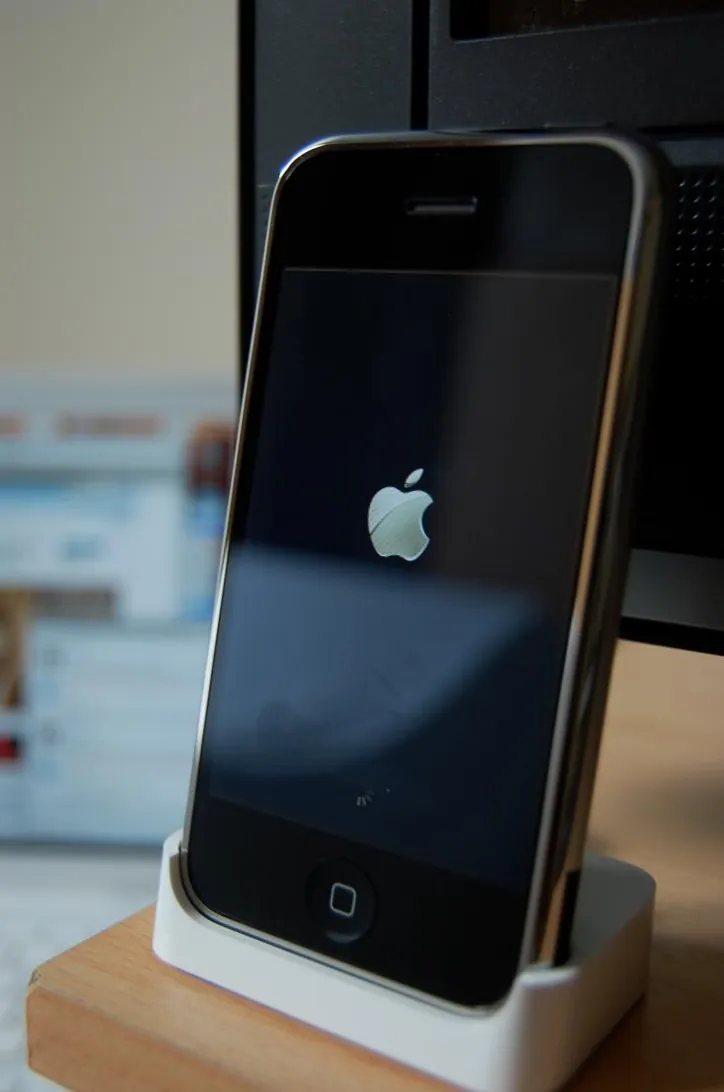
Among the few mementos in Weeks’s office, according to later profiles, is a framed note from Jobs: “We couldn’t have done it without you.”
From one phone to billions
Apple’s choice set the standard. Other manufacturers wanted screens that didn’t scratch, and Gorilla Glass was available. By 2010 it covered about 20% of the world’s mobile handsets, roughly 200 million devices. In October 2012 Corning said it had passed one billion devices. By 2017 The Economist estimated about five billion.
Corning kept improving it, with new versions every year or two that were thinner or tougher. Gorilla Glass 2 launched in 2012 and was about 20% thinner. In 2015 Ford announced it would use the glass in the windshield of its new GT sports car, which put the material, nearly fifty years late, in the place Project Muscle had once aimed for. For iPhones from the iPhone 12 on, Apple and Corning developed a glass-ceramic called Ceramic Shield.
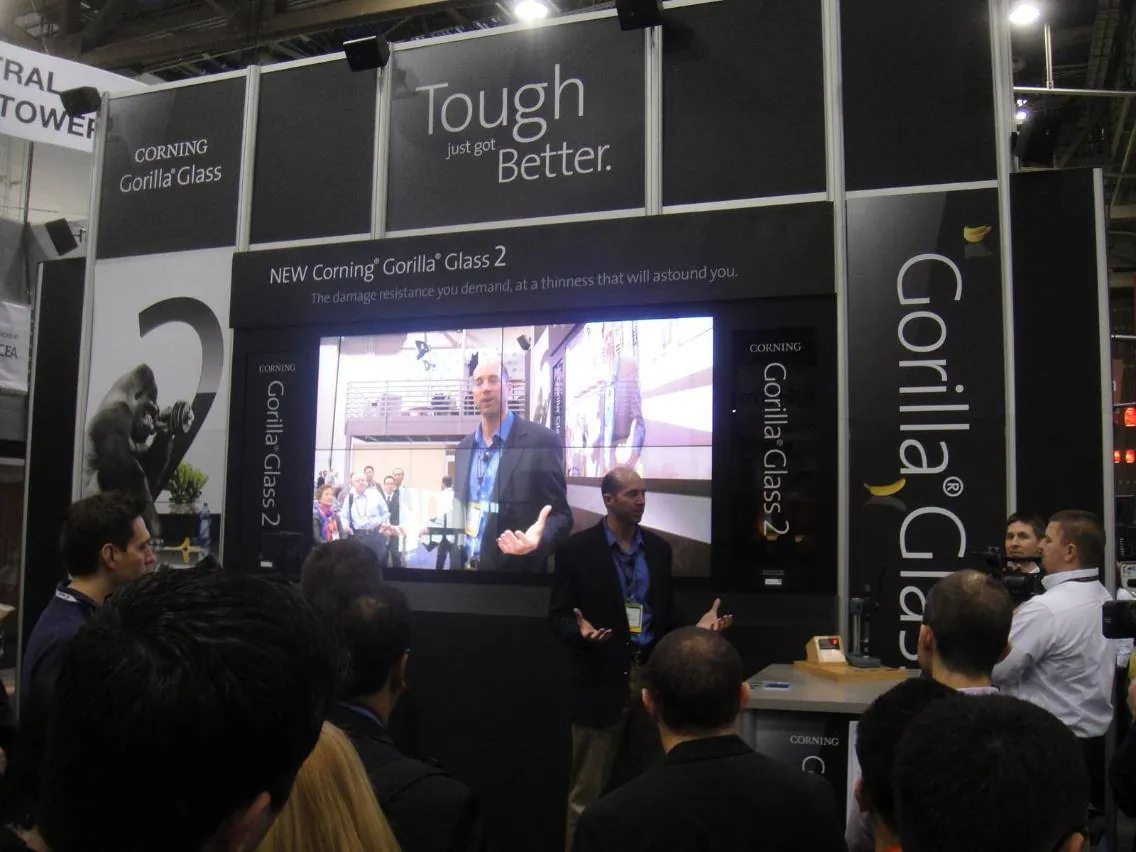
The relationship with Apple also deepened financially. Apple put $200 million into Corning in 2017 and another $250 million in 2021 through its Advanced Manufacturing Fund, much of it for the Harrodsburg plant. In August 2025, Apple announced a $2.5 billion commitment under which Corning would make all of the cover glass for the iPhone and Apple Watch in Harrodsburg, building what the companies called the world’s largest smartphone glass production line there. Corning said the plant would be devoted entirely to Apple. At a visit in September 2025, Corning’s chief operating officer said production would reach 100% by the end of 2026, and the workforce of about 350 was expected to grow to at least 500.
What the glass teaches
The usual reading of the story is about Steve Jobs’s will. The more useful one is about Corning.
The company had done expensive research that failed commercially and, crucially, didn’t throw it away. When the right customer arrived, Corning had the science, the manufacturing process and a plant that could be converted. What took decades to develop took weeks to deploy. A company with less patience, or one that had dumped Chemcor’s records in 1971, could not have answered the phone the way Corning did.
There is also a lesson about saying yes. Corning’s board wanted a safer path: share the order, limit the risk. Weeks took all of it. That is a gamble that only works if the people making it actually understand their technology, and Corning did.
The pattern repeats across this archive. Arm’s designers built a processor whose low power draw only became valuable once phones needed it. Bubble Wrap failed as wallpaper before it found its job. In each case the product existed years before the market that needed it.
Questions readers ask
- Who invented Gorilla Glass?
- Corning Incorporated. Its chemically strengthened glass grew out of Project Muscle, a research program started in 1960. An early version was sold as Chemcor and shelved in 1971; the revived material was named Gorilla Glass in 2008.
- Was Gorilla Glass used on the first iPhone?
- Yes. After Steve Jobs asked Corning for a scratch-resistant cover in early 2007, Corning made the glass at its Harrodsburg, Kentucky plant, and the first iPhone shipped with it in June 2007.
- How is Gorilla Glass made stronger?
- The glass is bathed in molten potassium salt at around 400°C. Larger potassium ions replace smaller sodium ions at the surface, which squeezes the surface into a state of compression and makes it harder to crack.
- How many devices use Gorilla Glass?
- Corning said more than one billion devices used it by October 2012. By 2017 The Economist put the figure at about five billion.
- Where is iPhone glass made?
- At Corning's plant in Harrodsburg, Kentucky, which made the glass for the first iPhone. Under a $2.5 billion Apple commitment announced in August 2025, it is set to make all iPhone and Apple Watch cover glass.
Run the numbers yourself
- Profit Margin CalculatorTurn cost and price into profit, margin and markup, or find the price that hits a target margin.
- Business Valuation CalculatorEstimate what a business could be worth with earnings multiples, a revenue multiple and a DCF.
- ROI CalculatorMeasure return on investment and the annualized return, and compare two investments side by side.
People and companies in this story
People
- Wendell Weeks
- Steve Jobs4 stories
- Walter Isaacson
Companies
- Corning
- Apple5 stories
- Ford
Share this story
Send the link to someone who would like this story, or keep it for later.
The timeline
Drawn to scale: the gaps are the years in between. Choose a year.
Sources & further reading 8
- Gorilla GlassWikipedia (citing Corning releases, Wired and The Economist)
- Apple and Corning partner to manufacture 100 percent of iPhone and Apple Watch cover glass in KentuckyApple Newsroom, August 2025
- Apple deepens its ties to a Kentucky plant that produces cover glass for iPhone and Apple WatchAssociated Press, September 2025
- A story of evolution and innovation: HarrodsburgCorning
- Jobs' abrasive nature got Corning to build Gorilla Glass for the iPhonePhoneArena, on Fortune's Leadership Next podcast
- Wired tells the story behind Gorilla GlassAll About Windows Phone, summarizing Wired (2012)
- Apple supplier Corning, and Isaacson's account of the 2007 meeting between Jobs and WeeksMacDailyNews, quoting Walter Isaacson's Steve Jobs (2011)
- How Corning's crash project for Steve Jobs helped define the iPhoneFast Company via The Loop, 2017
Spot an error? Send a correction. Corrections are dated and noted here.
Photographs are credited under each picture; licenses are listed on the image credits page.