Facebook Paid $19 Billion for WhatsApp
Two former Yahoo engineers started WhatsApp with $250,000 from old colleagues. Five years later Facebook agreed to pay $19 billion for it.
- Seed money
- $250KSeed money. The seed money Brian Acton raised from five former Yahoo colleagues in October 2009.
- Facebook's price
- $19BFacebook's price. Facebook's price for WhatsApp, announced on February 19, 2014: $4 billion in cash, $12 billion in shares and $3 billion in restricted stock.
In this story · 7 chapters
The short answer
Facebook agreed on February 19, 2014, to buy WhatsApp for $19 billion: $4 billion in cash, $12 billion in Facebook shares and $3 billion in restricted stock for the founders and staff. Because Facebook's shares rose before the deal closed in October 2014, it was worth about $22 billion by then.
In 2007 Jan Koum and Brian Acton left Yahoo, where they had worked together for nearly a decade. Neither was in a hurry to do anything. They traveled in South America and played ultimate frisbee. Both applied for jobs at Facebook. Both were turned down. Acton had also been rejected by Twitter. “We’re part of the Facebook reject club,” he later told Forbes.
Seven years later Facebook paid $19 billion for the company the two of them built. Koum signed the papers on the door of a building where he had once queued for food stamps.
The boy from Kyiv
Koum grew up near Kyiv in Ukraine, in a house that often had no hot water. In 1992, when he was 16, he and his mother moved to Mountain View, California, with help from a government program. They lived in a small apartment and relied on food stamps. Koum swept the floor of a grocery store and taught himself computer networking from manuals he bought secondhand.
At Yahoo he became an infrastructure engineer. He and Acton, an older engineer who had been one of Yahoo’s early employees, became friends. In 2009, after his year off, Koum bought an iPhone and saw that the new App Store was about to create an entire industry.
From status to messages
His first idea was modest: an app that showed a status next to each name in your contacts, so you could see who was busy, whose battery was low, who was at the gym. He chose the name because it sounded like “what’s up,” and on his birthday, February 24, 2009, he incorporated WhatsApp Inc. in California.
The status idea did not take off. Koum nearly gave up. But users began using their statuses to send each other short notes, and when Apple added push notifications, Koum turned the app into a messenger. WhatsApp sent messages over the internet instead of the phone network, at a time when text messages were expensive in much of the world, and international ones even more so.
In October 2009 Acton persuaded five former Yahoo colleagues to put in $250,000 of seed money. It made him a cofounder.
No ads, no games, no gimmicks
WhatsApp grew without spending money on marketing. People installed it because their friends and family were on it. It was especially popular in Europe, Latin America, India and the Middle East, where it replaced the text message almost completely.
The founders had strong views about how to run it. Koum, who remembered a childhood in which phones might be tapped, did not want to collect data on users. Acton wrote a note that Koum kept on his desk: no ads, no games, no gimmicks. Instead of advertising, WhatsApp charged many users $1 a year, after a free first year. In 2013, according to figures Facebook later filed with the SEC, it took in $10.2 million and lost $138 million, most of it in stock-based pay.
Venture capitalists chased them. In 2011 the founders accepted about $8 million from Sequoia Capital’s Jim Goetz, after he agreed not to push them toward advertising. Sequoia invested again in 2013, at a valuation of about $1.5 billion. The company kept its office unmarked, with no sign on the door.
Zuckerberg’s dinner
By early 2014 Mark Zuckerberg had decided that messaging was where Facebook’s next billion users would come from, and WhatsApp was far ahead. He had courted Koum for about two years. In February 2014 he invited him to dinner and made an offer.
On February 19, 2014, Facebook announced the deal. It would pay $4 billion in cash and about $12 billion in Facebook shares, a total of about $16 billion. On top of that, the founders and staff would receive $3 billion of restricted stock that would vest over four years. That made $19 billion, far more than Google had ever paid for anything, and more than Microsoft had paid for Skype.
Facebook said WhatsApp had more than 450 million monthly users, that 70% of them used it every day, and that it was adding more than a million new users a day. The company had about 55 employees. Koum, who Forbes estimated owned about 45%, joined Facebook’s board. Sequoia, which had put in about $60 million in total, made billions.
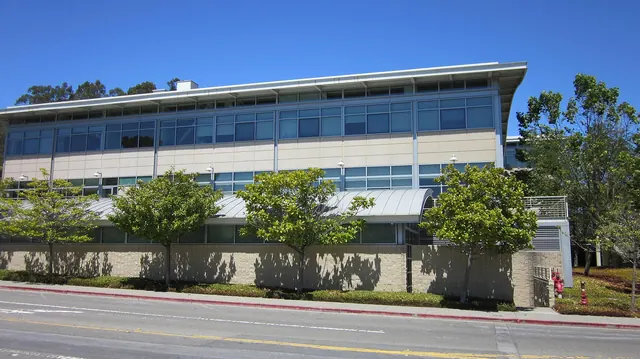
That same afternoon, Koum, Acton and Goetz drove a few blocks to a disused white building across the railroad tracks in Mountain View. It had been the North County Social Services office, where Koum had once stood in line to collect food stamps. Koum signed the agreement leaning on its door.
The price of the deal
Like Instagram’s, the price moved with Facebook’s stock. This time it moved up. By the time the deal closed in October 2014, the shares had risen and the purchase was worth about $22 billion.
The peace did not last. In 2016 WhatsApp began sharing some user data with Facebook. In May 2017 the European Commission fined Facebook €110 million for giving it misleading information during the merger review: Facebook had said it could not reliably match WhatsApp accounts with Facebook accounts. The fine did not undo the deal.
Acton left Facebook in 2017 after disagreements over how to make money from WhatsApp. Leaving early meant giving up about $850 million in unvested stock. In 2018 he publicly urged people to delete Facebook and put $50 million into a foundation behind Signal, a rival encrypted messenger. “I sold my users’ privacy to a larger benefit,” he told Forbes that year. Koum left in 2018.
Three billion
WhatsApp kept growing anyway. It passed 2 billion monthly users in 2020 and 3 billion in 2025, Zuckerberg said, making it one of the most widely used services on Earth. Meta has built a business around it by charging companies to message their customers. In June 2025 it announced the first advertisements inside WhatsApp, placed in the Updates tab, away from private chats.
What the record shows
- Raise as little as you need. WhatsApp took very little outside money and kept control of its own decisions.
- A small team can serve hundreds of millions. About 55 people ran a service used by 450 million.
- Rejection can be a gift. Facebook turned down both founders as employees, then paid them billions.
- Read the structure, not just the headline. $19 billion was cash, stock and restricted shares, and the stock part changed value before closing.
Two years earlier, Facebook had made a smaller version of this bet: Instagram, for $1 billion. For another founder who kept being told no, read how Colonel Sanders started selling his recipe in his sixties. And for an app Google bought rather than built, see YouTube’s $1.65 billion sale.
 $1.65BRead nextYouTube's $1.65 Billion Sale to GoogleIn October 2006 Google paid $1.65 billion in stock for a video site that was less than two years old and facing copyright fights. In 2025 YouTube brought in more than $60 billion.YouTube · 5 min read
Questions readers ask
- How much did Facebook pay for WhatsApp?
- $19 billion, announced on February 19, 2014: $4 billion in cash, $12 billion in Facebook shares and $3 billion in restricted stock units for the founders and staff.
- Who founded WhatsApp?
- Jan Koum and Brian Acton, two former Yahoo employees. Koum incorporated the company in California on February 24, 2009.
- Where did Jan Koum sign the WhatsApp deal?
- On the door of a disused building in Mountain View that had been the North County Social Services office, where Koum and his mother had once queued for food stamps, Forbes reported.
- How much did WhatsApp make before Facebook bought it?
- $10.2 million in revenue in 2013, with a net loss of $138 million, according to figures Facebook later filed with the SEC. The money came mostly from a $1-a-year subscription that many users never paid.
- How many users did WhatsApp have when it was sold?
- More than 450 million monthly users, with over a million new users a day, Facebook said in February 2014. By 2025 it had more than 3 billion.
Run the numbers yourself
- Business Valuation CalculatorEstimate what a business could be worth with earnings multiples, a revenue multiple and a DCF.
- Net Worth CalculatorAdd up what you own and owe, then compare your net worth with U.S. households your age.
- Compound Interest CalculatorSee how a deposit grows with compounding, extra contributions and different compounding frequencies.
People and companies in this story
People
- Jan Koum
- Brian Acton
- Mark Zuckerberg4 stories
- Jim Goetz
Companies
This story is on these lists
Share this story
Send the link to someone who would like this story, or keep it for later.
The timeline
Drawn to scale: the gaps are the years in between. Choose a year.
Sources & further reading 8
- WhatsApp's first half of 2014 revenue was $15M, net loss of $232.5MTechCrunch, October 2014
- Facebook to acquire WhatsApp (Form 8-K, Exhibit 99.1)Facebook, U.S. Securities and Exchange Commission, February 2014
- The rags-to-riches tale of how Jan Koum built WhatsApp into Facebook's new $19 billion babyParmy Olson, Forbes, February 2014
- WhatsApp founders include Facebook reject, Ukrainian immigrantNBC News, February 2014
- Facebook buying messaging app WhatsApp for $19 billionAssociated Press via Las Vegas Sun, February 2014
- EU fines Facebook 110 mn euros over 'misleading' info in WhatsApp takeoverAFP via Phys.org, May 2017
- WhatsApp founder deletes Facebook and tries to atonePrivacy International
- WhatsApp crosses 3 billion monthly usersNairametrics, May 2025
Spot an error? Send a correction. Corrections are dated and noted here.
- Correction, : An earlier version gave WhatsApp's 2013 revenue as about $20 million and misquoted Brian Acton. Facebook's SEC filing put 2013 revenue at $10.2 million, and Acton's words to Forbes were "I sold my users' privacy to a larger benefit." These have been corrected.
Photographs are credited under each picture; licenses are listed on the image credits page.